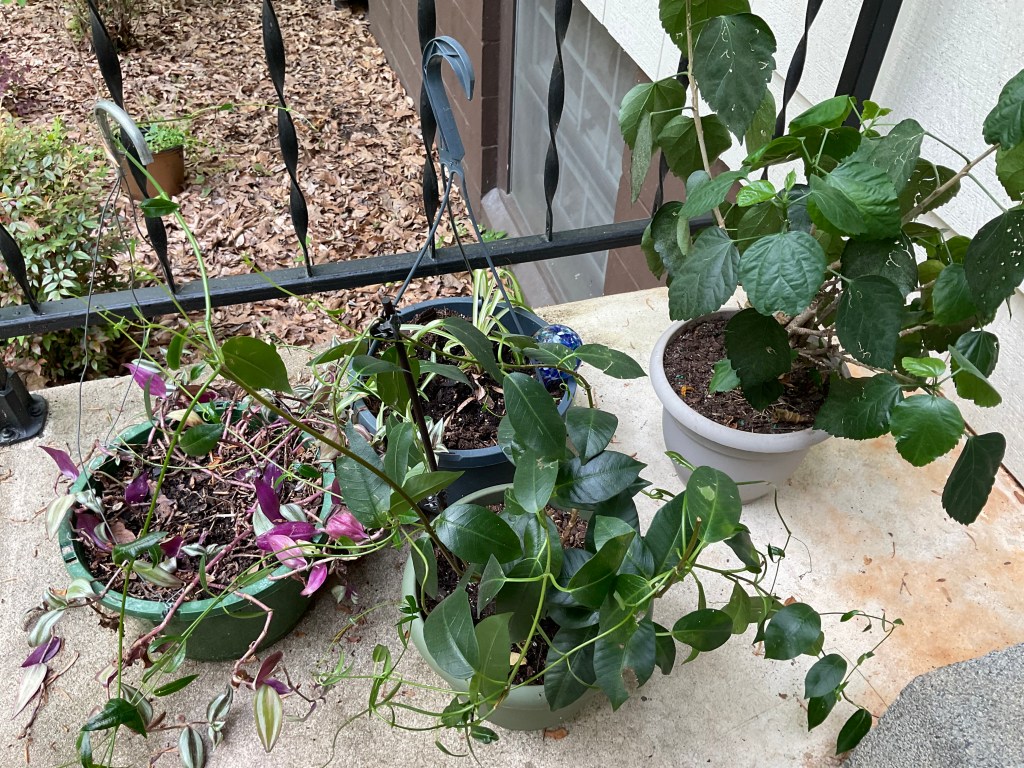
Weather in the Southern Piedmont seems to have the mind of a seesaw this spring—up into the 80’s then plunging into the 40’s or even 30’s—all in the same day, for weeks. The variety of temperatures expanded our wardrobes but we often didn’t know what to wear. My outdoor potted plants, now liberated from the confines of the dry, heated house seemed to do fine whatever the temperatures were—as long as I kept them watered (conserving water as I could). Rarely did heaven water them. We’ve been so thankful for rain, when it has come. When it does, it rains and rains for days. I’ll have to move some plants out of the rain this time, since they are in danger of becoming waterlogged. In gardening, it’s best to avoid extremes.

A benefit of the cool, sunny weather was the ability to garden without mosquitoes! In the heat of summer, they are ferocious. My neighbor and I have been talking for years about getting raised beds to bypass the heavy red clay, and put our hope for growth, in beautiful black soil. I bought a lot of wonderful varieties of seeds last year but discovered that they seldom sprouted in the clay. Maybe they’ll sprout in the rich soil?
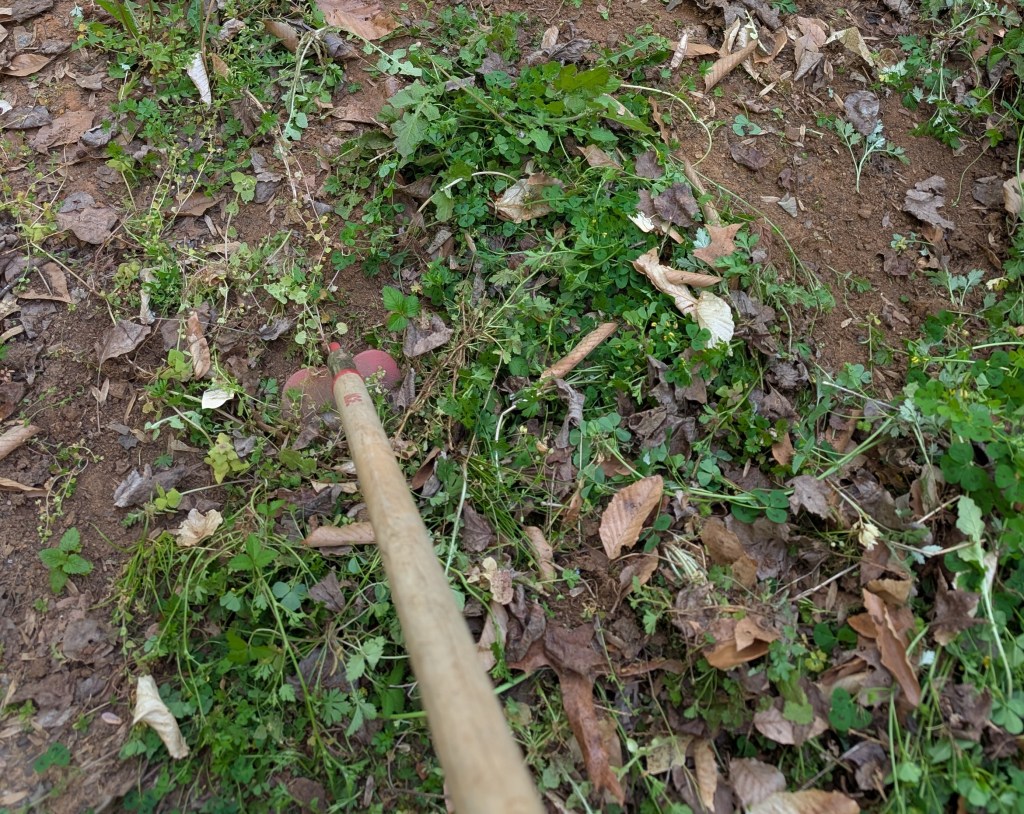
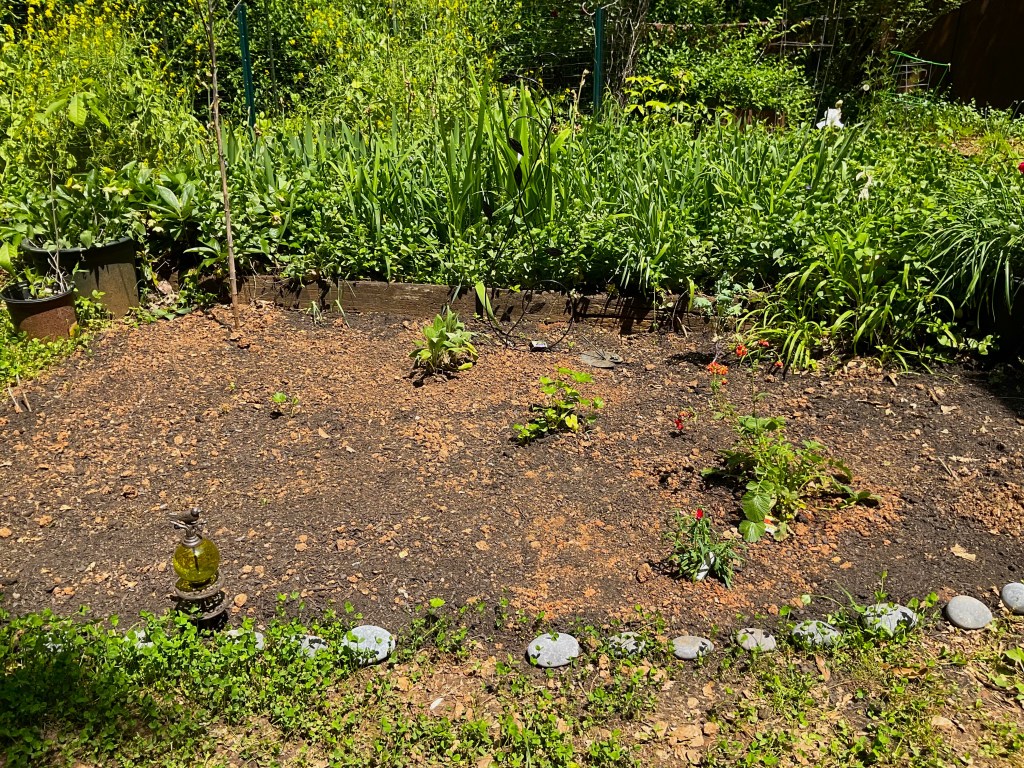
We finally found some affordable raised bed frames; it was time to get them set up. I spent over half a day hoeing the weeds out of my vegetable garden, thankful for help from my neighbor, whose gardens are next to mine; she reminded me that I didn’t have to pull each weed individually—I could hack clumps out all at once with a hoe. Whew!

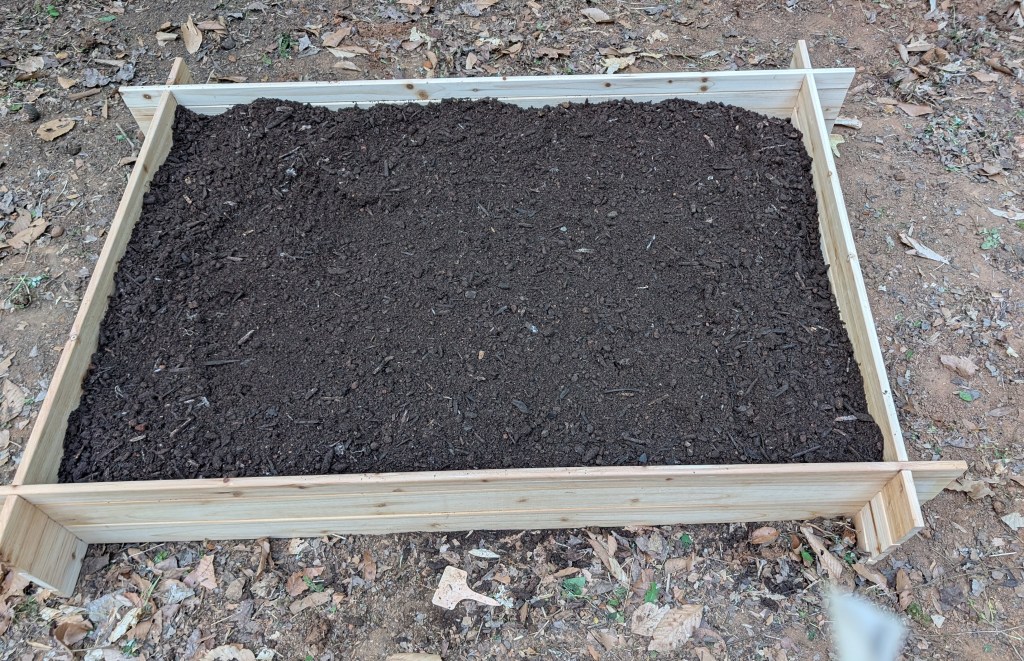
The raised beds came in a long box from a discount grocery store at an amazingly low price. They won’t last forever, and I don’t expect them to. But they do the job I need for now. The open bottoms allow for drainage, and the possibility of longer roots. Assembling them was fairly straightforward, which is a good thing since the first one I opened had no instructions. However, it was strenuous when I was already exhausted from weeding.
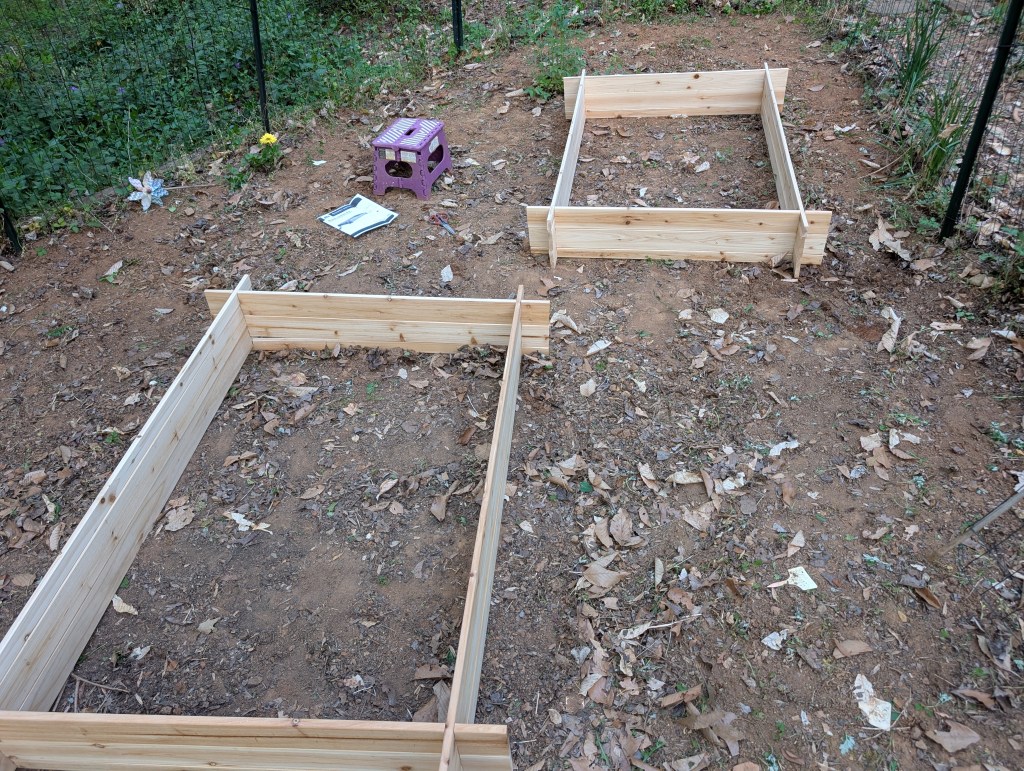
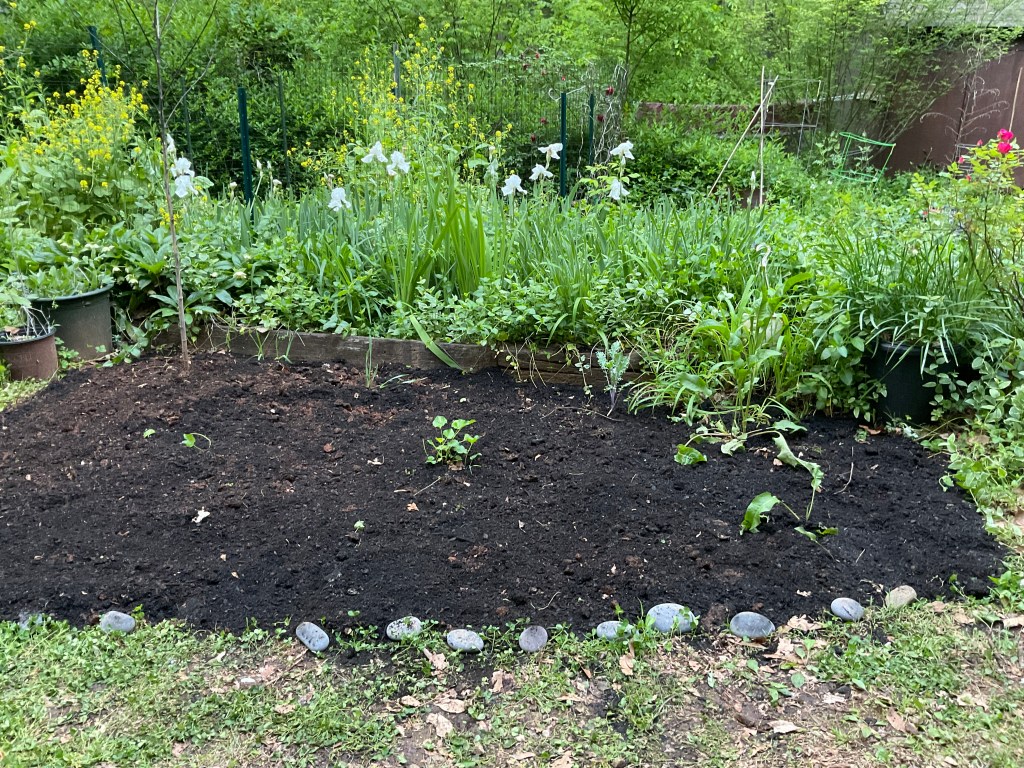
Then came the heavy bags of rich, black soil. Thankfully, my neighbor helped me haul them back to my vegetable garden—even with the two of us, it was backbreaking. I persevered to fill the raised beds with the soil before the end of the day, not knowing when I’d have the time to take it up again. Once finished, the accomplishment felt good. Every year, my neighbor and I wonder if it’s worth the time, money and effort to keep gardening, but we always do. We can’t help it. We need to dig in the dirt and help things grow. Gardening was the first task God gave to people—it’s part of what he made us for. It brings me joy.

Do you garden with raised beds? If so, how is that going? Let me know in the Comments. If you enjoy these posts, please like and share them, and subscribe. Thanks!
Raised Beds at Last

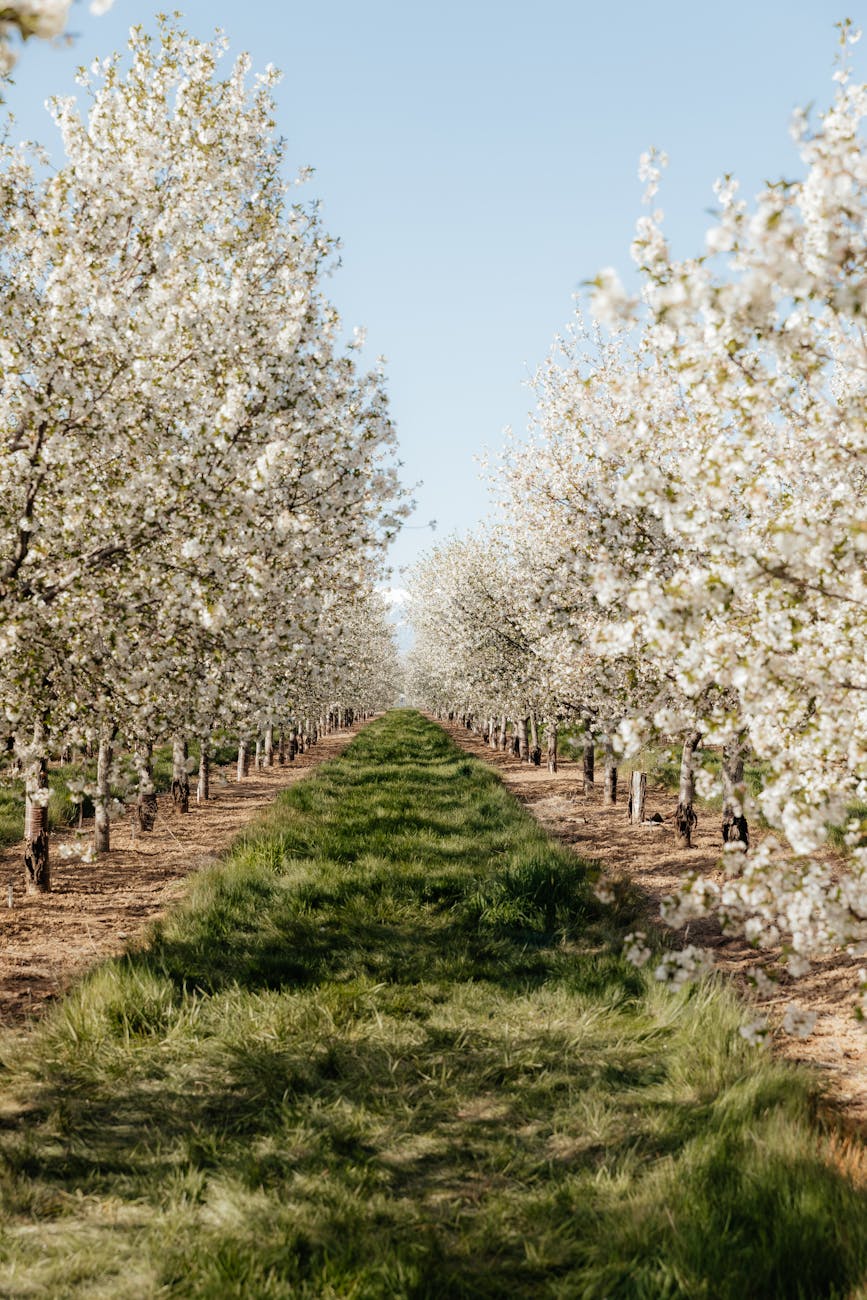
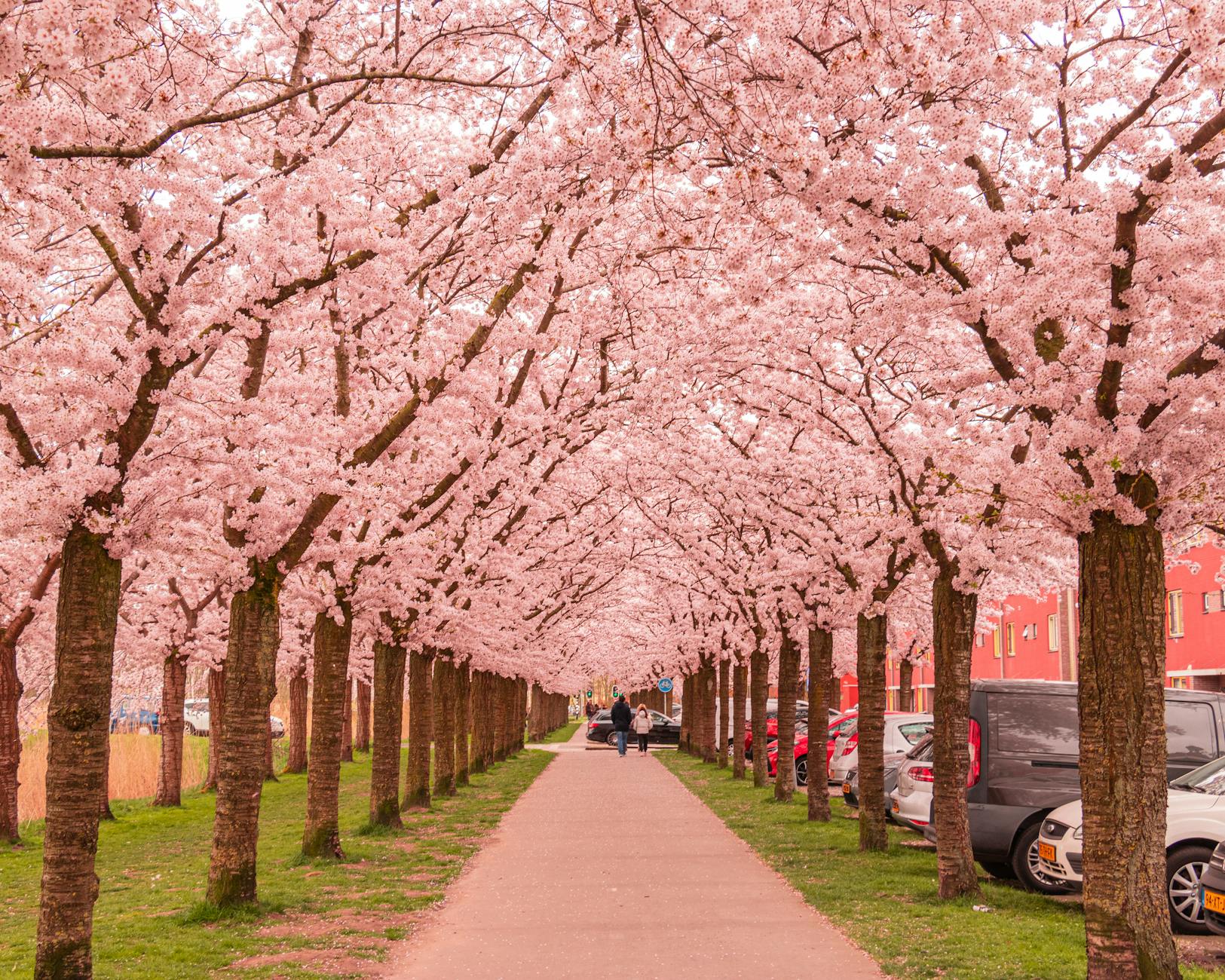
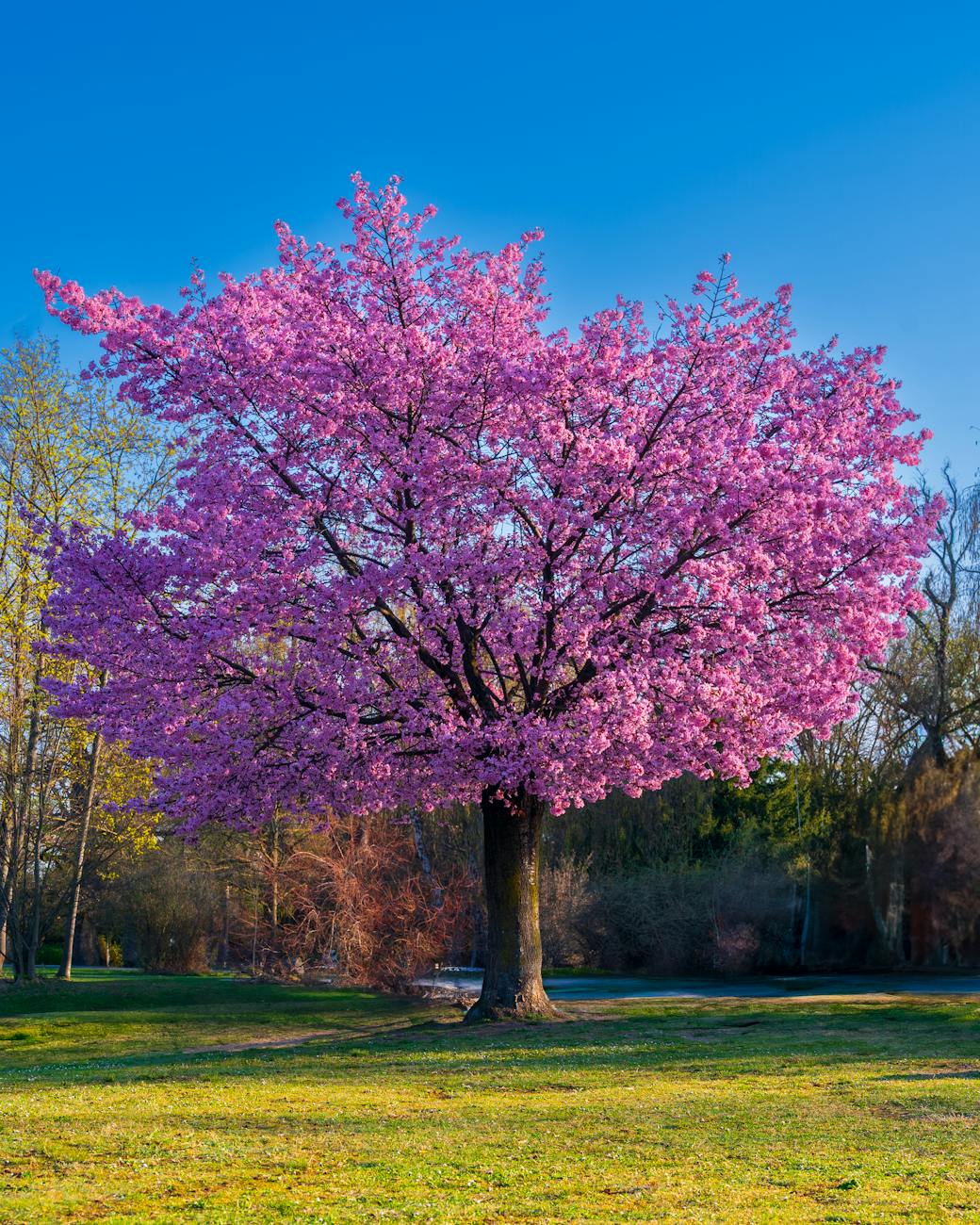
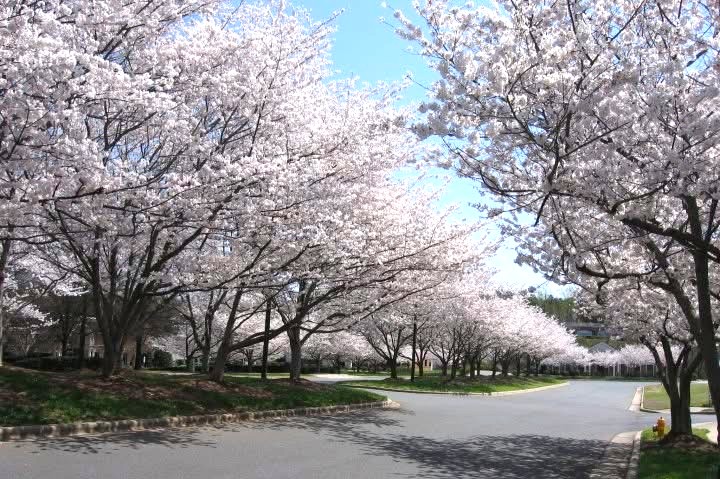
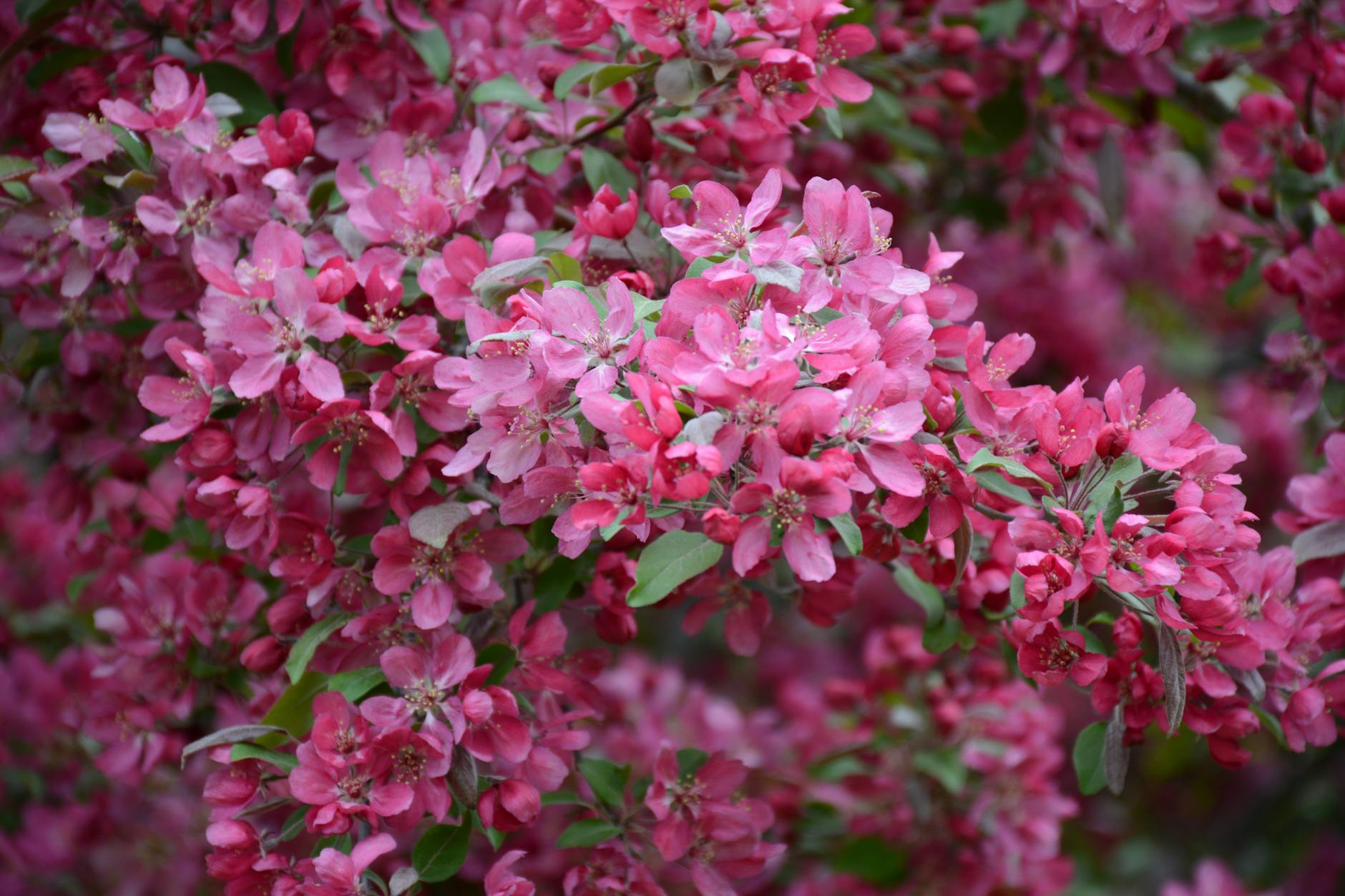
Welcome Spring! I always tell newcomers to the Piedmont that they’re in for a treat, that Spring unfolds like a parade. Though we’re in a drought, this year’s parade did not disappoint, revealing  one colorful, flowering tree, bush or vine at a time; it’s glorious! First, my overwintered orange pansies, then pink ornamental crab trees, white Bradford pears, then the delicate, floaty, barely pink cherry blossoms, red bud trees in bright red violet my favorite since my grandmother had a massive one, neon yellow forsythia, purple panicles of wisteria, then the flat, upward-facing white, and an occasional pink, dogwood. Wrapping up the parade is the southern favorite, the wonderfully outrageously pink, fuchsia (and white) azaleas. Streets are lined with flowering trees; I sometimes have my mouth open in joy as we drive through the show.

Photo by Jeff Wiles on Pexels.com
Photo by Adriana Coulson on Pexels.com
Photo by Sevda Ozdemir on Pexels.com
Photo by Mohamed B. on Pexels.com

In my flower garden, I’ve been pleased again this year to see the perennials sprouting up with no effort from me. The red orange-flowered geum stayed leafy and green all winter and is building its cells to unfurl a flower soon. Red, and pink dianthus, which we always called Sweet William is abloom.  My purple coneflower and maybe the prolific rudbeckia have come back. If the rudbeckia somehow doesn’t make it, it’s such an abundant producer of pretty yellow orange flowers, I’ll definitely replace it. Last year, I bought a special (expensive) magenta salvia that grew beyond my expectations to be almost as tall as me! Though each flower was small, the sun shone through them like stained glass. I thought it would be perennial but the winter was harsh for this area and I don’t see any signs of life in it—yet.

Three varieties of dahlias have several shoots each and will need props early on for their exuberant though sometimes brittle growth. I fell in love with the large colorful flowers when we lived in England and watched BBC’s Gardener’s World. In the US, we call them doll-y-ahs (or dal-y-ahs) but the British call them dale-y-ahs. Since I first grew them in England, I pronounce their name the British way.

I’d planted some spinach and parsley for the winter, in the front part of my flower garden—where I could get to it easily. These now have a home in my new raised vegetable bed. I’ll tell you about it soon.

Do you have a favorite spring-flowering tree or bush? Does something else flower this time of year where you live? What are you planting this Spring? I’d love to hear, in the comments.

Please like, subscribe, and share. Thanks!

Flowery Language

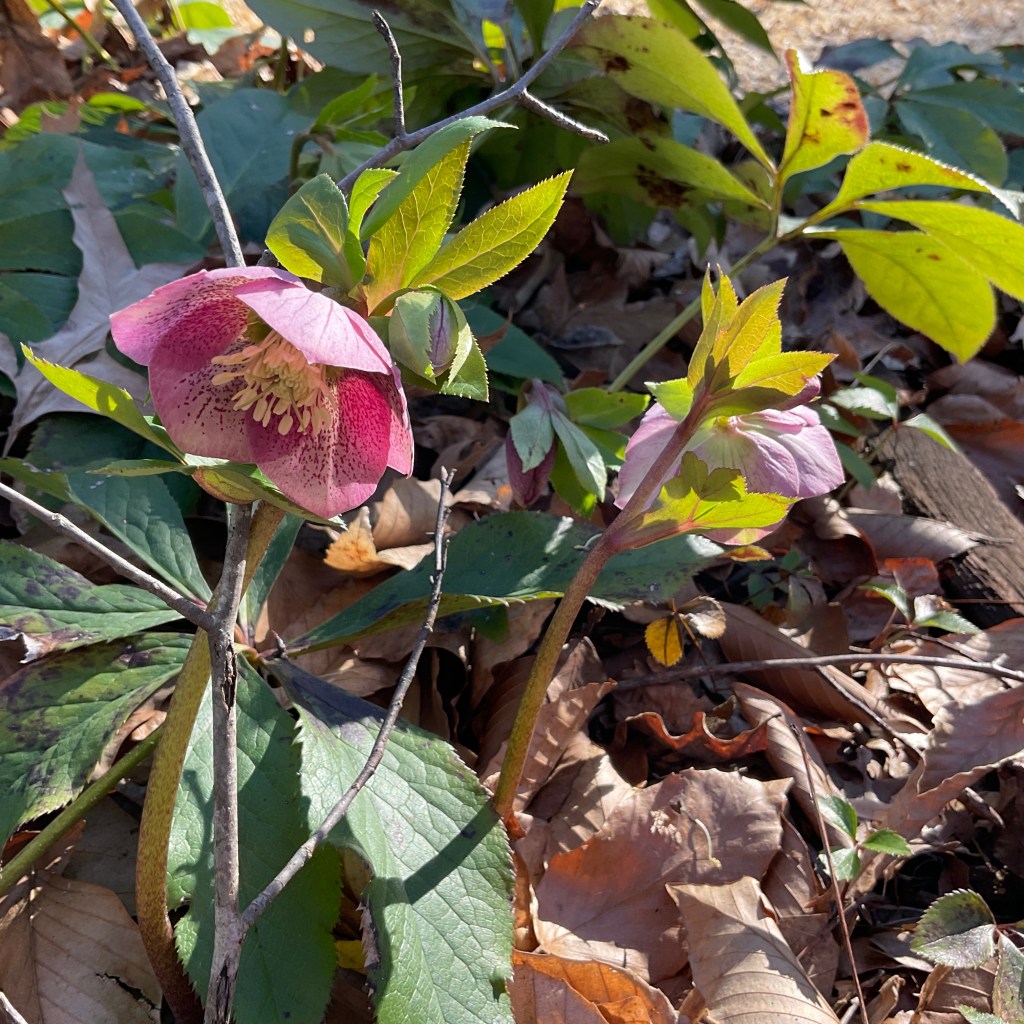
It’s winter here in the Southern Piedmont though the 65 degrees today deny it; the landscape is still grey, brown and tan. Experience, and the calendar, give me hope though—spring is coming! The first harbinger is our Lenten roses. They are blooming true to their name since Lent begins tomorrow. Though easily overlooked since they hang their pink or white (even almost red) heads down, Hellebores are beautiful.

They multiply readily with lots of large palmate leaves that stay evergreen—a bonus unless you want them to share space. They love shade that most other plants can’t tolerate, so that probably won’t be a problem. Lenten roses take practically no care so they’re easy to live with.

Take heart, spring is coming!

The First Harbinger

I was on a mission. I looked out my window and spotted some white flowers at
the edge of my vegetable garden. Wow! What are those? Ah, the mini gardenias my
landlady said I could cut for indoors. I donned my knee boots (quicker than
lacing up shoes) and trod out purposefully, scissors in hand. Suddenly I
stopped, rubber-booted foot in mid-air; right in the path was this beautiful
creature—a turtle. I’m so glad I didn’t step on it! I was fascinated by its
golden symmetrical–and asymmetrical, markings that extend to its head. They’re
almost like ancient writing.

At first, it’s pointed mouth led me to believe it might be a snapper so I
kept my distance, but an internet search told me that it is instead, an Eastern
Box Turtle, unique in being able to completely close off its shell. A friend
tells me that they can nevertheless bite. It’s the State Reptile of North
Carolina. I had no idea there was such a thing; I’m relieved that they didn’t
choose a snake!

I also discovered that these turtles eat slugs and bugs, and other things
that aren’t welcome in the garden. However, the turtles apparently extract
their pay for such a service by eating fruits, and roots. We’re not real happy
about that part since bunnies–even a tiny one, have been eating our plants (my
neighbor and I garden side-by-side) down to the nubs. I know God’s creatures
have to eat but we live in a wood, so there’s plenty there for them.

Not to worry though, the turtle came, saw, and slowly wandered back into the
woods. It hadn’t been previously seen, and I haven’t seen it since. I count it
a privilege that I was there at just the right time to have seen it.

Have you had experience with Eastern Box Turtles—a close encounter, or as a
friend?

(I say a “friend”–one who visits, rather than a pet since in North Carolina it’s “unlawful to hunt or trap them…or to take from the wild, have in their possession” https://www.ncwildlife.org/species/eastern-box-turtle)

A Colorful Visitor

A woodpecker hunts for his lunch in a dead tree in the surrounding woods. The sky is blue again with a few white clouds cooling the warmer weather.

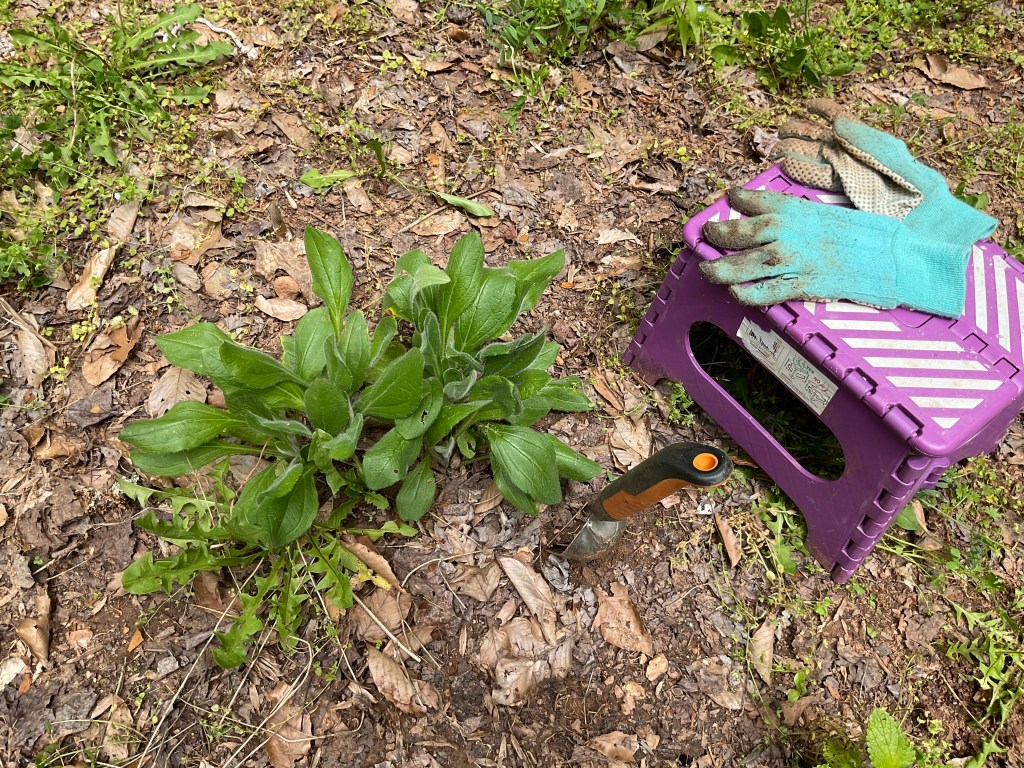
Today, I started my gardening with digging up my rudbeckia/black-eyed Susan from my still weedy vegetable plot. I’d bought it in a pot as a fundraiser at the previous place we lived; though I had no garden there, I looked forward to our next home, which would surely have a garden. Actually it was a non-negotiable for me to have a garden in our next home. Gardening is necessary for my well-being. (The NHS of the UK (National Health Service)increasingly prescribes gardening for good mental health.)

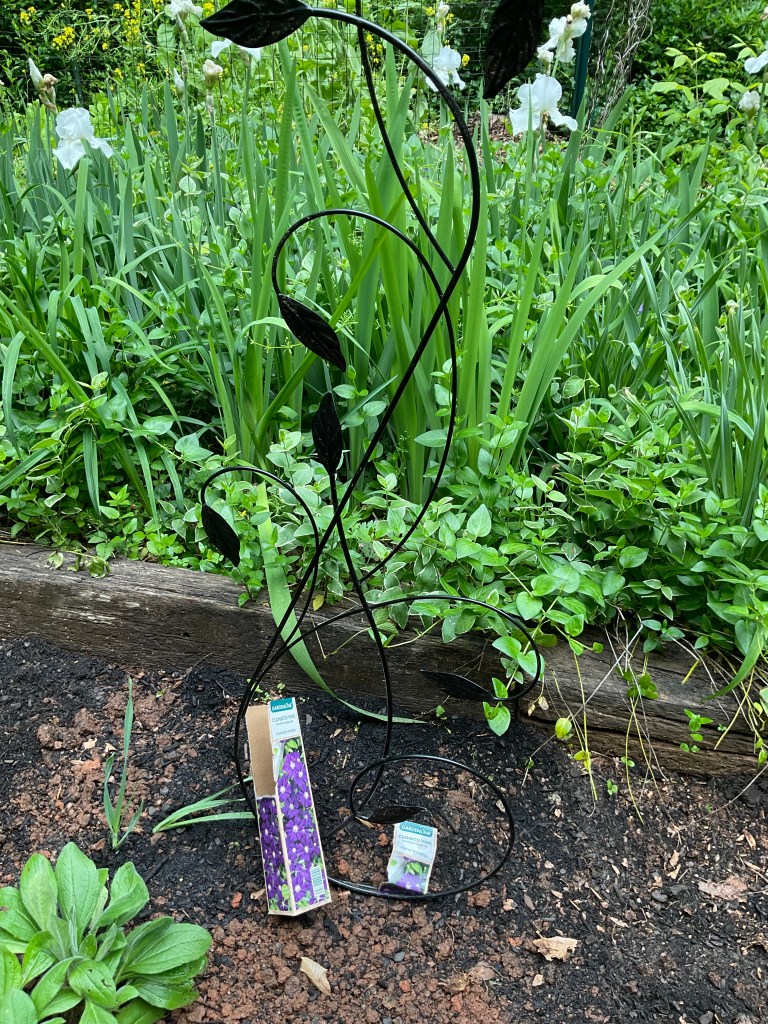
As a young girl, I loved to answer ads for garden catalogs in the  back of my mother’s magazines. I’d tape my precious dime to an index card, slide it into a small white envelope, address it to the seed company then ask my mother for a stamp. A clothes pin held my request to an arm of our mailbox for the postman to pick up (yes, our postal worker was a man). I’d eagerly check the mailbox several times every day until the wondrous day my picture book, aka seed catalog, of colorful flowers finally arrived. As I pored over the pages of “dahlias the size of a dinner plate!” and other “exotic” flowers, one plant stood out. I’d never seen a clematis growing in hot, humid Texas but the purple-flowered vine captivated me. Recently, our landlady presented me with a gift of a purple-flowered clematis—my first. I hope I grow it well in the Southern Piedmont. I found a lyrical trellis of black wire and metal leaves, to support it when it does grow.

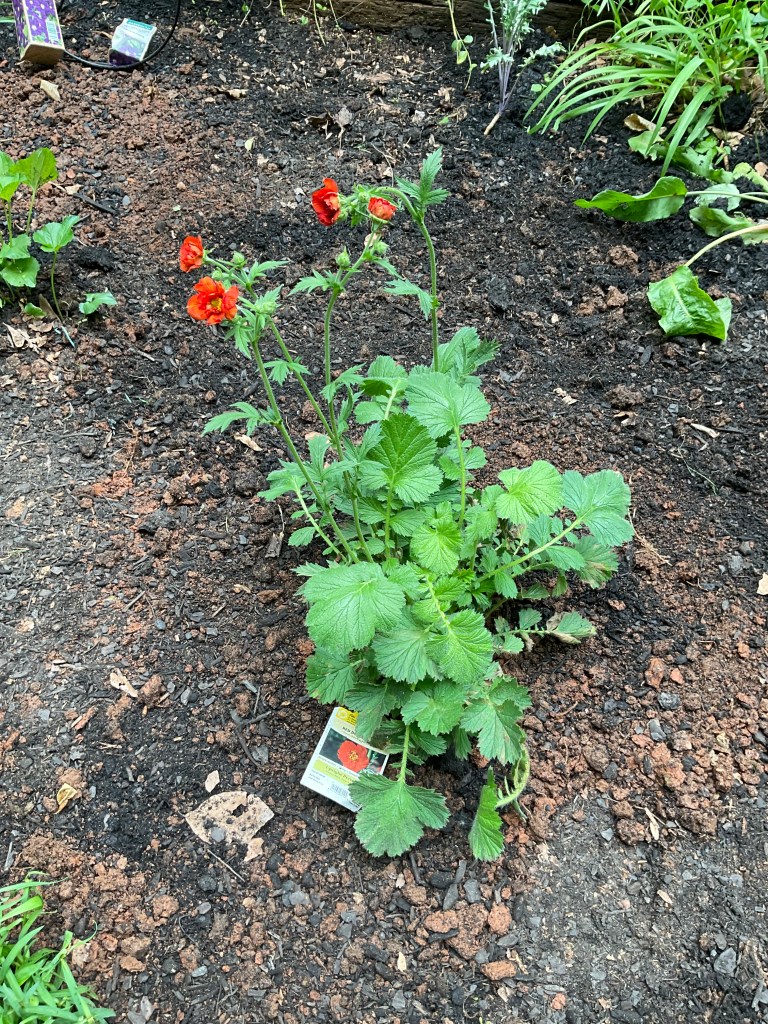
The other night, the BBC Gardener’s World TV show (I highly recommend it) had a feature on geums, reminding me of how much I enjoyed the orange-flowered perennial I grew in my garden in England (see older posts for the story of that garden). I came across a geum plant at the local big box garden center and of course, I needed to buy one. I have some flower seeds to plant but it’s good to have some already flowering plants to get the garden started.

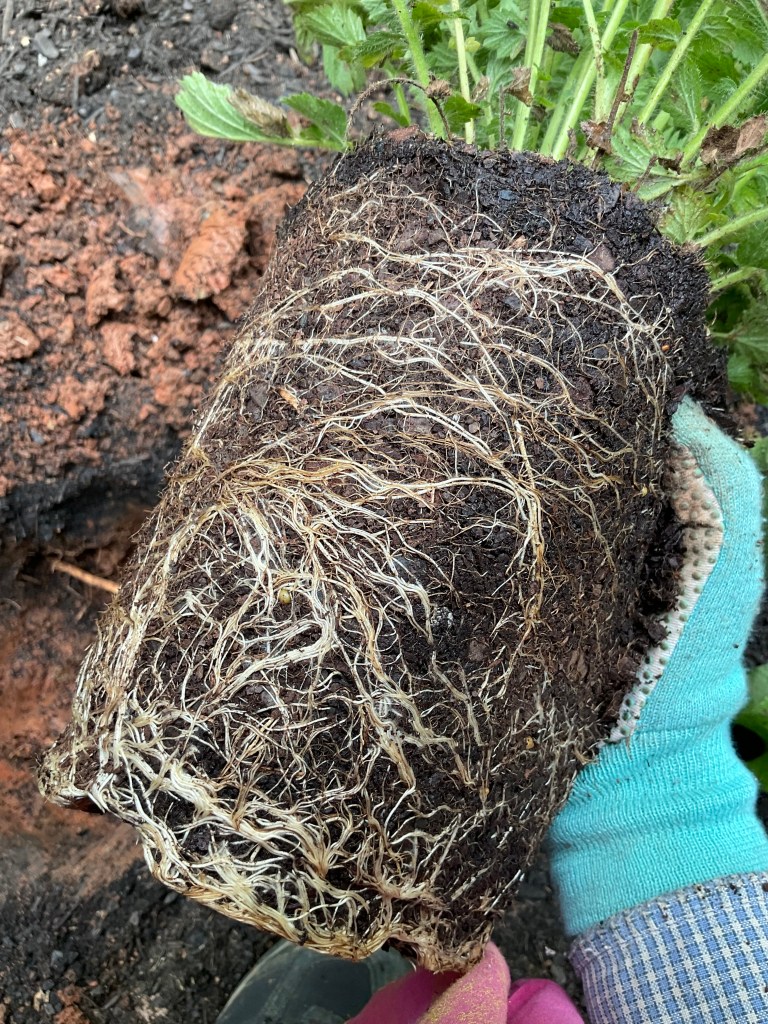
 I also learned on Gardener’s World that when sliding a plant out of its pot for transplanting, it’s good to run a finger over the bare roots  to stimulate growth. This plant was definitely ready to be free of its pot and be planted in the ground.

Transplants have to be well watered. I’ve had to water the transplants more than I expected, even when it had rained; it takes a few days for them to get established.

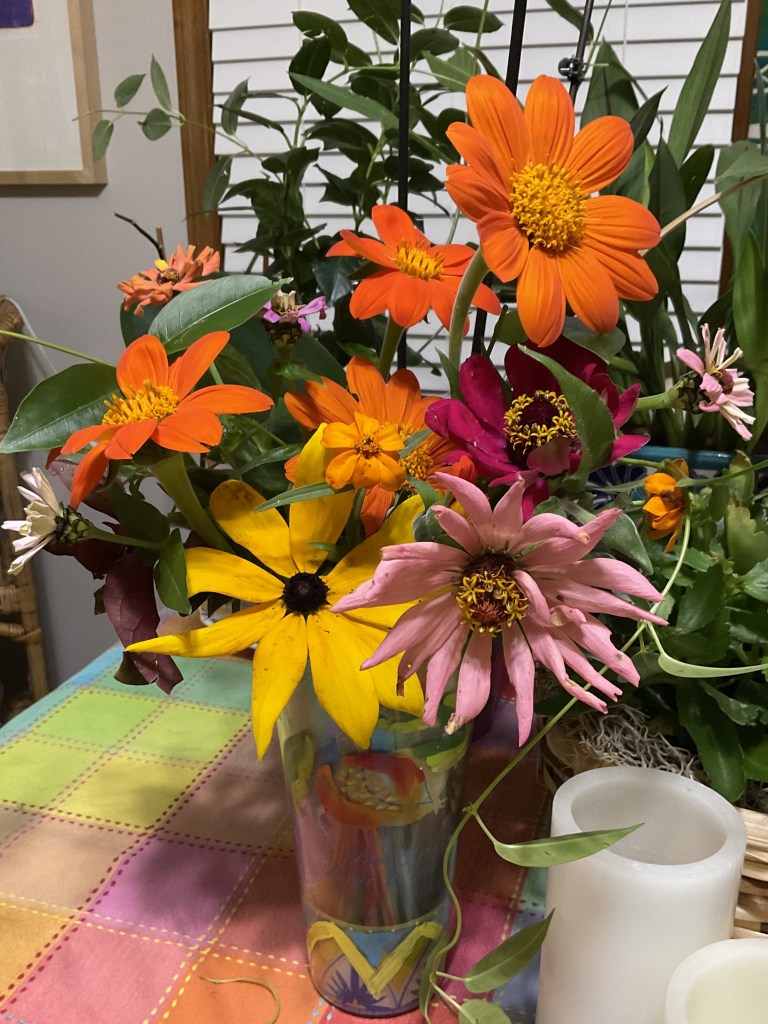
Progress! There’s still a lot to be done, which is a good thing, but I have to remember that the zinnias, and tithonias I have planned, take up a lot of space.

Do you prefer to grow your flowers from plants or seeds? Or both? I’d love to hear from you in the comments below. Please feel free to share these posts with your gardening—and garden-loving, friends.

Flower Planting

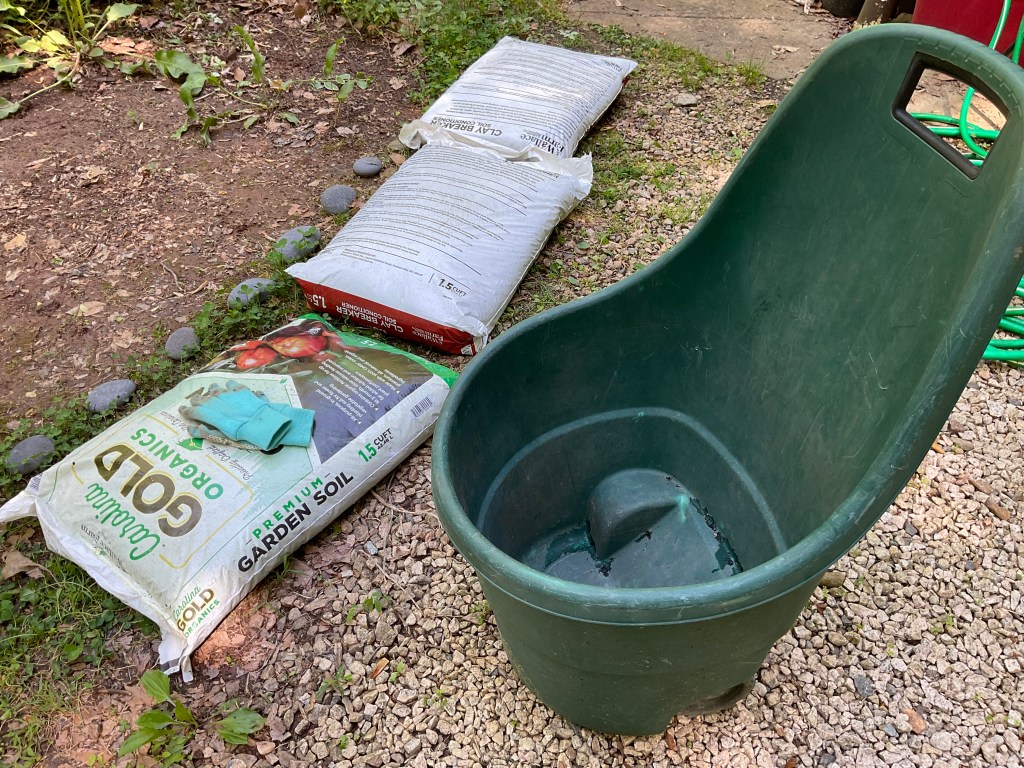
Today was the day to travel to the local big box garden center to buy some bags of compost. I looked online first, so I wouldn’t stand there all day trying to decide—I had work to do! I found a product that claims to break up the hard red clay soil and improve the structure. It surely needs something. The website said that my ninety square foot flower bed would take ten bags. Our little car can’t carry that much and neither can I. Too expensive anyway. So I ended up with five bags—three of the “Clay Breaker” and two of another product (as it turns out, by the same company) that “contains organic fertilizer” –from a hen house it seems. I hope the rain doesn’t enhance that “fragrance” and/or bring the local flock pecking. From a bug standpoint I don’t mind but I don’t want to trip over them or have them in the way of the cars.

Some helpful young guys at the garden center hoisted the 1.5 cubic foot bags off the pile, onto the flat bed cart and into our car trunk. Too bad they couldn’t do the reverse on the other end. But a wheel cart (I don’t know what else to call it) and I managed to haul them out and to the garden, with my husband happily doing the wheeling.

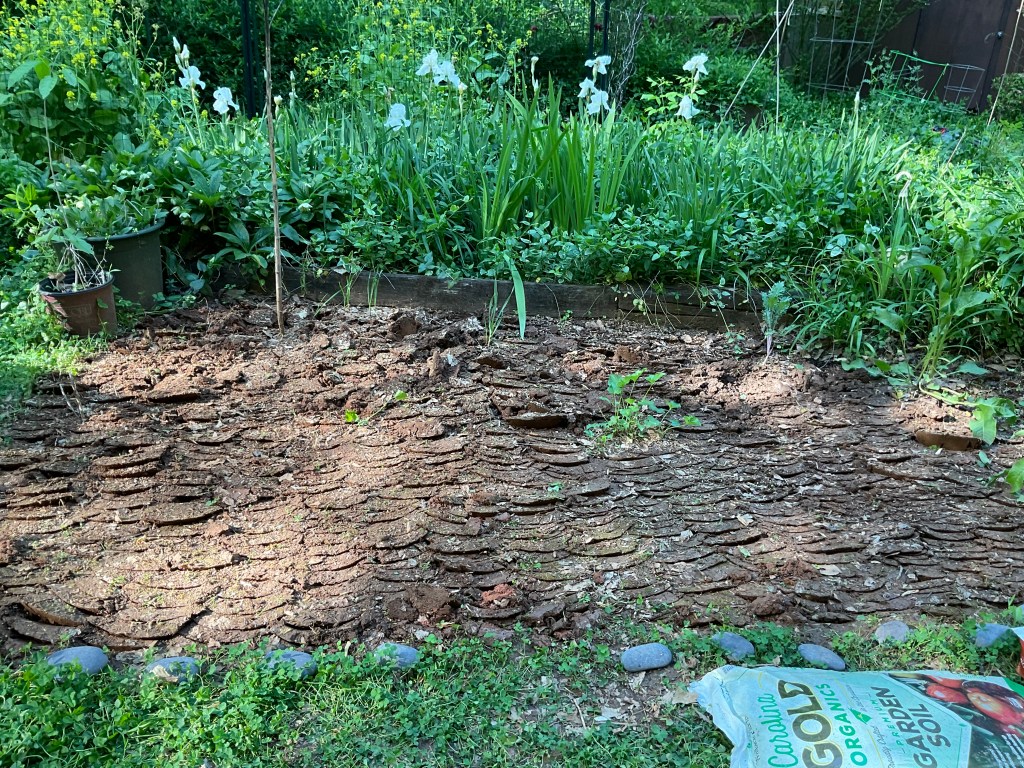
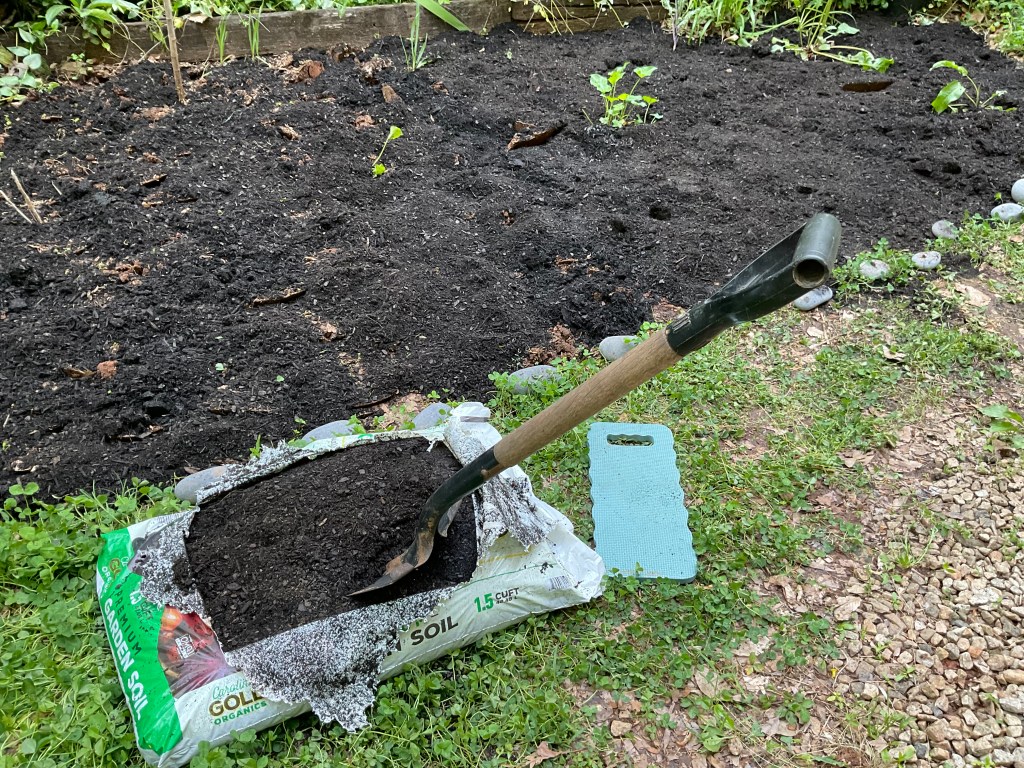
Before I spread the compost, I dug up the clay soil, thankful that the weather was perfect–my mother calls it “Chamber of Commerce weather,” blue skies and mild temperatures, a soft breeze. The bag instructions said to dig up four to six inches; my back says I dug about four inches across the plot. I think I will feel it tomorrow; it’s said that if you keep on doing the thing that made you sore, you won’t be sore anymore ( of course not if you’re injured) so tomorrow’s garden workout might help.

Would I get it done before dark? It had turned cooler in the “golden hour” (the hour before sunset that photographers cherish) but it didn’t take long for me to warm up. The neighborhood rooster had given up his crowing and the crows their cawing, making way for songbirds who called, “Secret, secret” and were answered by “Picchu, picchu.” A dog barked in the distance, but otherwise it was totally quiet, giving space for my prayers. Countless shovelfuls later, the red clay became black with a layer of compost—not a deep one, but hopefully enough to make a difference in the clay bog.

Tomorrow, Lord willing, I’ll begin to plant some flowers—and make progress on weeding my vegetable patch.

What is your soil like? Do you add anything to improve it?

In the Dirt

“Isn’t this fun?” As I grinned my way through the large garden center for first time since autumn, I spotted a woman loading a tall red hibiscus and other gorgeously vibrant scarlet, and cobalt blue-flowering plants onto her flatbed cart, and enthused over her choices. It felt so good to be back in the gardening wonderland!

I see that it’s been a long time since I’ve posted on this blog. Life has been upside down as my husband and I have moved from place to place after returning from living in England (see my posts about my English garden here https://aleafyjournal.com/2021/02/15/goodbye-and-hello-new-growth/)

We did finally land back in the Southern Piedmont of the US last year, with spaces for me to garden–a non-negotiable for me. However, because of my late start with the move, and not knowing the soil, my garden didn’t go well. Red clay that was strangely always wet didn’t germinate flower seeds well, and bugs and tomato horn worms decimated my vegetable plants. I did get a few tomatoes and flowers though.

Yesterday, after a stressful morning, I made my way outside among the trees with their bright new leaves against the saturated blue sky, air filled with birdsong and breeze, and felt the stress melt away. That’s when I knew it was time to start my garden!

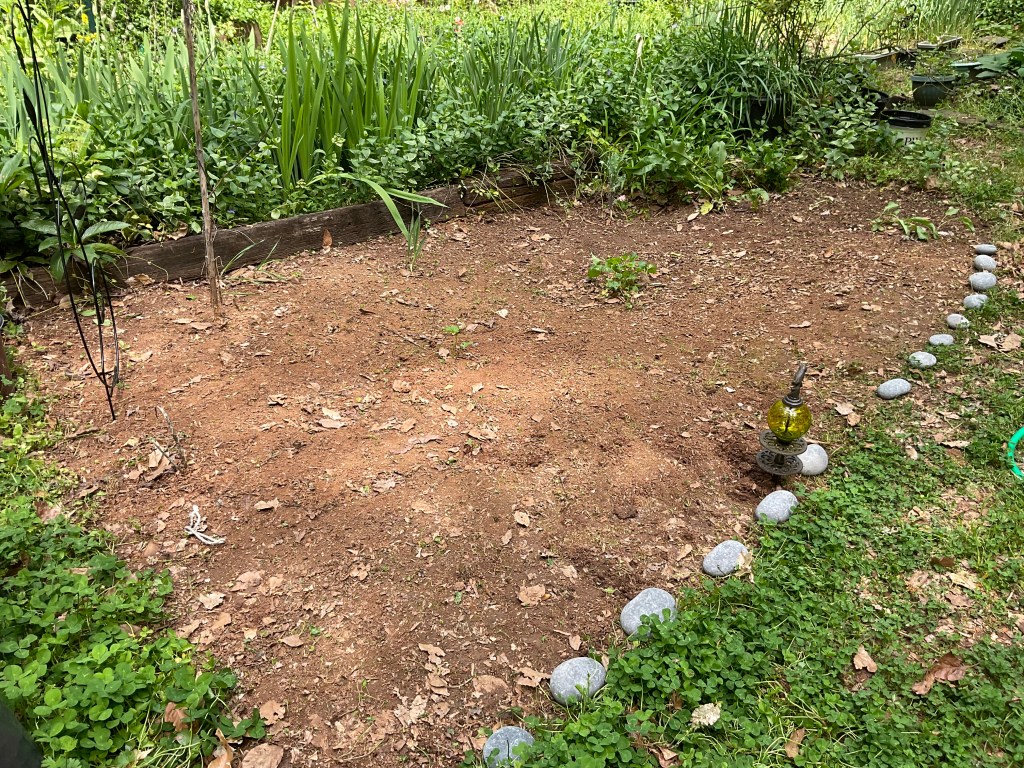
At the garden center, I was enthralled with the deep red, tropical Mandevillas and several colors of hibiscus, but I reminded myself that I already had those plants—I just need to get them outside in the sun, and fertilize them. The selection was huge, but other than a couple of plants for a large pot, I brought home non-living things for my flower garden—stones, a lyrical metal trellis shaped like leafy vines, and a colorful “hose guard” with a yellow green glass globe topped by an iron(?) songbird.

After being without a place to settle in and call home for a while, it’s become important to me to have more substance to my garden, starting with outlining my flower bed with “X-tra Large Beach Pebbles,” the size of a large fist. I realized that lining gardens with stones has spelled home to me since I was a young Girl Scout making a platform tent, “home,” for the weekend. Today, I had almost enough of the heavy, but not too heavy stones. More to come.

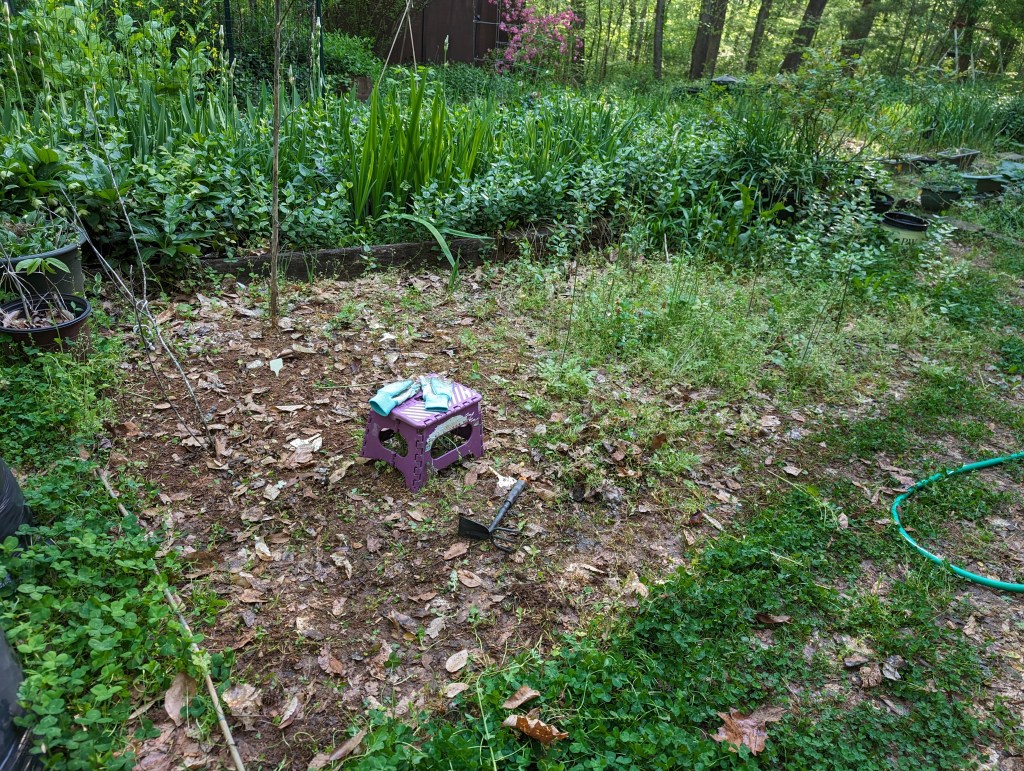
But first, the weeds had to go. What is a weed? Anything that impedes the growth of the cultivated—though we do leave a LOT of (tiny) wildflowers on the property. Thankfully, the morning was cool today so I got a lot done before the temperature heated. However, it was hot, sneezy work that ached my back, legs and feet, but it felt good get the flower bed ready for its next step—soil testing and amending. By the time I get that done—and clear my vegetable patch, there should be no more frosts to threaten plants and seeds.

I even ordered some special, unusual seeds online since the ones in all the stores didn’t do so well last year (the one company must have a monopoly). Special though they are, they didn’t cost any more than the everyday brand. This year, I chose a lot of deep pink flowers. I look forward to showing you what I got.

What are you planting this year?

It’s Time! De-stressing With Gardening

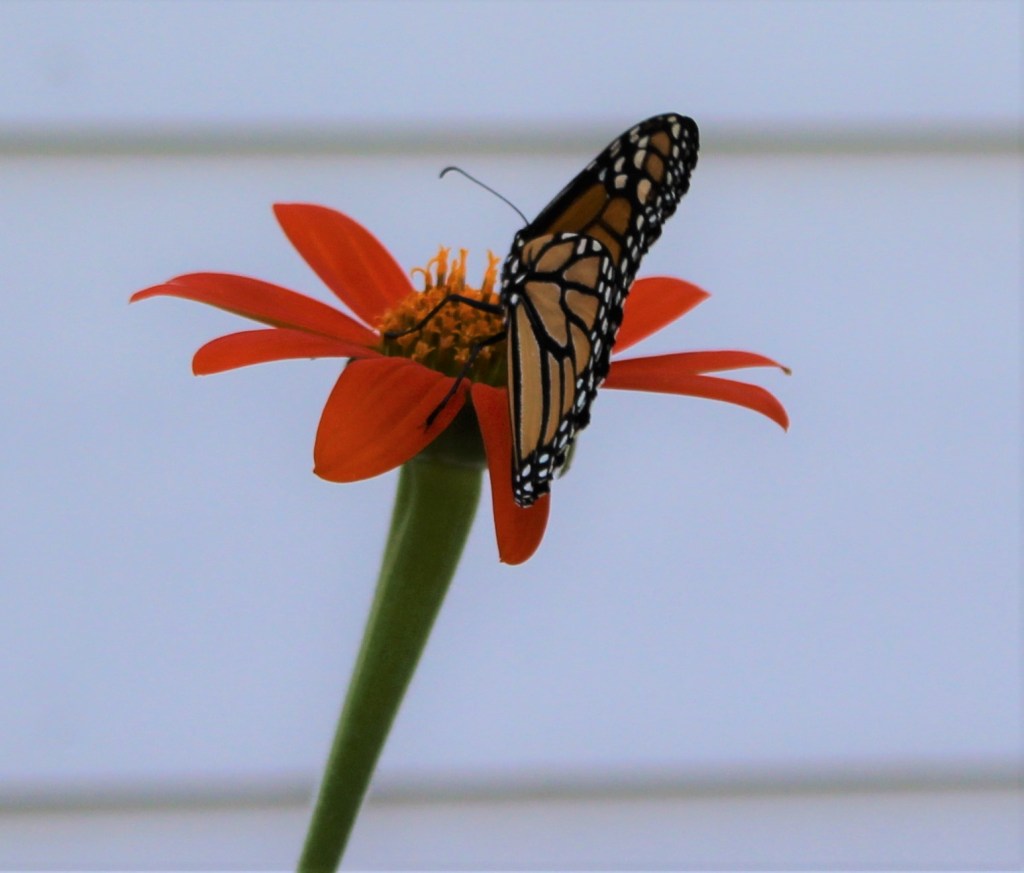
God has done it again! I renewed my prayer late last summer, for him to send a monarch butterfly to my garden—my favorite for its beautiful orange color, and one that I missed while we lived in England. One day soon after I’d prayed, as I sat on our porch in the Carolinas reading, movement caught my eye. There it was, the monarch butterfly I’d longed for sitting on my tall tithonia, fanning its wings—sent by The Monarch over all, Jesus. I gasped in awe, then crept as close as I dared. I carefully turned to go inside for my camera. Would it wait? Inside, I hurriedly fumbled for my camera.

Monarch Butterfly on Tithonia Flower

Back outside, I discovered that the monarch had waited patiently, perched on my tithonia, enjoying its nectar. I watched for a long time, taking lots of pictures of orange on orange, enjoying its magnificence and feeling affirmed. But finally, I got too close; it flew high in the sky, above the second story, above the chimneys and moved on to its next assignment.

Just one. One monarch butterfly sent by God as a reminder that he hears and sees me. He hears and sees you too.

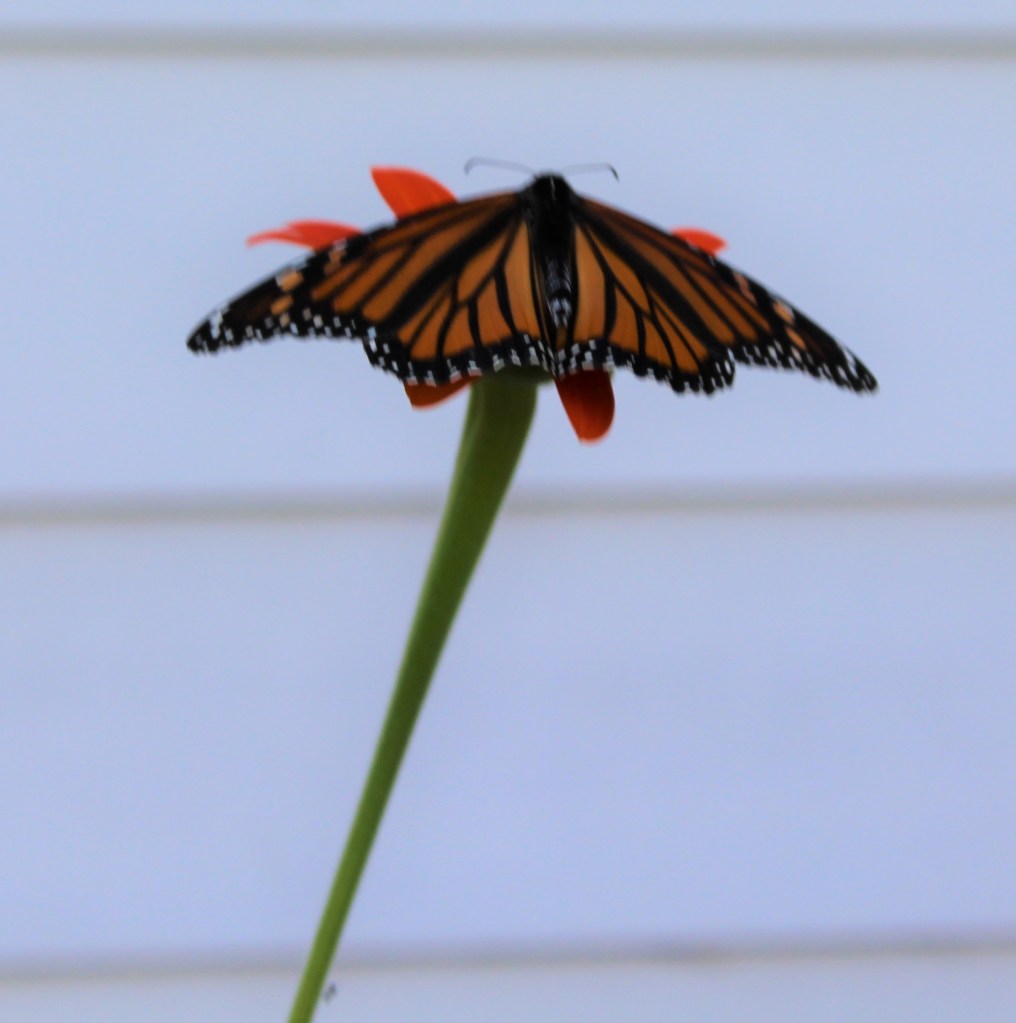
Wingspread of Monarch Butterfly on Tithonia Flower

Magnificent Monarch

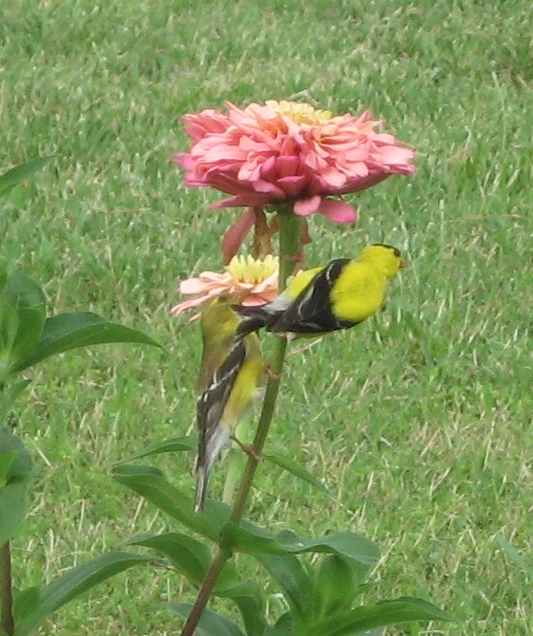
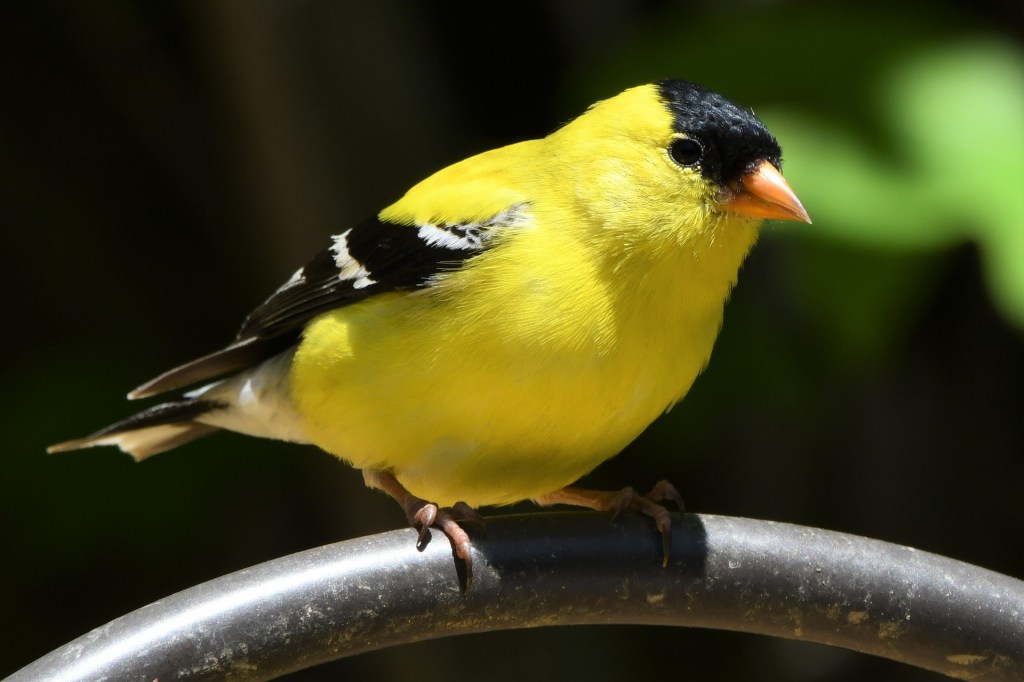
Everywhere we’ve lived for the last couple of decades, I’ve asked God to send some golden yellow, black-winged American goldfinches because they’re some of my favorite birds. Why? I love their audacious color! And he has. Goldfinches have bobbed on tall grasses behind my apartment balcony, dined on my fading zinnias in my wide-open former pasture honest to goodness in the dirt garden—no need for deadheading, they did it for me. When I told an older woman who loves birds, that I pray for goldfinches and Father sends them, she fussed at me, exclaiming, “If you’re going to pray them in, you’d better feed them!” Hmm, being somewhat nomadic, I couldn’t get a feeding program started since I couldn’t keep it going. What could I do? God would have to feed them. He did; the seeds of the zinnias and towering sunflowers I grew at the time suited the goldfinches just fine.

One of the American goldfinches God sent to my garden

I asked my heavenly Father to send them to my gardens, and he has—for my joy, simply because he loves me. But when we lived in England, I didn’t ask because American goldfinches don’t live there. My heart sank when I realized that I wouldn’t see them there; certainly, England’s goldfinches are beautiful and colorful, but not the cheeky yellow-colored ones that I love.

Now that I’m back in the US and have planted a garden here again, I’ve asked God again to send me a goldfinch—this time I added, “in a way that I can see it.” A couple of days later, as I looked out our window onto our porch, I saw a large streak of yellow zip by in that downward arcing way that low-flying birds fly. That’s how I knew it was a bird and not a butterfly. Was it a goldfinch? On my porch? My eyes couldn’t be sure, but my spirit leapt.

American Goldfinch
American Goldfinch Image by Miles Moody from Pixabay

A few days later as I rested among my pots of plants, I talked to Father about it again. “I think you sent me a goldfinch, as I asked, but it flew by so fast, I couldn’t see it. Would you send me one where I can get a good look at it?” The same day, as I sat in my art studio looking out the window grieving the news of the death of a family member, something flitted in the window box outside the window. Probably a hummingbird since our neighbor feeds them, I thought. I leaned in to see it better. But it wasn’t a hummingbird, it was a goldfinch! It lingered for a couple of minutes eating from my Victoria Blue salvia stalks in clear view!

The next day, I asked God to keep the goldfinch around my garden all season, then I clearly saw it flying off my porch that day, to a nearby large tree. It had stayed.

God had heard me and given me what I’d asked.  As Hagar in the wilderness proclaimed, “You are the God who sees me” (Genesis 16:13). Sending a particular bird in a particular way just for my joy seems a little thing but God does care about every little thing since he created all the heavens and the earth and every little thing in them. He cares about you.

What has little thing has God shown you to let you know he’s listening to you?

The Little Things

Goodbye and Hello–New Growth

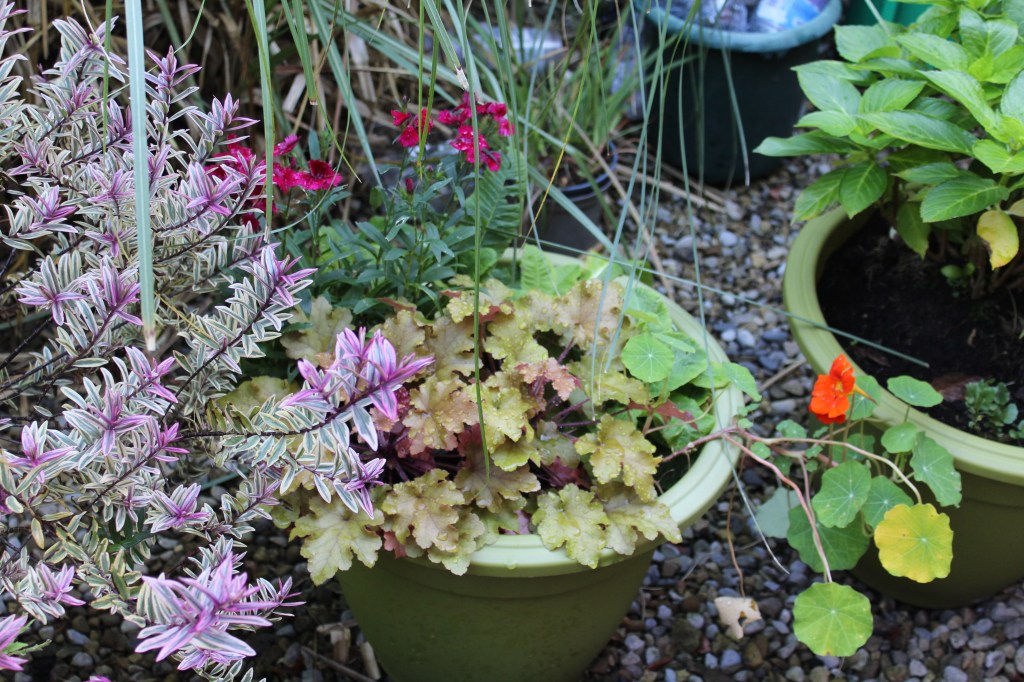
Hebe, heuchera–two new-to-me plants and two old favourite–nasturtium and dianthus aka Sweet William

As my dad always said, “Long time, no see,” (Am American idiom). It has been a while since I’ve written, my time consumed by packing up our English house, clearing it out and giving away my garden—pot by pot. It was a sad process, but I had to steel myself and do it (from a distance) since UK visa laws required us to leave the country too long to keep our house and my garden. But the recipients of my pots of perennials and bulbs are blessed. Many have promised to send pictures of new blooms and the plants’ progress, promised to pray for me as they enjoy my plants and pots. Don’t send any pictures if the plants die though, I insisted.

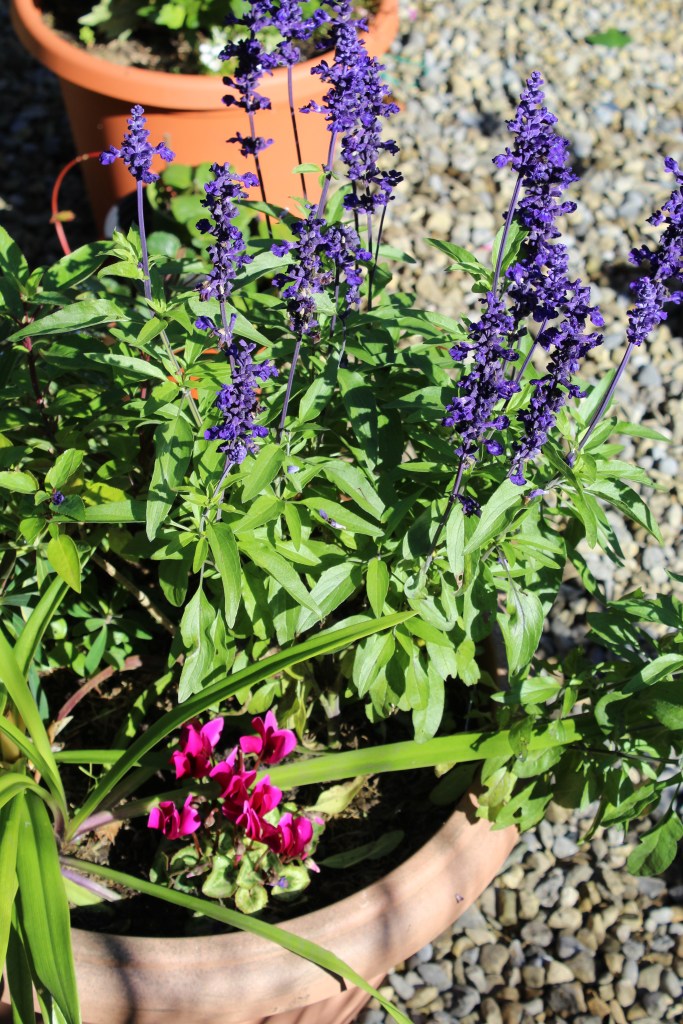
Blue Salvia and Deep Pink Cyclamen

My English garden helped keep me going during the long lockdowns during 2020 in the UK, and gave my husband and me  a place to receive visitors when they were allowed in our gardens. There’s something about seeing the plants’ progress—growth, new blooms, something satisfying. It was also great to have a place to get out of the house, to potter/putter about, to clear my mind and to pray. We had two outdoor dining set-ups in opposite ends of the garden where on many warm or almost warm days, we ate breakfast, lunch and dinner.

But now, we’ve landed back in the Southern Piedmont region of the United States without much place to garden. However, I have a bay window with good light in my art studio that I’m filling with orchids and other tropical plants. I’m also learning that there are many more plants that do well in low to almost no light indoors, which encourages me since other windows in my care receive very little light. Even orchids are often listed as “low light.”

I hope you’ll stick with me as I grow as many plants indoors as I can manage and negotiate other places to grow beauty in our rented space. I’ll also be highlighting aspects of my English garden that I so enjoyed.

In what ways has your garden-or public gardens, helped you through the pandemic?