There’s nothing like transformation—book and movie plots rely on it; if a character
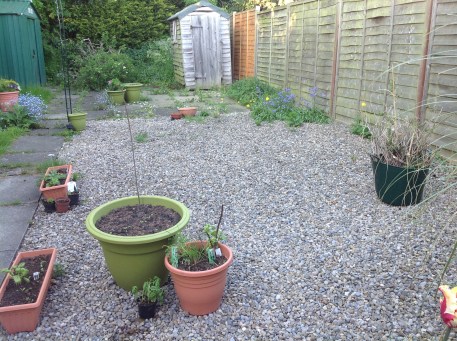
Before
doesn’t change there’s no “plot.” I love TV shows and magazine articles showing “before” and “after” scenes of people, houses and my current favourite—gardens. Transformations give us hope that things don’t have to stay a mess; why leave things that way when they can be made better?
Charlie and “the boys” on British TV’s Garden Rescue have encouraged and inspired me to do something with our back garden consisting of a long strip of grass on one side and gravel down the other. “Patios” top either end with a footpath down the middle. It was the proverbial “empty canvas” except for the massive pampas grass that I’ve always said I’d never have, and countless little abandoned toys and bits of plastic and netting left by previous tenants. Since we’re renting and on a visa, I didn’t want to invest a lot of money but I wanted beauty.
The estate agents and the landlord gave me permission to dig up the grass for a vegetable garden but with hesitation. “I guess the grass would grow back,” the landlord surmised. Most definitely. Though I ordered a shiny new shovel delivered, in the end, I decided that pots would be enough since my back didn’t like the idea of digging.
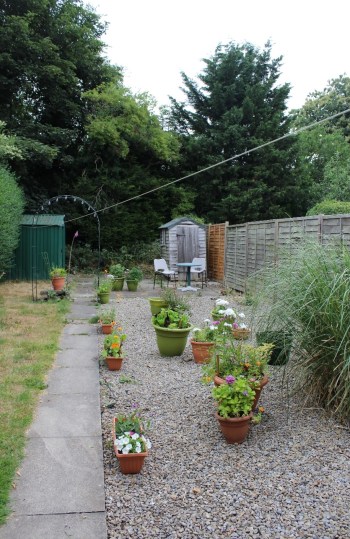
Last year
Last year I ordered and filled some plastic pots with compost, flowers and vegetables, arranging them on the gravel, as best I could–they were heavy, in a sort of river flow. This year, I brought in more pots, compost and plants, refining the path.
The hardscaping of the Garden Rescuers’ designs inspired me to consider some flat stones to make a proper path. In my last garden—in the US, I had discovered enough flat stones around the property to lay a path. My husband and I had bought and filled the car boot with extra stones from a local farmers market. Since we don’t have a car in England, we couldn’t haul any in but I wondered if there might be stones here in the garden? Yes. They were buried in the dirt or overgrown with ivy; it felt like a treasure hunt. Were there more? I needed a few more. Yes, just enough. I unearthed the stones and dragged them one by one to the gravel, pushing gravel aside to nestle each one in. I couldn’t dig beds for them since the gravel has a liner but for the most part they stay in place.

This Year
I hear a lot these days about how garden paths require a person to slow down and enjoy the garden. I walk the cement path when I’m in a hurry but take every opportunity to meander down my stone path.
Thankfully, the old three-sided shed that looked like an old time American latrine (all it needed to complete the look was a crescent cut in the door) has been torn down and removed, opening up new space.
Do not conform to the pattern of this world, but be transformed by the renewing of your mind. Then you will be able to test and approve what God’s will is—his good, pleasing and perfect will. Romans 12:2


 ith fragrant flowers. A city we lived in the US has streets lined with trees billowing with faintly pink cherry blossoms each spring.
 systematically chewed in curves, and stripped stalks, all signs of the hidden army that attacks my hard to get plants. It’s not like they have to go hungry—what about the wildflowers I allow to provide for the wildlife? What about the weeds? Ah but they are connoisseurs and prefer my tender petunias and delphiniums.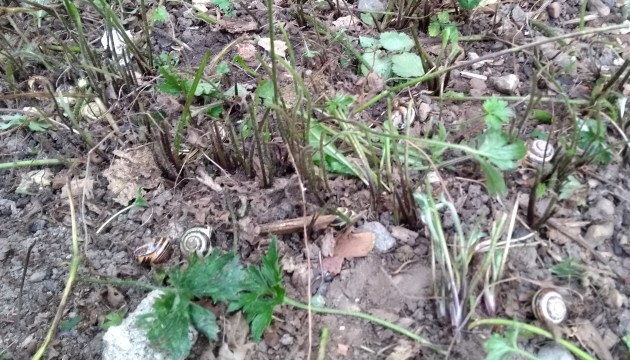
 Another and another proved too tough to eat so I freed the little green orbs from their leathery jackets making a very small serving for all the effort to grow and cook them. Friends hint that I must be mistaken and have instead grown regular peas. I checked the plants again and found that even the tiniest, newest pods already have round peas in them. In fact, the package says “mangetout, harvest: May thru Aug,” so not only are they the kind of peas to “eat it all,” but I’m well within the harvest time. I don’t think I’ll be planting those again. But then, I always say that one of the great things about gardening is that if something doesn’t work, you can throw it out and start again.
 again some other day!” After several days of all-day rain here in Yorkshire that keeps temperatures at an almost winter, I’ve had enough rain for now. It’s common for people to pray for rain but less so to pray for it to stop. That’s what I’m doing, praying for it to stop but only for a couple of days. But maybe we need to store it up for when it’s dry, one might think. Last summer certainly was dry—sunny, with almost no rain; it was lovely for outside activities but not good for the garden. My husband and I had to form our own “bucket brigade” to water the containers, even the beds, since we don’t have an outdoor hose bib. Yes rain is good, needed. And yes, it is England. However, the weather watchers warn Yorkshire of flooding—the ground and the waterways apparently can’t hold much more. Nor can the garden. The soil is getting waterlogged.
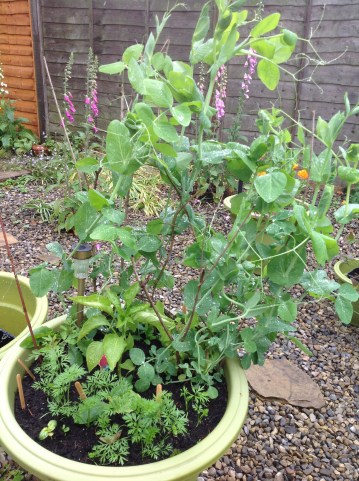 I keep reading that we should save rainwater in the garden for dry times but by the time the ground and the soil in my pots dries out enough to need more, the rainwater in my bucket (pictured above—yes, I poured rainwater from other parts of the garden into it) will have diminished through evaporation. I suppose a rain butt (I’d never heard of one before I came to UK) would minimize evaporation but as a sojourner here, I’m reluctant to invest in the huge things.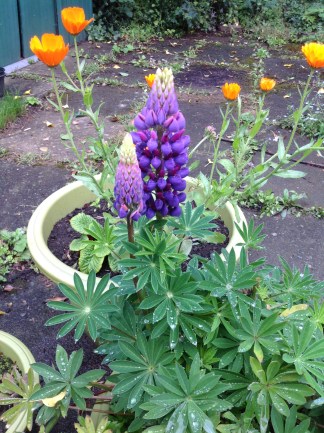
 burgundy veins. I’ve seen and grown a lot of petunias over the years, loving them for their bright colours, resiliency and heady fragrance but I’d never seen any like these. I knew I “had” to have one. It’s still going strong several weeks later with little tending. But I’ve just discovered, as I ventured out into the rainy garden to visit it, slugs and/or snails like it too though I couldn’t find any at the scene.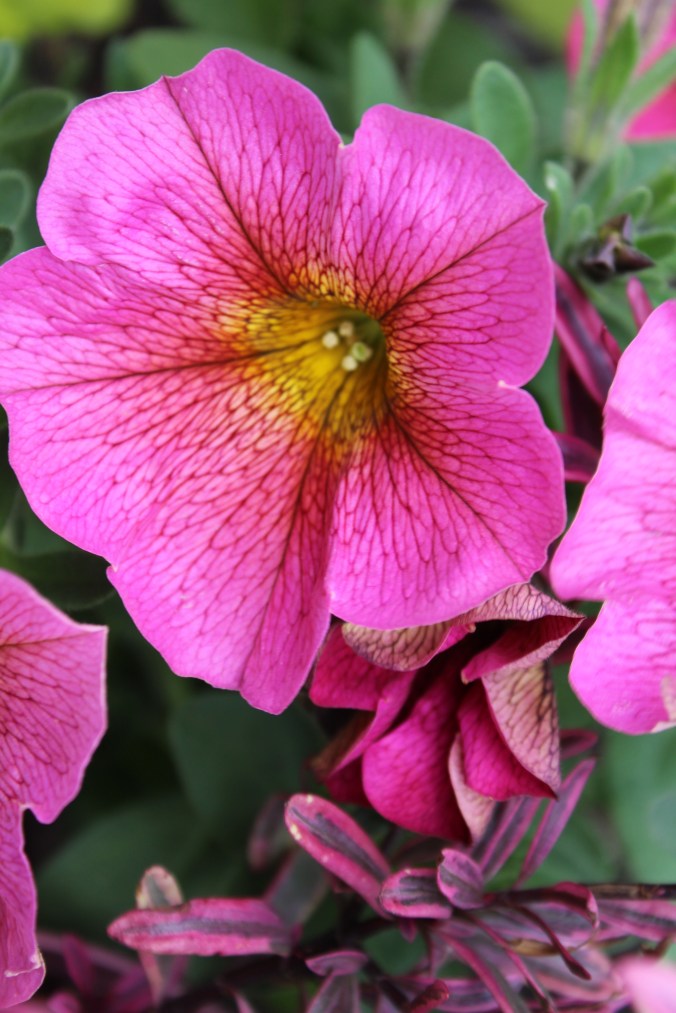
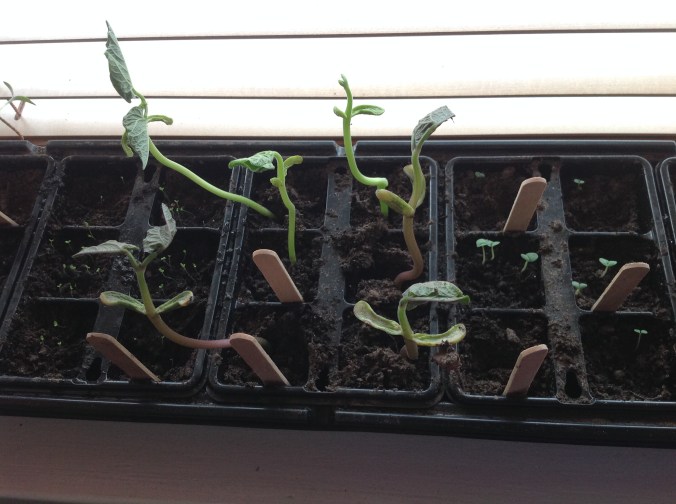 But then I was away for three days and my husband dutifully misted and turned them—mostly. But he’s not a plantsman and many of them withered.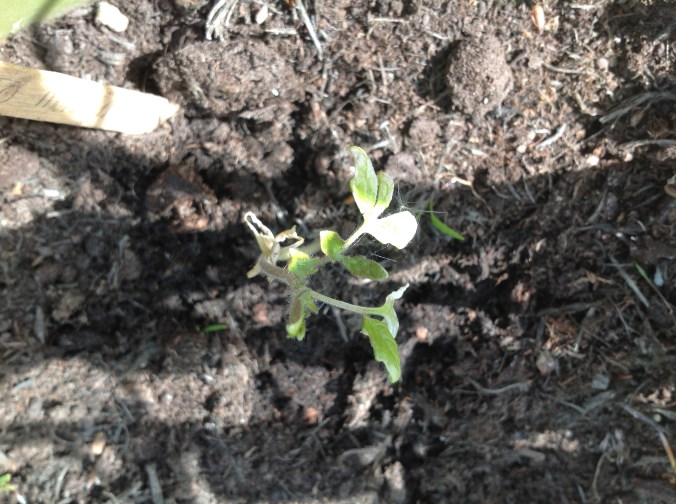
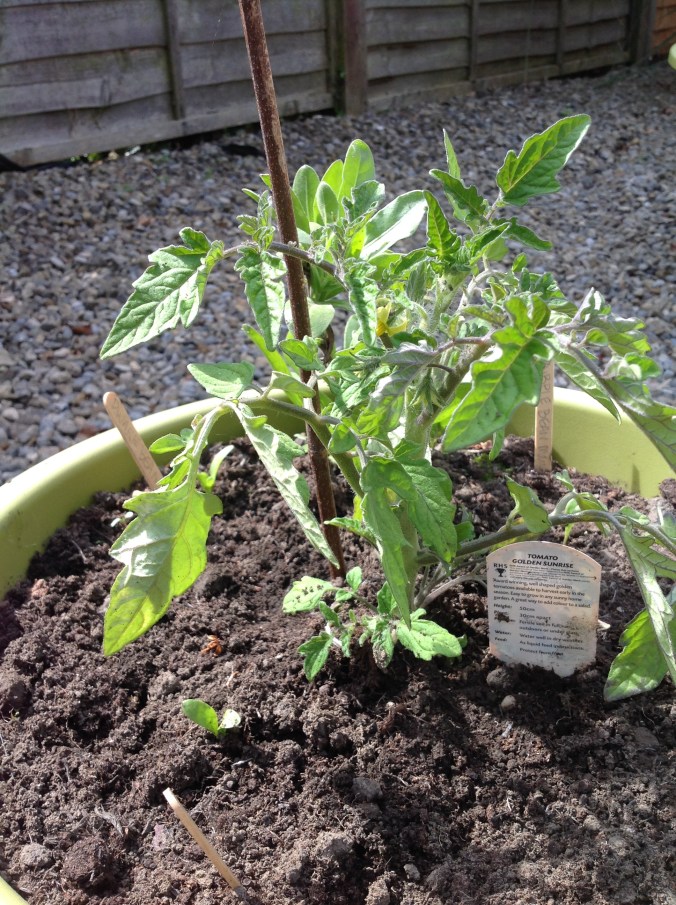
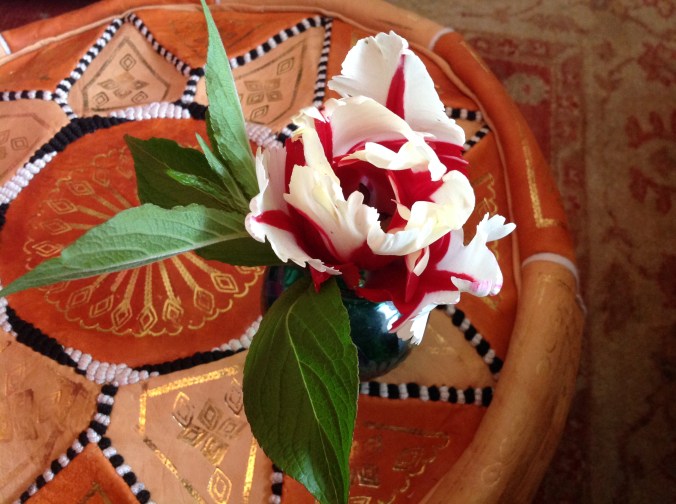
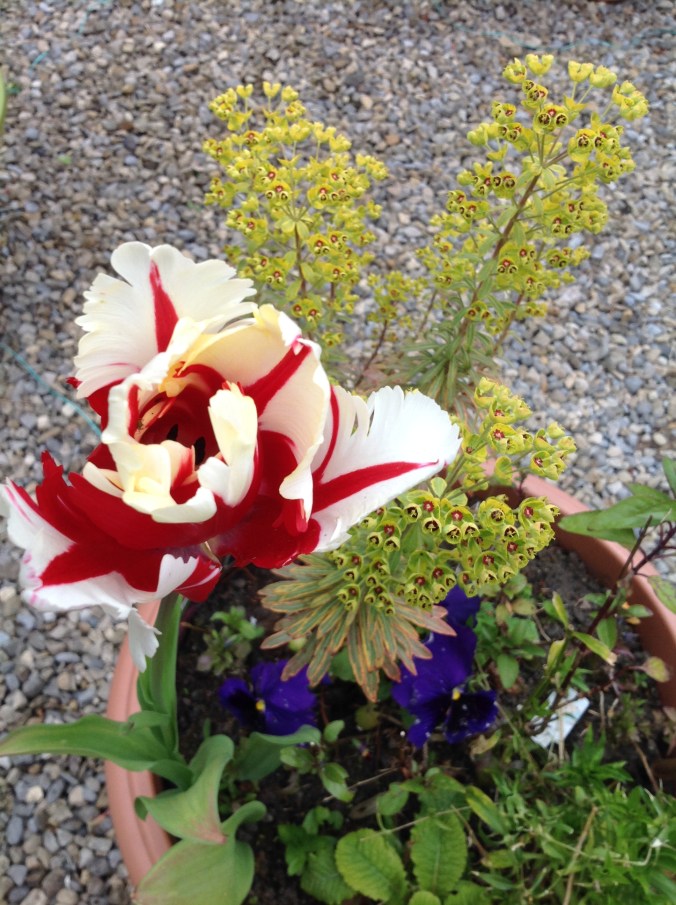 Though my lovely red and yellow parrot tulip had faded to red and white, I still enjoyed it. I was shocked to discover it one day, lying on the ground decapitated. A long thread of tulip stem attached, along with a memory of last year’s garden told the story. A snail or slug had feasted on the stem and the flower was collateral damage. But not for long! When life chops your tulip stem short, put it in a vase.
 I later donned my garden gloves and felt along the underside of the pot rim. Aha! There was the culprit—a big fat yellow shelled snail. Banished to the wild area of our garden where it could eat whatever it wanted. Manufacturers of flowerpots should catch on to this and create rimless pots, removing hiding places for plant marauders.
 A Leafy Journal