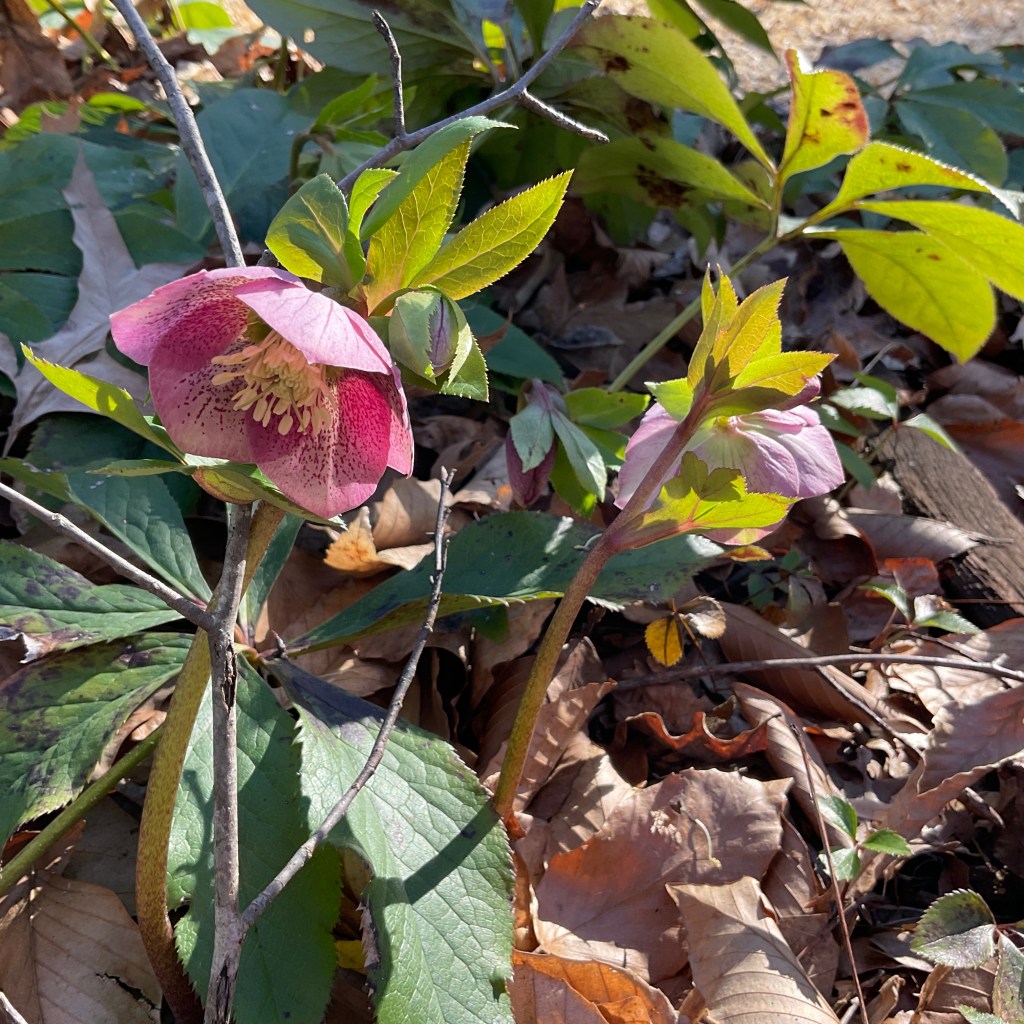
It’s winter here in the Southern Piedmont though the 65 degrees today deny it; the landscape is still grey, brown and tan. Experience, and the calendar, give me hope though—spring is coming! The first harbinger is our Lenten roses. They are blooming true to their name since Lent begins tomorrow. Though easily overlooked since they hang their pink or white (even almost red) heads down, Hellebores are beautiful.
They multiply readily with lots of large palmate leaves that stay evergreen—a bonus unless you want them to share space. They love shade that most other plants can’t tolerate, so that probably won’t be a problem. Lenten roses take practically no care so they’re easy to live with.
A woodpecker hunts for his lunch in a dead tree in the surrounding woods. The sky is blue again with a few white clouds cooling the warmer weather.
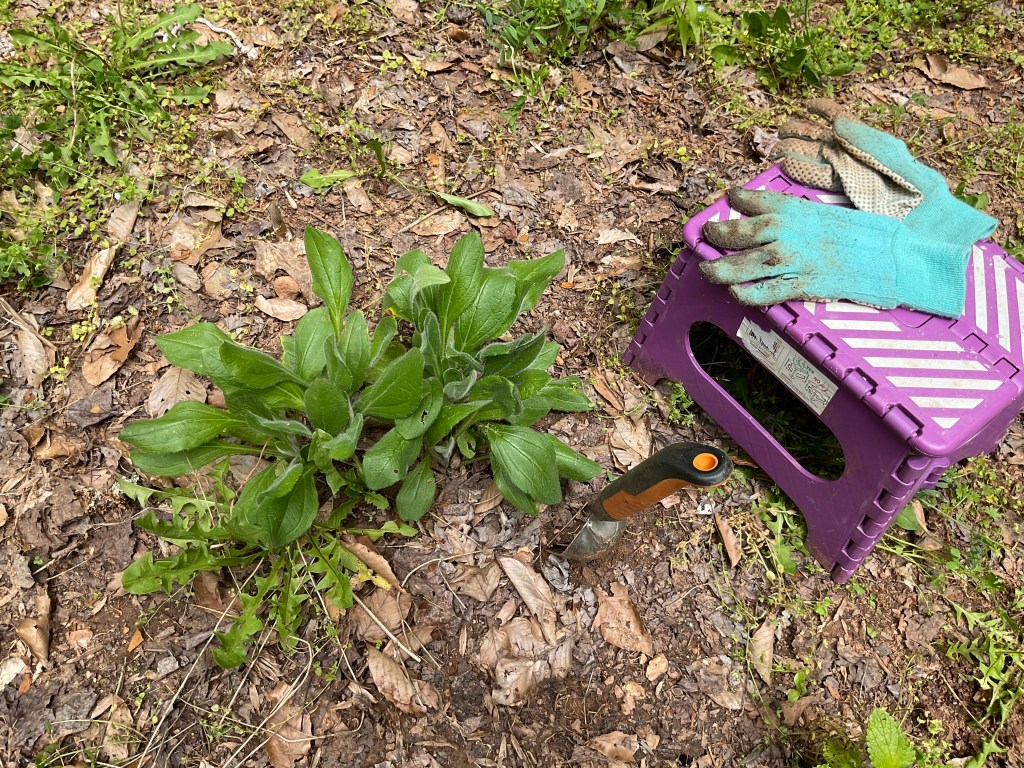
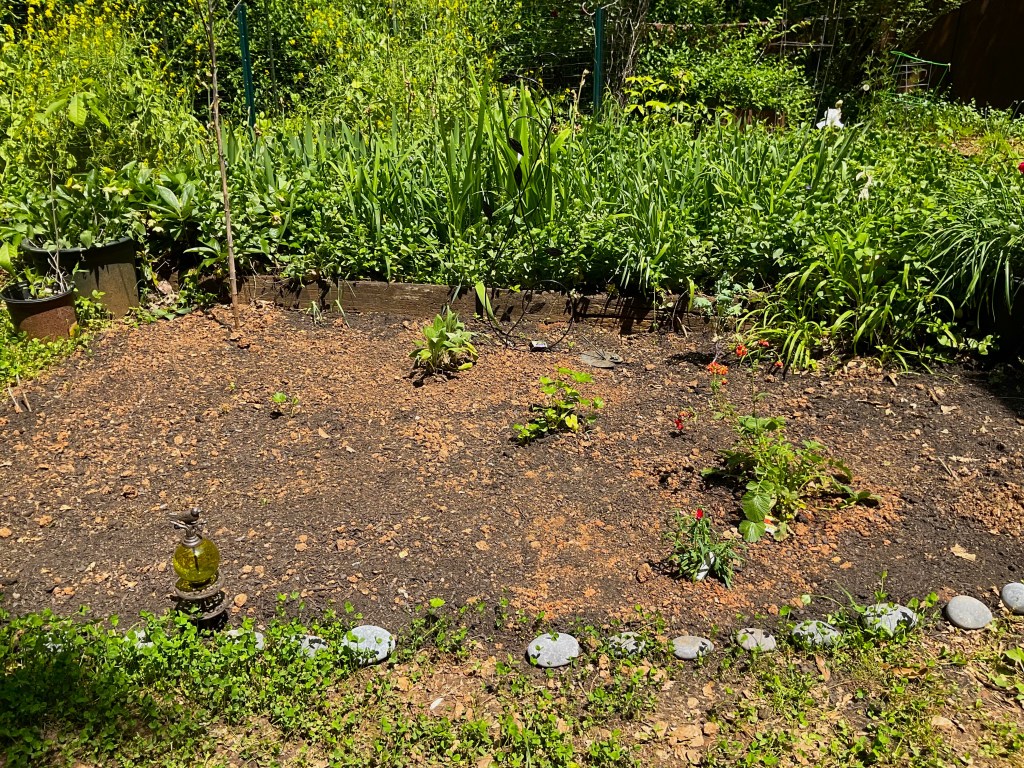
Today, I started my gardening with digging up my rudbeckia/black-eyed Susan from my still weedy vegetable plot. I’d bought it in a pot as a fundraiser at the previous place we lived; though I had no garden there, I looked forward to our next home, which would surely have a garden. Actually it was a non-negotiable for me to have a garden in our next home. Gardening is necessary for my well-being. (The NHS of the UK (National Health Service)increasingly prescribes gardening for good mental health.)
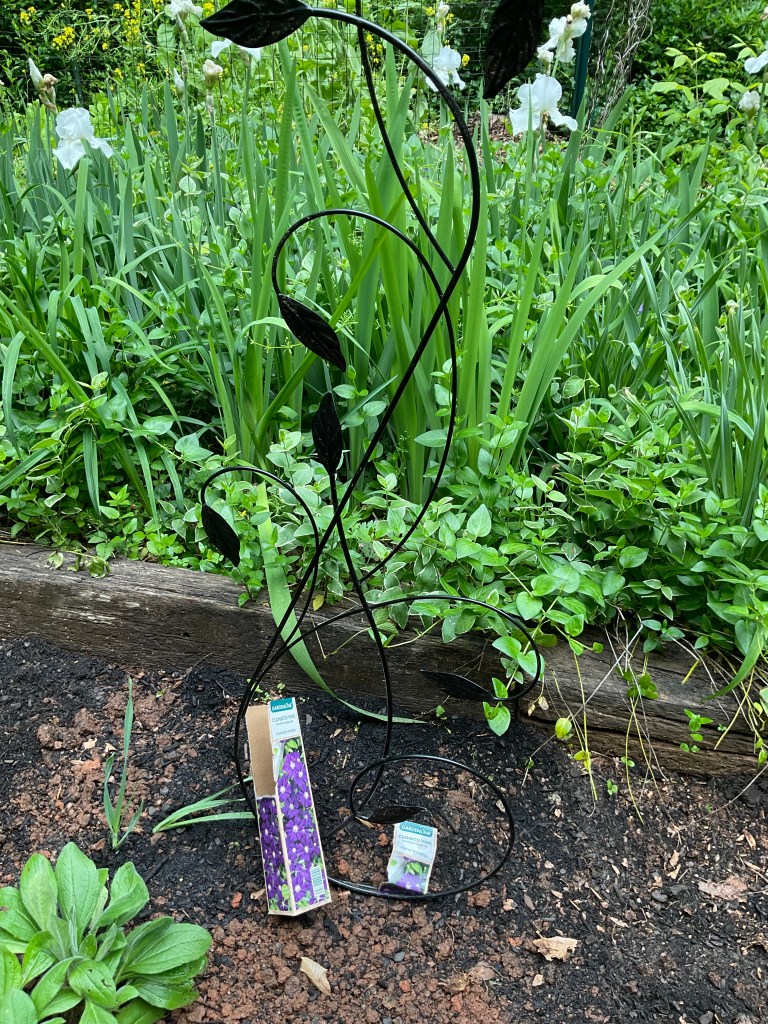
As a young girl, I loved to answer ads for garden catalogs in the back of my mother’s magazines. I’d tape my precious dime to an index card, slide it into a small white envelope, address it to the seed company then ask my mother for a stamp. A clothes pin held my request to an arm of our mailbox for the postman to pick up (yes, our postal worker was a man). I’d eagerly check the mailbox several times every day until the wondrous day my picture book, aka seed catalog, of colorful flowers finally arrived. As I pored over the pages of “dahlias the size of a dinner plate!” and other “exotic” flowers, one plant stood out. I’d never seen a clematis growing in hot, humid Texas but the purple-flowered vine captivated me. Recently, our landlady presented me with a gift of a purple-flowered clematis—my first. I hope I grow it well in the Southern Piedmont. I found a lyrical trellis of black wire and metal leaves, to support it when it does grow.
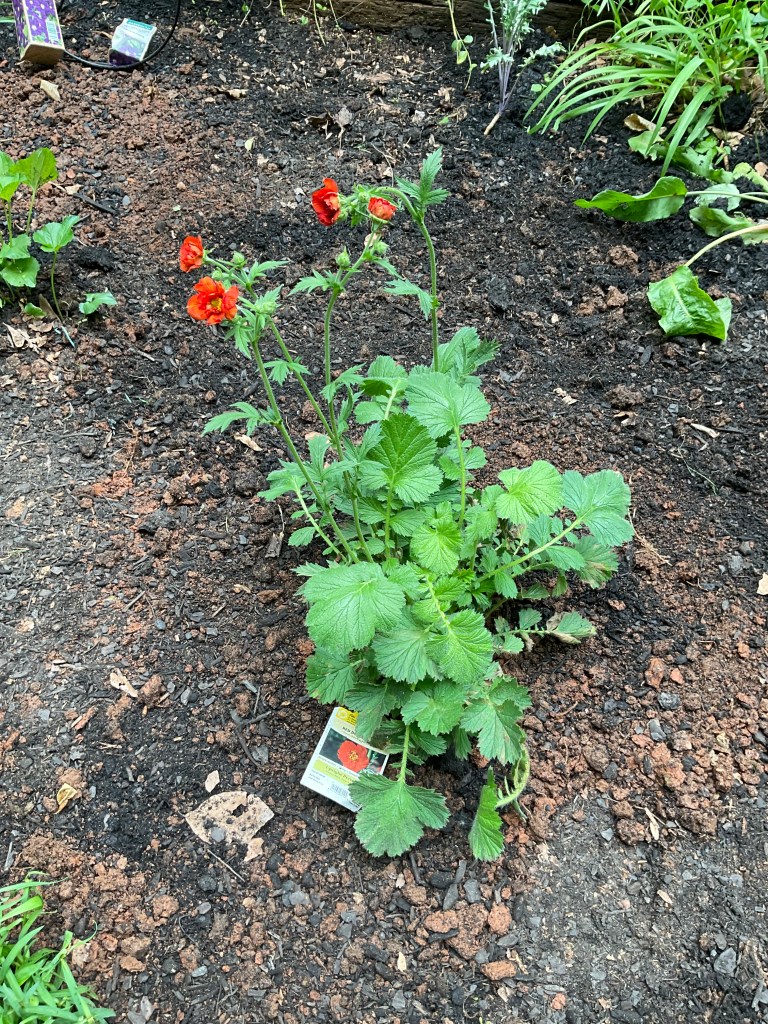
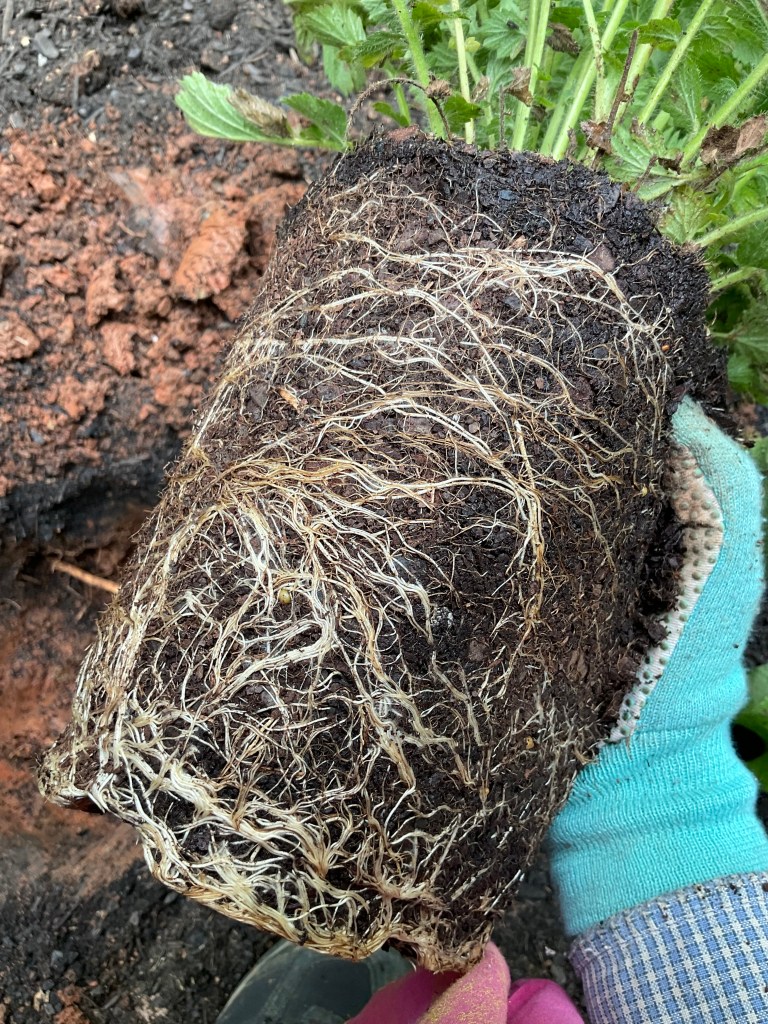
The other night, the BBC Gardener’s World TV show (I highly recommend it) had a feature on geums, reminding me of how much I enjoyed the orange-flowered perennial I grew in my garden in England (see older posts for the story of that garden). I came across a geum plant at the local big box garden center and of course, I needed to buy one. I have some flower seeds to plant but it’s good to have some already flowering plants to get the garden started.
I also learned on Gardener’s World that when sliding a plant out of its pot for transplanting, it’s good to run a finger over the bare roots to stimulate growth. This plant was definitely ready to be free of its pot and be planted in the ground.
Transplants have to be well watered. I’ve had to water the transplants more than I expected, even when it had rained; it takes a few days for them to get established.
Progress! There’s still a lot to be done, which is a good thing, but I have to remember that the zinnias, and tithonias I have planned, take up a lot of space.
Do you prefer to grow your flowers from plants or seeds? Or both? I’d love to hear from you in the comments below. Please feel free to share these posts with your gardening—and garden-loving, friends.
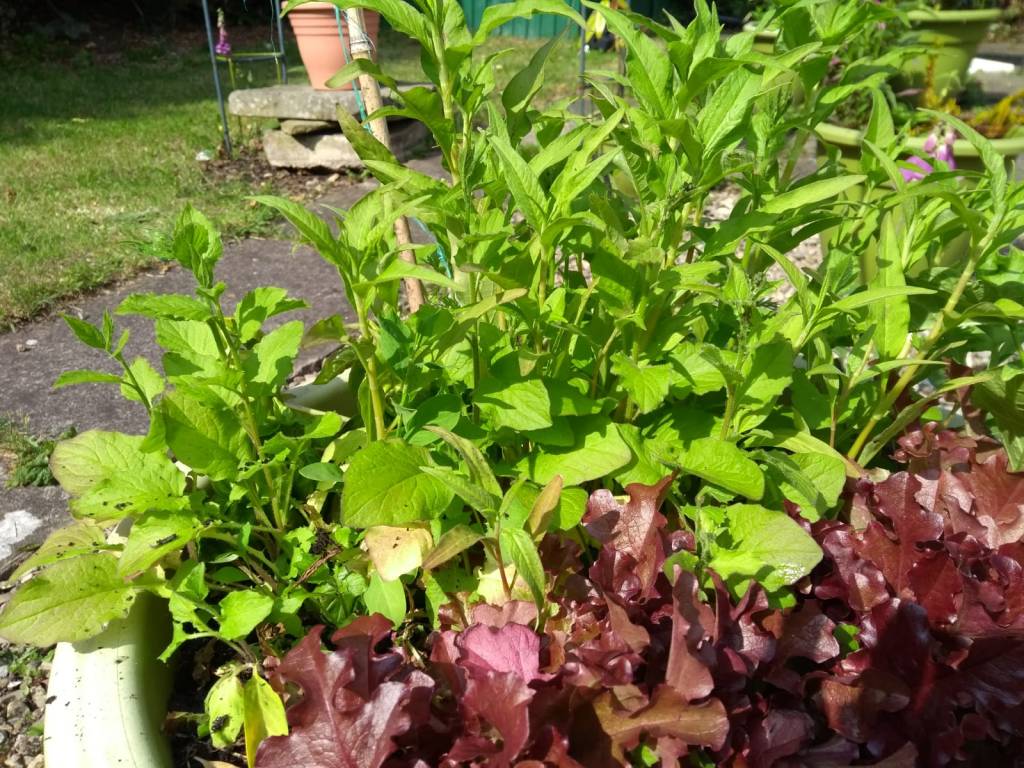
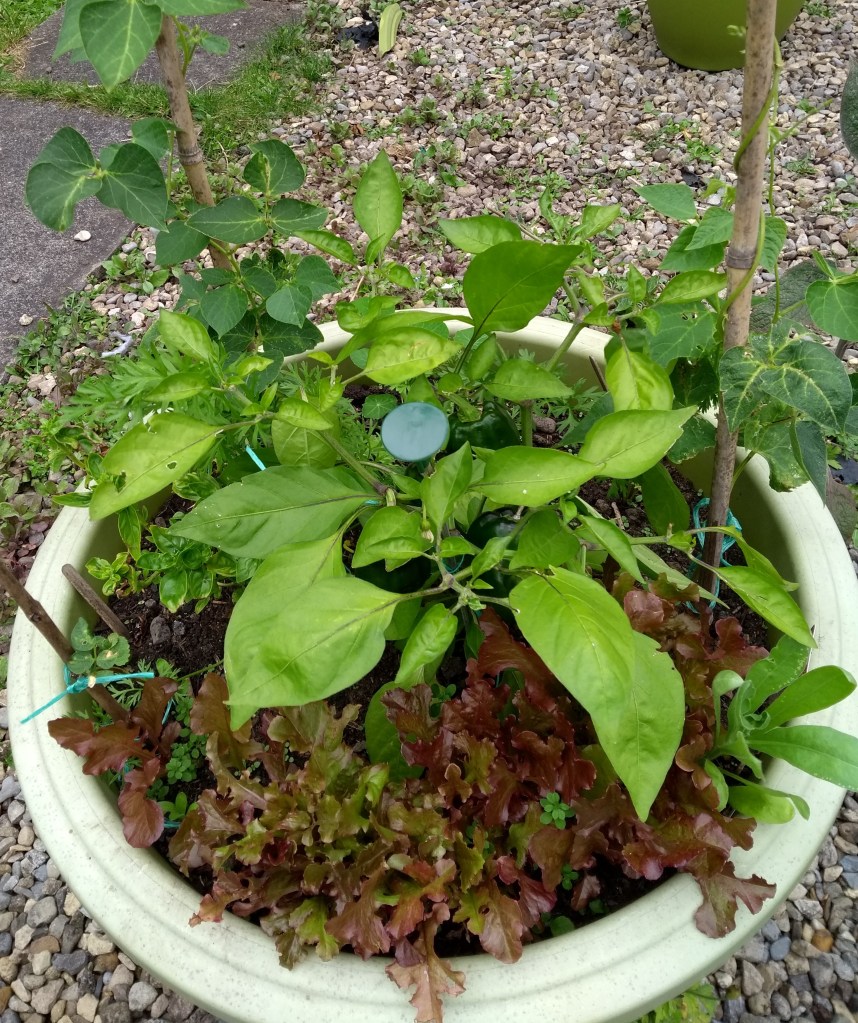
Early in the spring I filled one of my large pots with loads of tiny seeds from an upscale seed packet of “mixed lettuces.” They’d be quick growing and we could have some refreshing salads before it was time for other vegetable plants to take up residence. They did wonderfully well. Except that half of them looked nothing like lettuces. But what were they? I looked them up on the internet but the pictures I found looked nothing like what was in my garden—and growing fast! Were they a different kind of salad green? I wouldn’t mind; I even let a few dandelions grow in my pots for salad. But what if they’re not? What if they were there by accident? What if they were poisonous? I asked some friends; “Look on the internet.” Back at the beginning of the circle.
Not lettuce!
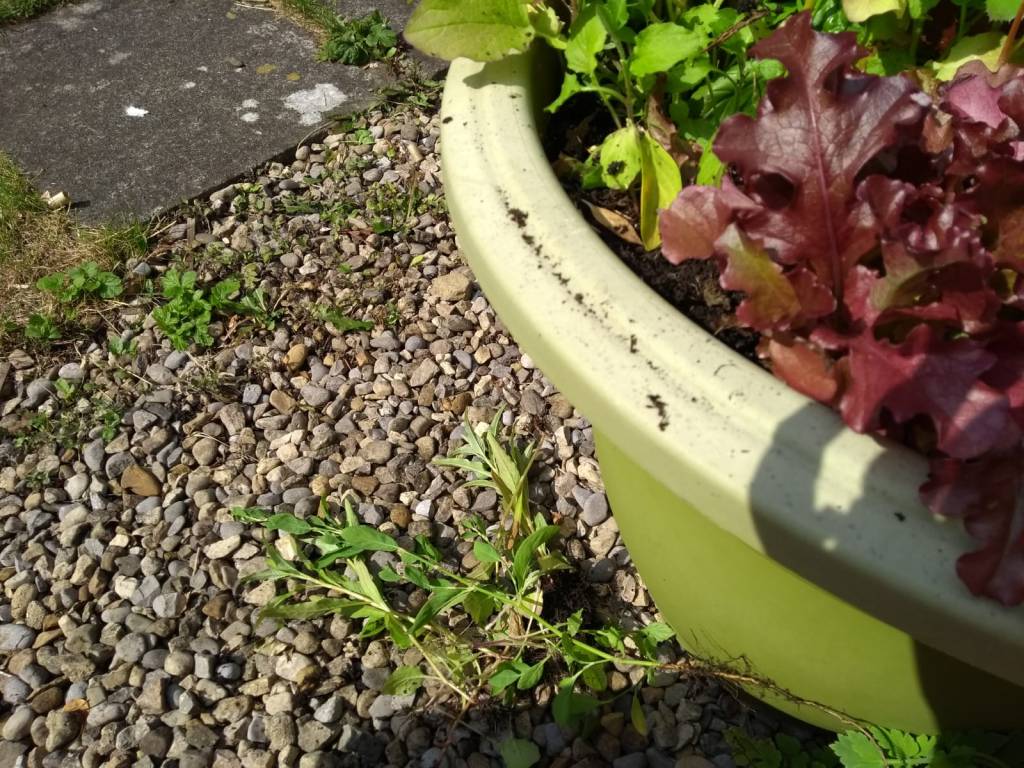
As the mystery plants grew larger and threatened to take over my newly vining beans, I prayed about what I should do. Then it came to me; the seed packet said “lettuces,” and these were not lettuces! If something other than what I planted was growing in my veg pot, it became obvious–since they were not lettuces, they did not belong. I couldn’t find out what they were, but I knew what they weren’t so out they came, making room for two bean plants and a large bell pepper plant.
Veg pot with room for bell peppers and runner beans
Later, I saw some plants just like the ones I had evicted in a nearby weeded area. I do allow wildflowers to grow—what some might call weeds, but not in my veg pots.
Jesus talked about weed seeds masquerading as a crop:
Jesus told them another parable: “The kingdom of heaven is like a man who sowed good seed in his field. But while everyone was sleeping, his enemy came and sowed weeds among the wheat, and went away. When the wheat sprouted and formed heads, then the weeds also appeared.“The owner’s servants came to him and said, ‘Sir, didn’t you sow good seed in your field? Where then did the weeds come from?’
‘An enemy did this,’” he replied.
Apparently the seed company also had an “enemy,” or blundered. Not everything that says it’s the real thing, is.
Spring? What’s that? During the especially windy, especially wet winter, there were times when it felt like spring would never come. But it did come, unhindered by viruses or governments, it returned right on time and beyond human control.
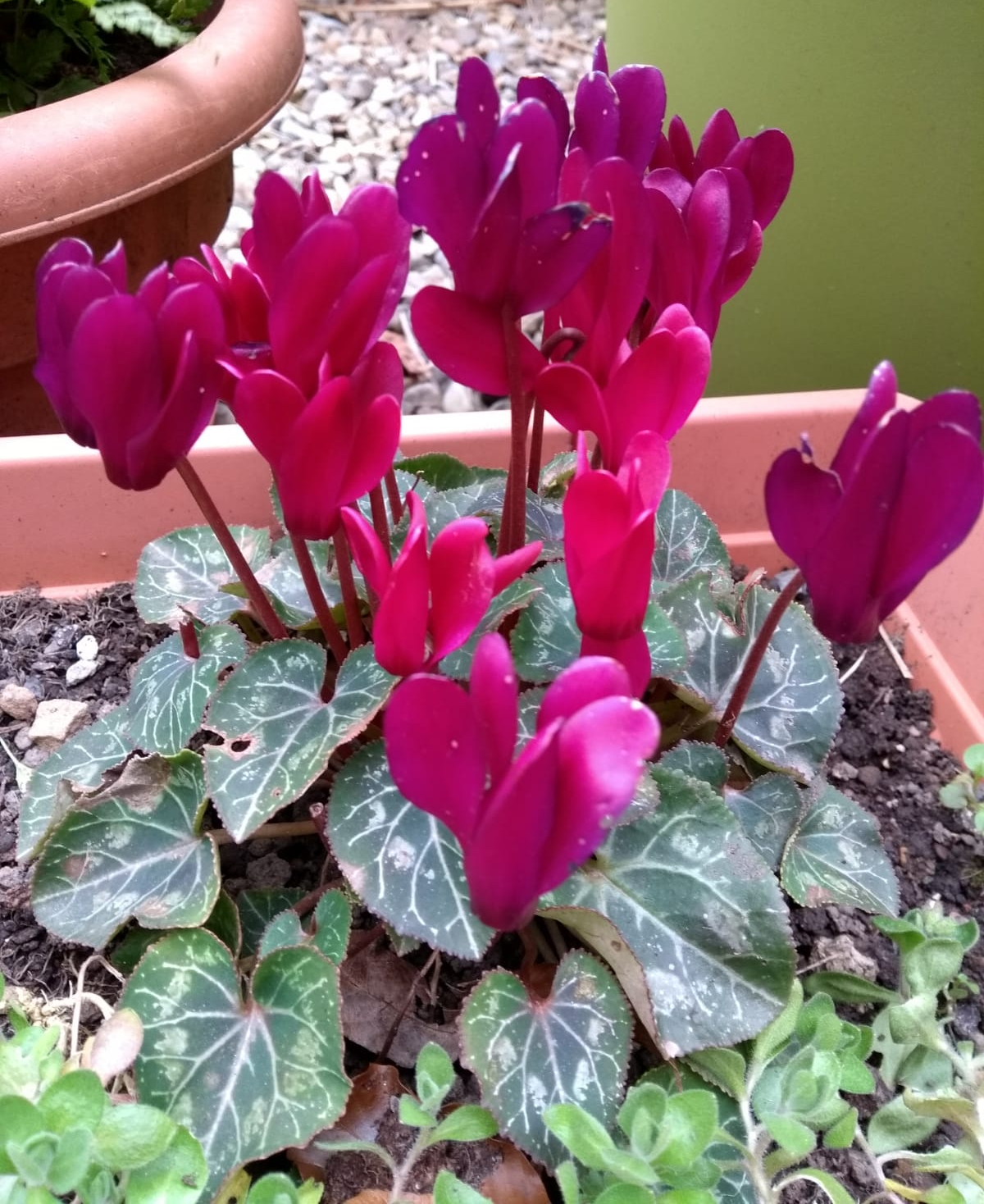
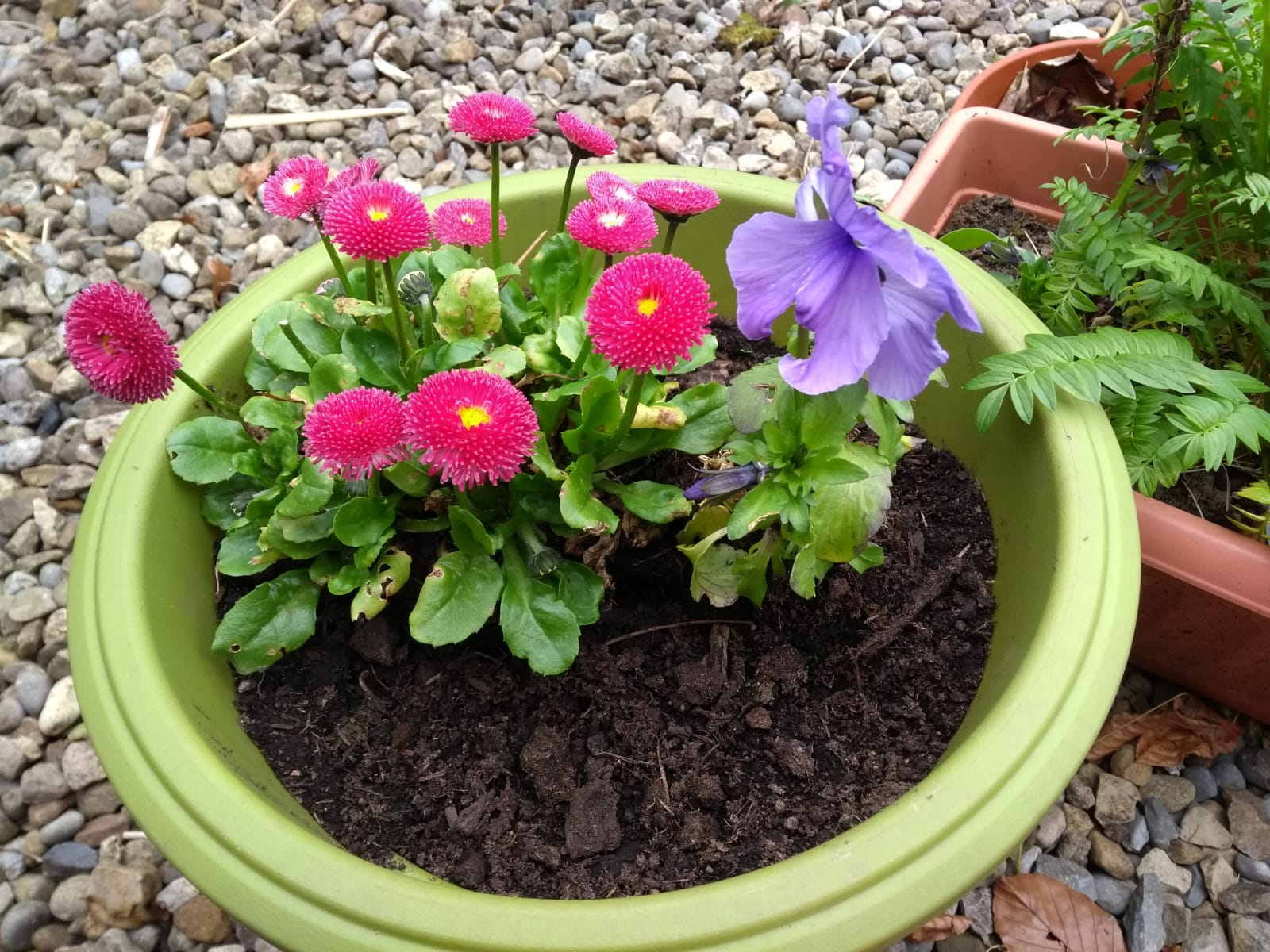
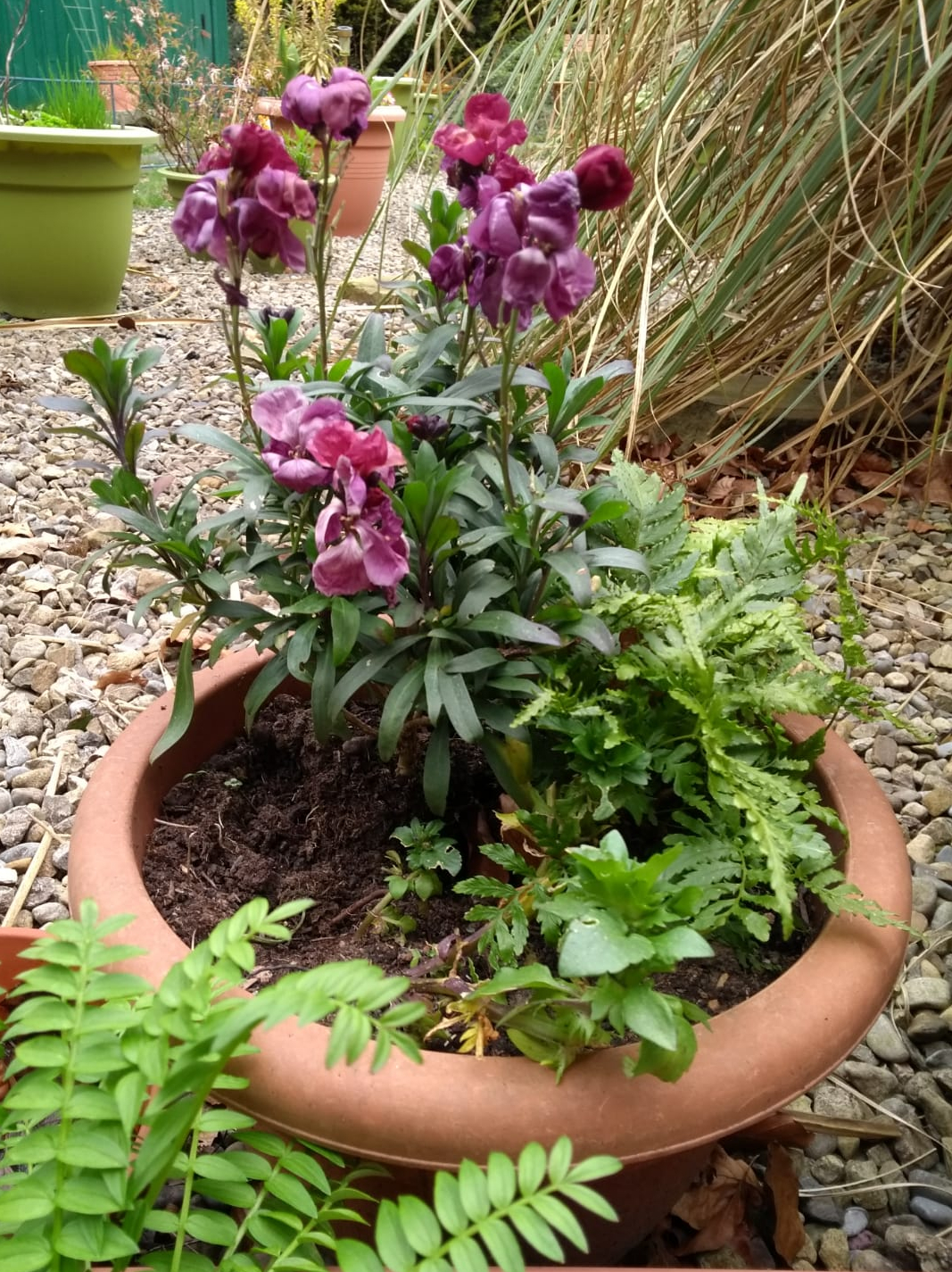
Thankfully, my autumn choices of flowering plants triumphantly braved the winter and heralded spring. The Bellis daisies and wallflowers flourished whilst most of the pansies simply persevered. To my amazement, the primroses eventually reemerged despite slimy slug demolition last summer. Some plants kept a few straggly blooms but these have emerged as my winter champions in West Yorkshire: cyclamens (in the southern US, we could only halfheartedly grow them as houseplants), which bloomed all autumn, winter and into spring; Bellis daisies–their “brushes” in various pinks, and wallflowers (undeserved metaphor for the shy and retiring) in multiple shades of mauve—all on the same flower; these were undeterred by hard freezes and day after day of 50 mph winds.
Cyclamen, one of my winter champion flowering plants
Bellis daisies and large pansy bloomed all winter
Mauve wallflowers–another of my winter champions
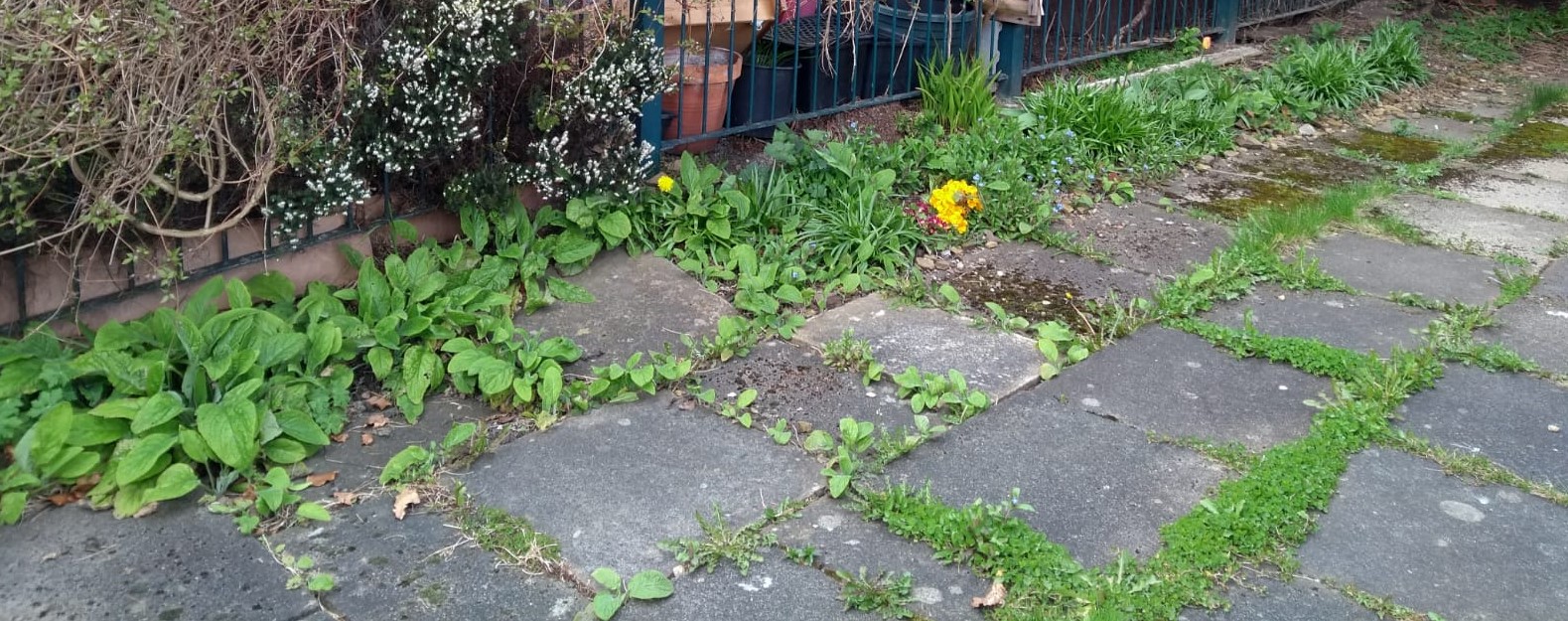
From late winter to the first hints of spring, to the casual eye my side border seemed only an overflow of weeds, but experience and hope told me that there would be much more.
My side border anticipating spring
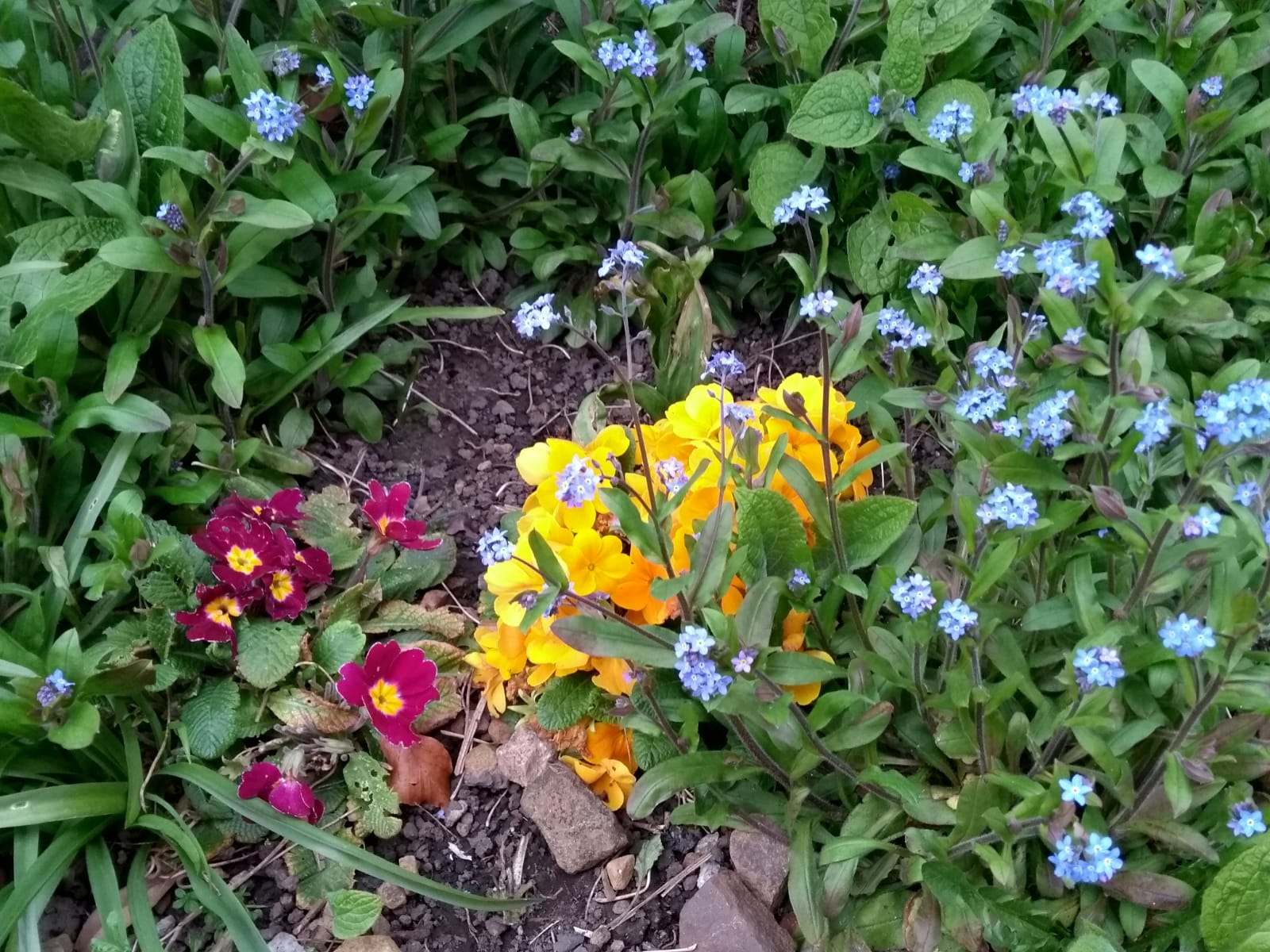
Primroses and forget-me-nots in side border
Fuchsia–“Purple Supernova” long-stemmed primrose and orange tulips in side border
Experience and hope, tell me that God will again intervene in this long season of uncertainty and instability, bringing joy, peace and healing, with resolution. Spring didn’t forget us. Nor has God.

 A Leafy Journal