A Colorful Visitor

I was on a mission. I looked out my window and spotted some white flowers at
the edge of my vegetable garden. Wow! What are those? Ah, the mini gardenias my
landlady said I could cut for indoors. I donned my knee boots (quicker than
lacing up shoes) and trod out purposefully, scissors in hand. Suddenly I
stopped, rubber-booted foot in mid-air; right in the path was this beautiful
creature—a turtle. I’m so glad I didn’t step on it! I was fascinated by its
golden symmetrical–and asymmetrical, markings that extend to its head. They’re
almost like ancient writing.

At first, it’s pointed mouth led me to believe it might be a snapper so I
kept my distance, but an internet search told me that it is instead, an Eastern
Box Turtle, unique in being able to completely close off its shell. A friend
tells me that they can nevertheless bite. It’s the State Reptile of North
Carolina. I had no idea there was such a thing; I’m relieved that they didn’t
choose a snake!

I also discovered that these turtles eat slugs and bugs, and other things
that aren’t welcome in the garden. However, the turtles apparently extract
their pay for such a service by eating fruits, and roots. We’re not real happy
about that part since bunnies–even a tiny one, have been eating our plants (my
neighbor and I garden side-by-side) down to the nubs. I know God’s creatures
have to eat but we live in a wood, so there’s plenty there for them.

Not to worry though, the turtle came, saw, and slowly wandered back into the
woods. It hadn’t been previously seen, and I haven’t seen it since. I count it
a privilege that I was there at just the right time to have seen it.

Have you had experience with Eastern Box Turtles—a close encounter, or as a
friend?

(I say a “friend”–one who visits, rather than a pet since in North Carolina it’s “unlawful to hunt or trap them…or to take from the wild, have in their possession” https://www.ncwildlife.org/species/eastern-box-turtle)
Goodbye and Hello–New Growth

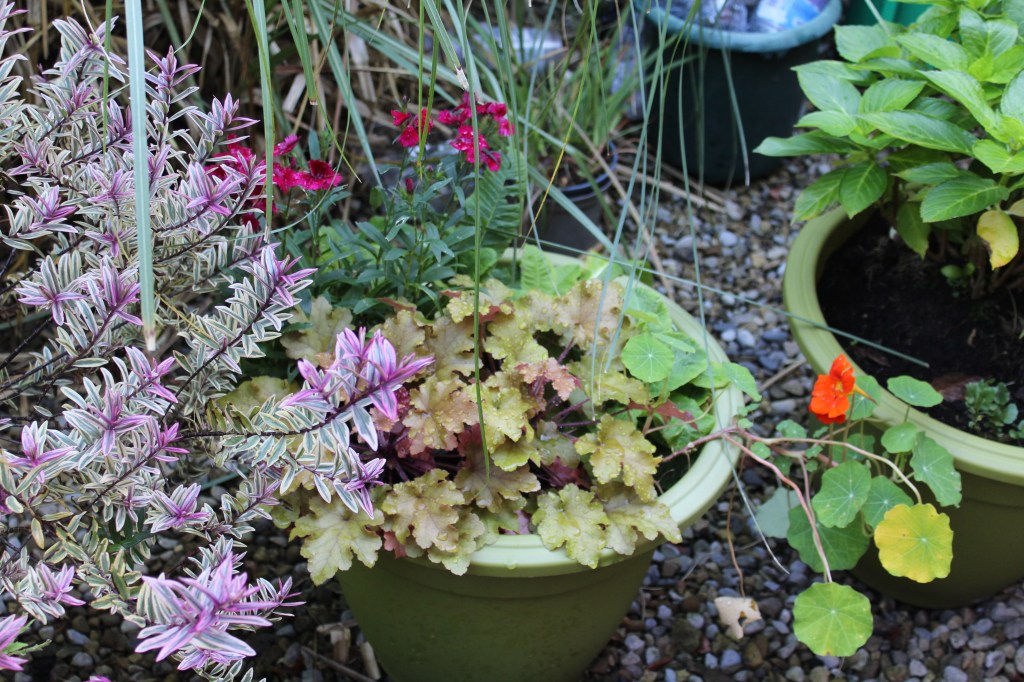
Hebe, heuchera–two new-to-me plants and two old favourite–nasturtium and dianthus aka Sweet William

As my dad always said, “Long time, no see,” (Am American idiom). It has been a while since I’ve written, my time consumed by packing up our English house, clearing it out and giving away my garden—pot by pot. It was a sad process, but I had to steel myself and do it (from a distance) since UK visa laws required us to leave the country too long to keep our house and my garden. But the recipients of my pots of perennials and bulbs are blessed. Many have promised to send pictures of new blooms and the plants’ progress, promised to pray for me as they enjoy my plants and pots. Don’t send any pictures if the plants die though, I insisted.

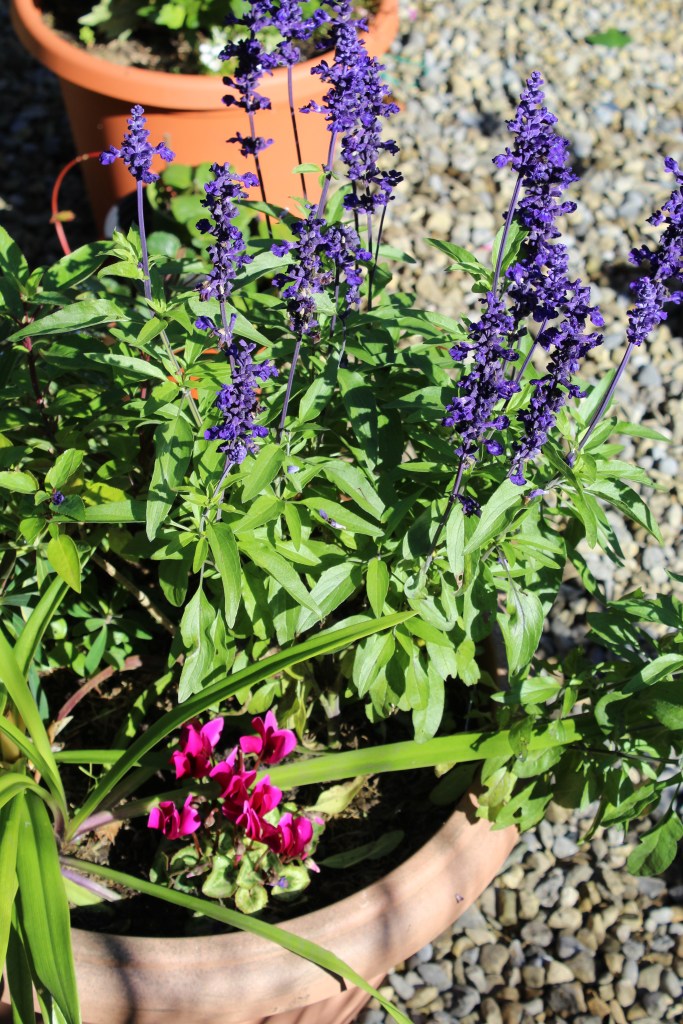
Blue Salvia and Deep Pink Cyclamen

My English garden helped keep me going during the long lockdowns during 2020 in the UK, and gave my husband and me  a place to receive visitors when they were allowed in our gardens. There’s something about seeing the plants’ progress—growth, new blooms, something satisfying. It was also great to have a place to get out of the house, to potter/putter about, to clear my mind and to pray. We had two outdoor dining set-ups in opposite ends of the garden where on many warm or almost warm days, we ate breakfast, lunch and dinner.

But now, we’ve landed back in the Southern Piedmont region of the United States without much place to garden. However, I have a bay window with good light in my art studio that I’m filling with orchids and other tropical plants. I’m also learning that there are many more plants that do well in low to almost no light indoors, which encourages me since other windows in my care receive very little light. Even orchids are often listed as “low light.”

I hope you’ll stick with me as I grow as many plants indoors as I can manage and negotiate other places to grow beauty in our rented space. I’ll also be highlighting aspects of my English garden that I so enjoyed.

In what ways has your garden-or public gardens, helped you through the pandemic?

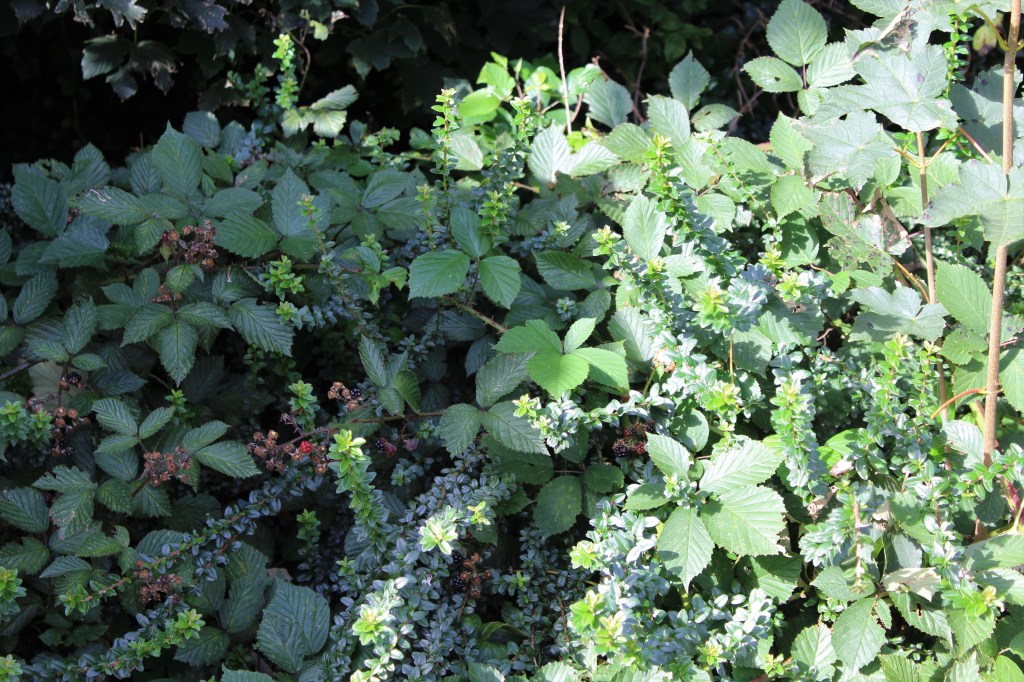
Bramble Berries

The end of our back garden grows wild; last year I cut back the brambles, but they only grew again. We enjoyed the berries they produced, so this year I let them sprawl. Most evenings, I pick the shiny ebony-coloured fruit, drop them into my little ceramic bowl, painted with green scroll-work, and feel a joy rising up in me. Soft, golden light or bluish grey cloudy. Breeze or wind, even a few raindrops, it doesn’t matter; somehow, I feel God’s presence in that moment, that place. Blackbirds serenade but more often, it’s me singing out to my heavenly Father. “Thank you Father for this wonderful provision of food that I didn’t have to work for,” except of course to climb among the brambles and carefully search with my fingers avoiding the thorny undersides of the leaves. Occasionally, the berries are too ripe and collapse in my fingers, dripping them with purple, but the berries still go in the little bowl for tomorrow’s muesli. I avoid thorns scraping my legs by firmly planting my feet on the brambles as I reach far back in the growth. I bend low to discover the hidden treasures or stand at a different angle to find all the ripe ones. If I don’t get them, they’ll go to seed. The magpies, wood pigeons, crows, blackbirds, and doves decline, thank you very much.

But today, it was time to cut the brambles back. They’re picked out. They never produced a massive amount, just what we needed, though one day I had enough of a bounty for my husband to make a blackberry crumble. It’s been a long time since we’ve had such a treat.

Tomorrow is brown bin day—pronounced “bean,” here in Yorkshire, so today was the day to prune. Between some annoyingly long shrub branches that I finally reached with the ladder (thanks to my husband for his steadying hand), and the chopped brambles, the bin is full. Satisfying.

What simple provision has God made for you in your garden or elsewhere?

Out of the House at Last!

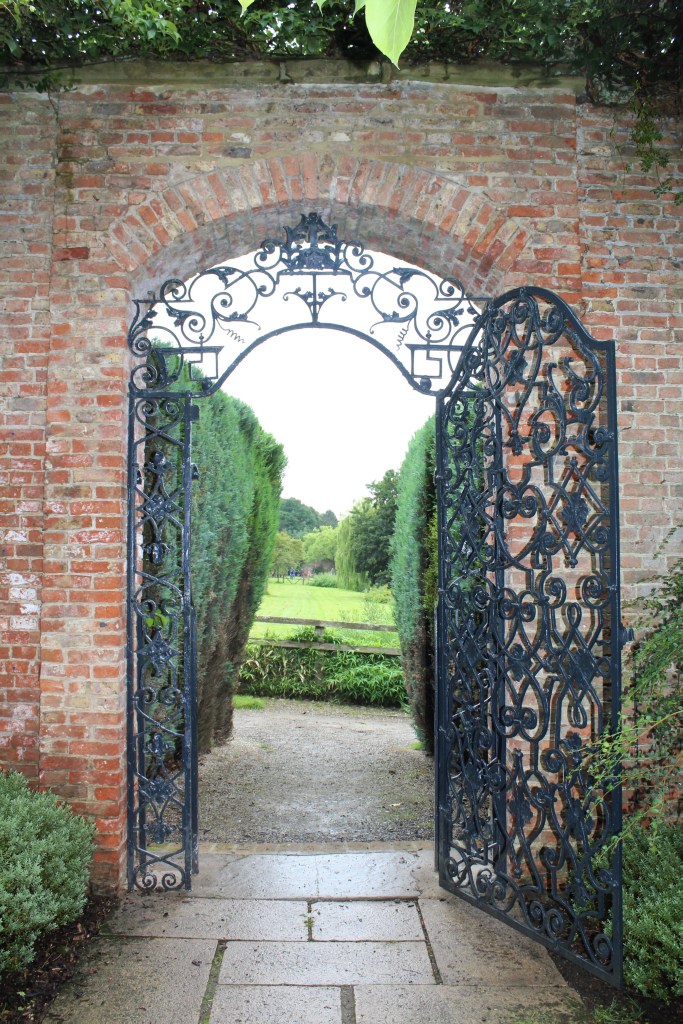
Welcome to the walled garden

When public gardens were allowed to open, it was glorious to finally get out of the house and visit an historical walled garden! Clouds and some wind gusts didn’t make brilliant weather, but it worked fine for our first outing in seventeen weeks.

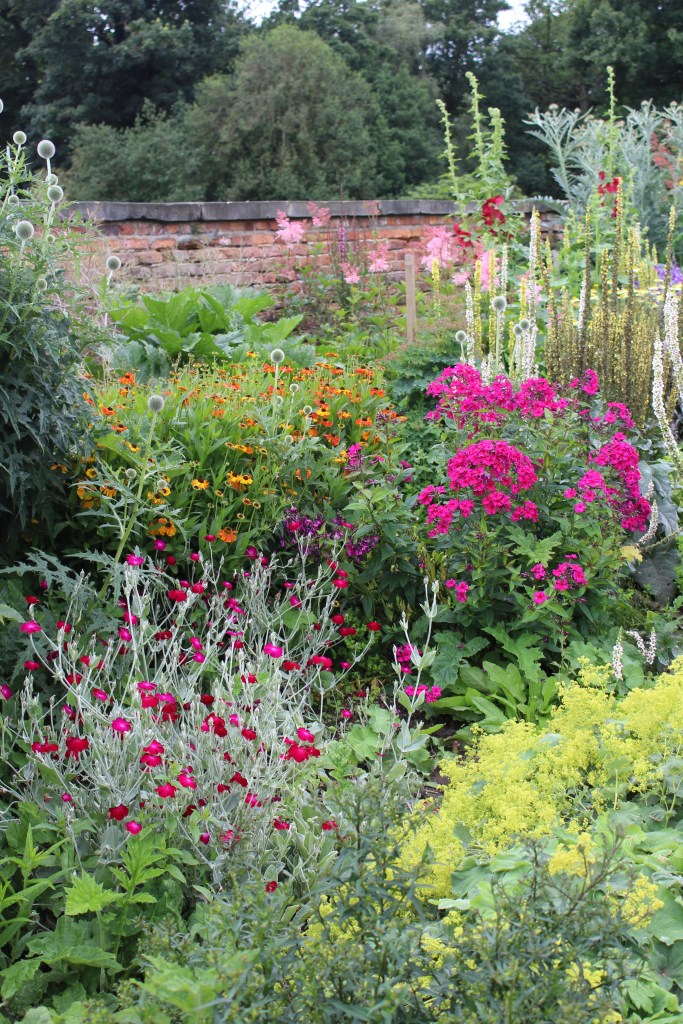
Hollyhocks, echinops, helenium, phlox, dianthus, lady’s mantle

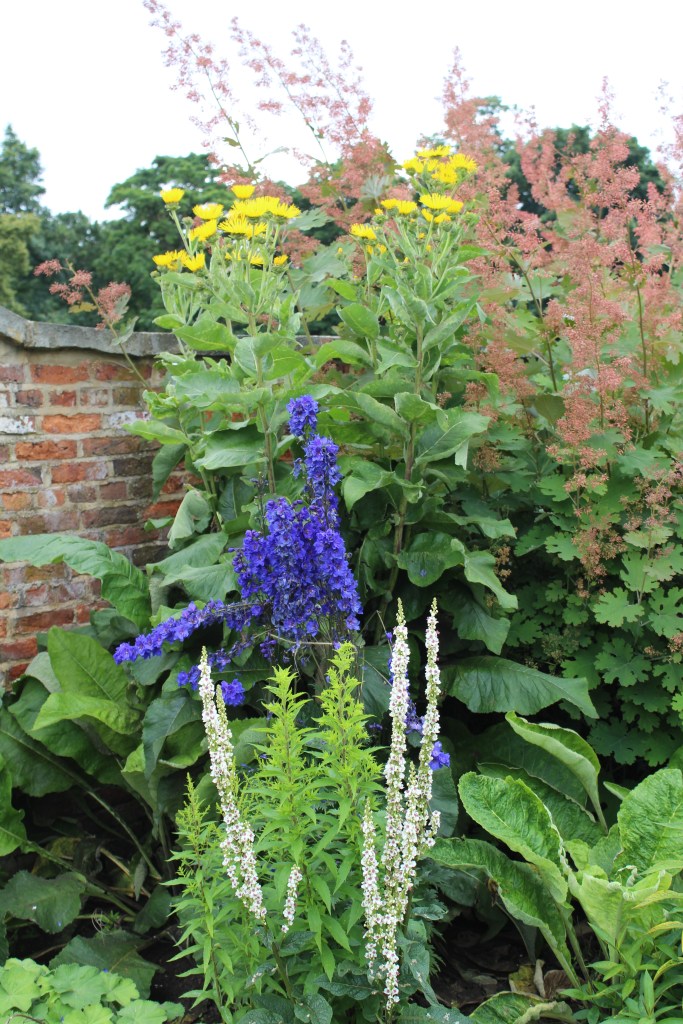
Dianthus and delphinium dressed in wonderfully outrageous colours. Some plants I’d only seen in magazines and TV—the blue violet prickly globes of echinops, looking like they’d flown in from another planet, and tall spires of yellow mullein.  Others, such as the towering broad-leafed plants bearing large frilly, daisy-like flowers were new to me, but an internet search doesn’t locate them. The stately hollyhocks reminded me of my long-ago friend Ann, who taught me to cook with herbs (pronounced with a hard “h,” the British way)—and how to preserve them. Her garden always grew hollyhocks. These hollyhocks stood tall in dignified colours of deep red and a red deeper still—almost black.

Electric blue delphinium, the mystery daisy-like plant and another gorgeous tall and airy plant that I can’t identify. Do you know what these are? Please comment below. Thanks

I love being surrounded by a garden—up to my eyes, even above my head. Regimented rows around my ankles can be pretty but I love the exuberance of height.

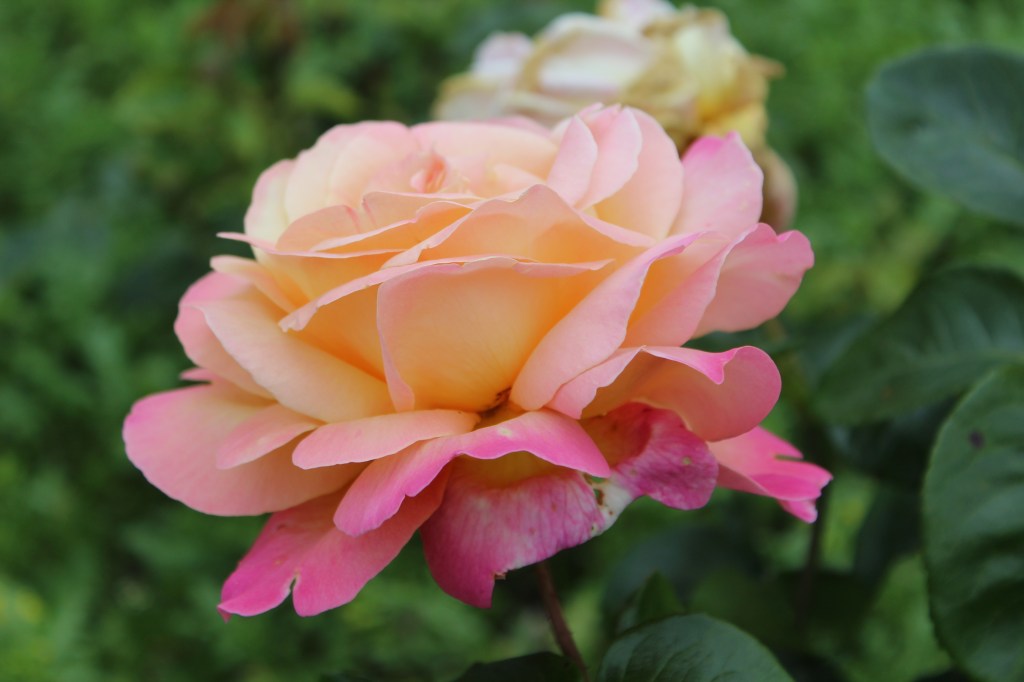
A lovely rose

The centre of the walled garden was filled with geometric-shaped beds of roses in many colour varieties—my grandmother would have loved it. I had to bend low to smell the lovelies, but the fragrance rewarded me. During lockdown, fragrance has encouraged me in new ways.

The gardener told us that it’s hard to keep staff or volunteers—they start with a romantic notion of being surrounded by beauty then leave when they have to weed every day. Beauty takes work, but with the right heart, it’s joyful work.

What’s your favourite English garden? Which flowers do you love to grow?

Garden Wish List

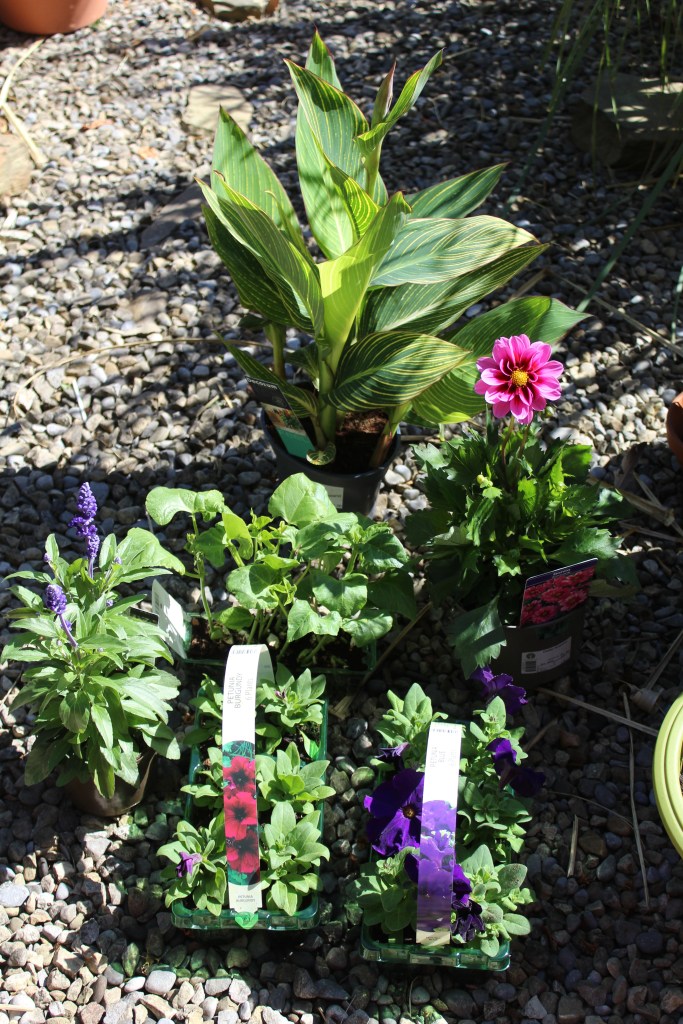
My gathering of plants

We’re going to the local garden centre, would like for us to pick some plants up for you and bring them to you? Would I? Yes please! What a gift! The garden centres are recently allowed by the UK government to reopen and we’re encouraged to support them. Of course (any excuse will do)! My wish list was long though I knew that it was too early for some things and others too soon for newly restocking garden centres. No orange nemesia—these bloom nearly forever, putting on quite a show, no zinnias—again, probably too early, no miniature pink water lily. But I had to try; you never know what might turn up. I also asked for a cup and saucer vine or an orange black-eyed susan climber for our garden arch but only some sad-looking white climbers had made their way to the nursery. Alas.

Striped canna

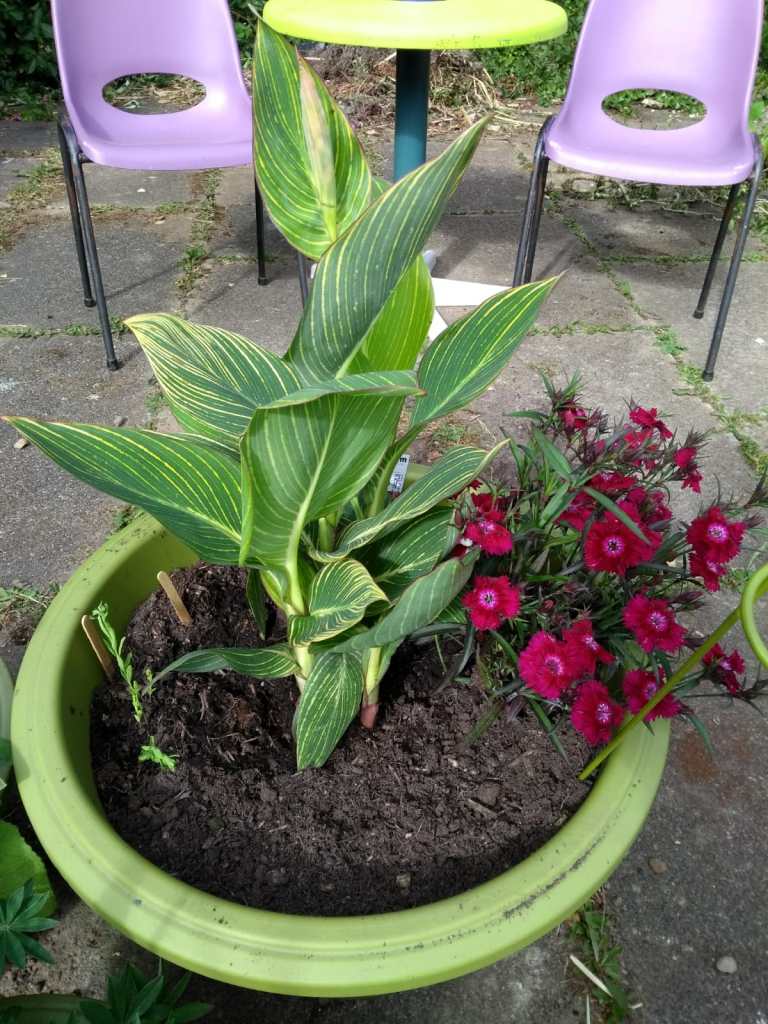
HOWEVER, My friend found a gorgeous striped leaf canna—we don’t yet know what colour it will be but if images on Google are any indication it will likely be orange—my favourite. The pot says Canna Island but when I searched it, I only got listings on an Island in Scotland.

Amazone dahlia

Petunias in burgundy (red violet) and blue (purple) were there—some of my all time favourite bedding flowers. They bloom again and again in their showy colours and heavenly scent. Since gardening in England, I’ve become a fan of dahlias, spurred on by frequent mention and glorious photography on BBC Gardener’s World (if you don’t live in UK, you can find excerpts on YouTube—I recommend!) In the US, we pronounce the flowers, dahl-yah; a vintage celebrity’s name—Arlene Dahl, gave us what seemed an obvious clue to pronunciation. But the Brits say dale-ya. Either way, they come in many sizes, shapes and colours blooming well into the autumn. I had picked up a couple of small ones at Aldi, which are nice but this Amazone is a prize.

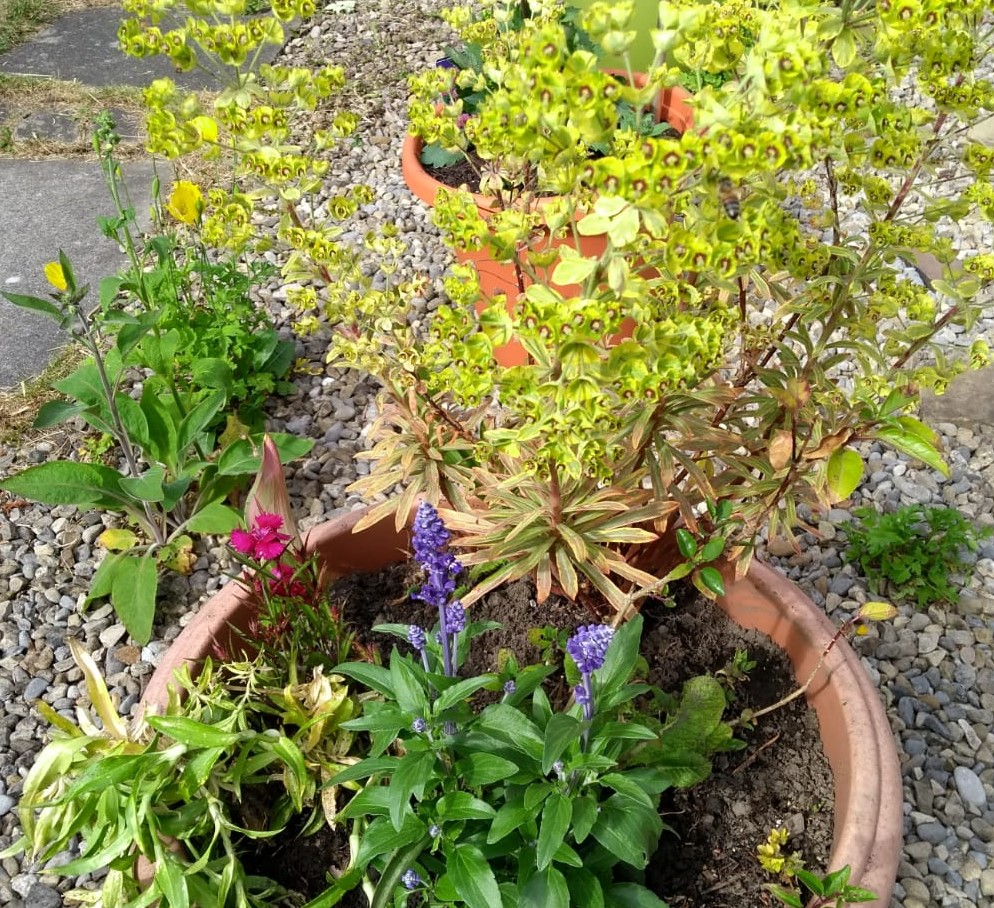
Victoria Blue salvia and euphorbia

I also asked for a Victoria Blue salvia, something I’ve grown every year for a couple of decades. They can be counted on for their deep blue, nearly violet spires to keep blooming until the heat slows them down, then burst into bloom again in the autumn. And again, in spring. Hmm..blue hill and blue marvel only. Yes, definitely the one that leans toward violet. Surprise! It is indeed what I’ve known as Victoria Blue—a good colour companion to my yellow green euphorbia.

We rounded out the gathering of plants with a tomato, two courgettes (zucchini) and a tray of runner beans.

My containers are looking more colourful and less lonely these days thanks to my thoughtful friends.

What’s on your garden wish list?

Open Air Office

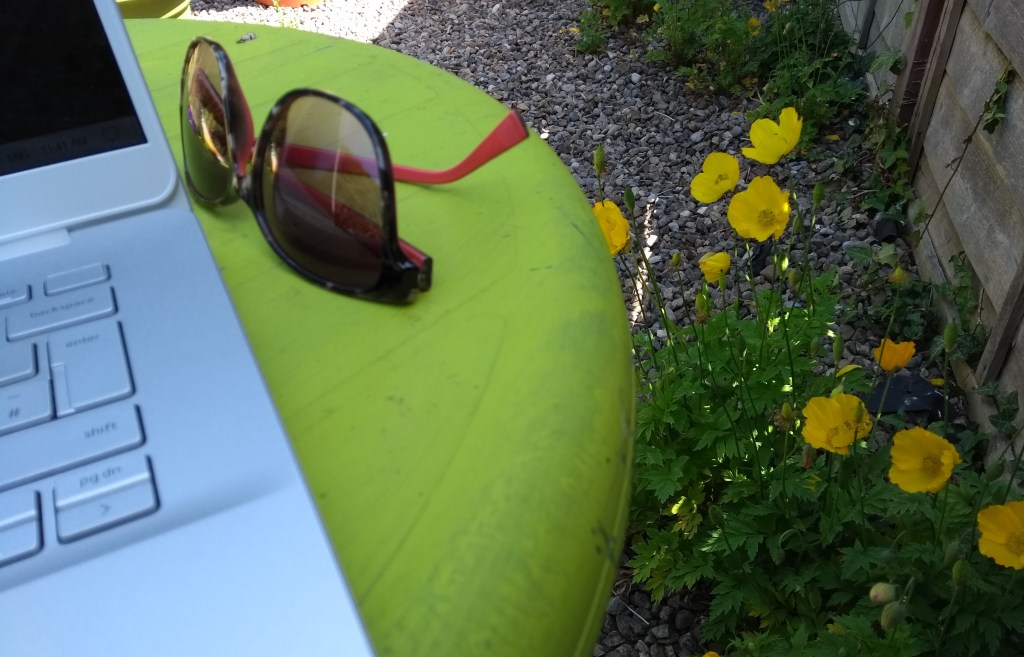
A picture containing a laptop, sunglasses on a green table near yellow flowers
My flowery office

I had to come out to the garden to work today. I had to. Surrounded by yellow Welsh poppies and the throaty call of wood pigeons– now expanding into a choir, I’m making a space—not to work the garden this time, but to work in the garden. The golden light and soft warm breeze called to me, soothing my soul. How could I stay in the darkened house on a day like this? I once knew a man who worked for the State of Alaska; he related that sunlight there was so scarce, when the sun made an appearance the State immediately declared a holiday!

I couldn’t exactly declare a holiday, but I’ve taken on the challenge to find a place in our back garden where the sun, though welcome, doesn’t overcome my laptop screen. I’ve found a narrow space in the shade of our wooden fence—shade for the computer; sun cream for me. Yorkshire being the hilly land that it is, our garden slopes in many directions, so I’m slanting.

I feel so much more peace when I’m in my garden—whatever size space I have, quite possibly since God himself, planted the first garden. Functionality wasn’t enough for God; he saw to it that the fruit trees he planted were not only good for food, but also pleasing to the eye. God built beauty into his garden and walked in it with his Adam and Eve.

Now the blackbirds sing their joy, wood pigeons adding a chorus. When I walk near their trees, I thank the choristers for their beautiful songs.

The yellow Welsh poppies have year after year, sprung up through the gravel on their own, a pleasant and welcome addition to a previously bleak space.  The English bluebells, protected pride of the land, displayed their arcs of intensely blue nodding bells in the back garden and the side flower bed in their time. A rich heritage. Finished now, their long narrow leaves lie flat, feeding their bulbs for next year’s show.

The choristers’ tree

Amazing that after nearly ten weeks of pandemic lockdown, I could feel so happy. The nearly all clear blue sky is heating now; time to find a shadier spot

Getting Rid of the Bad to Make Room for Something Better

The tiny patch of dirt by the fence—no more than 60 centimetres by 130 centimetres (1 foot, 11 inches by 4 feet, 3 inches), after I extended it a bit with a layer of compost over some paving stones, had been overtaken by stinging nettles (and various bits of broken glass and rubble). I did not want to tangle with those nasties after accidentally finding out why they have their name–there was no forgetting for days. Besides, I was busy with bringing the other parts of our gardens to life; it was easy to ignore that bit. Unfortunately, they didn’t go away and as we began to relax on our back patio near the patch of nettles, as much as I dreaded it, I knew it was time for them to go.

I donned long sleeves, gloves, and wellies, armed myself with every tool I owned, from trowel to heavy rake, and tackled the stinging beasts—piles and piles of them. I’m chuffed to say–without getting stung.

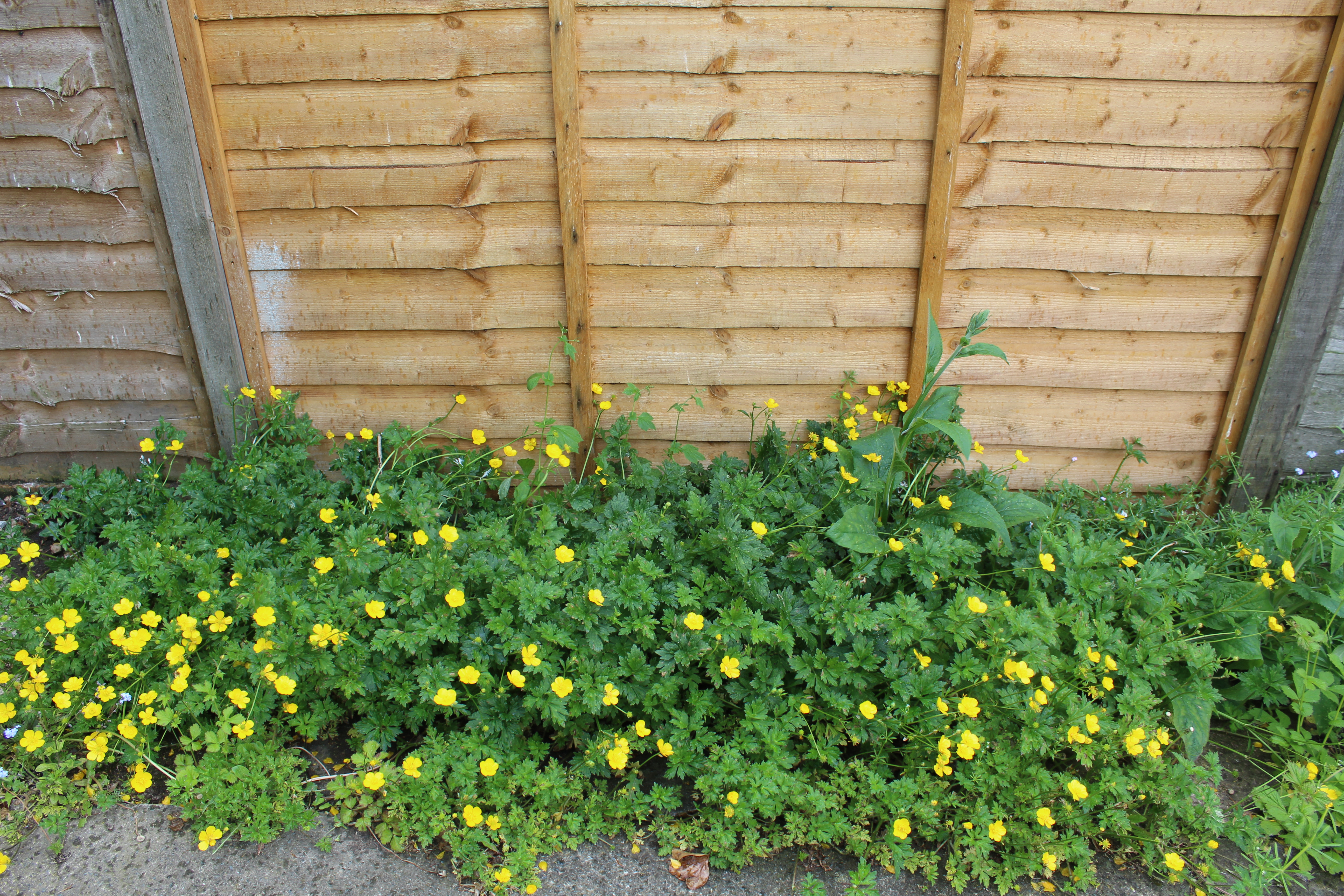
Small garden patch of yellow buttercups by a fence

Buttercups–Ranunculus repens

Next spring, no nettles came up—victory! In their place, the bed brimmed with intensely yellow, shiny-petalled buttercups (Ranunculus repens). I had to clear the bad (I know nettles can be made into a smelly concoction to feed plants, even to make tea, but no thank you) to make room for the lovely little flowers.

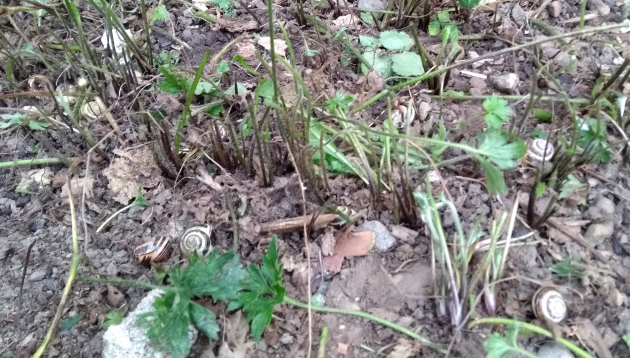
When the buttercups had finished their display, I knew it was time for them to go as well, to finally make room for flowers of my own choosing–flowers with loads of colour. As the bare ground came into view, I discovered the answer to my earlier question of, “Where do all those snails come from?” This rocky little bed was a colony, a breeding ground for those devourers of my garden! The dangerous had been hidden by the pretty. I even counted them at the time, but have forgotten how many got a free ride to the “forest” out back, though I know there were scores.

garden patch filled with snails and weeds

That’s where the snails come from!

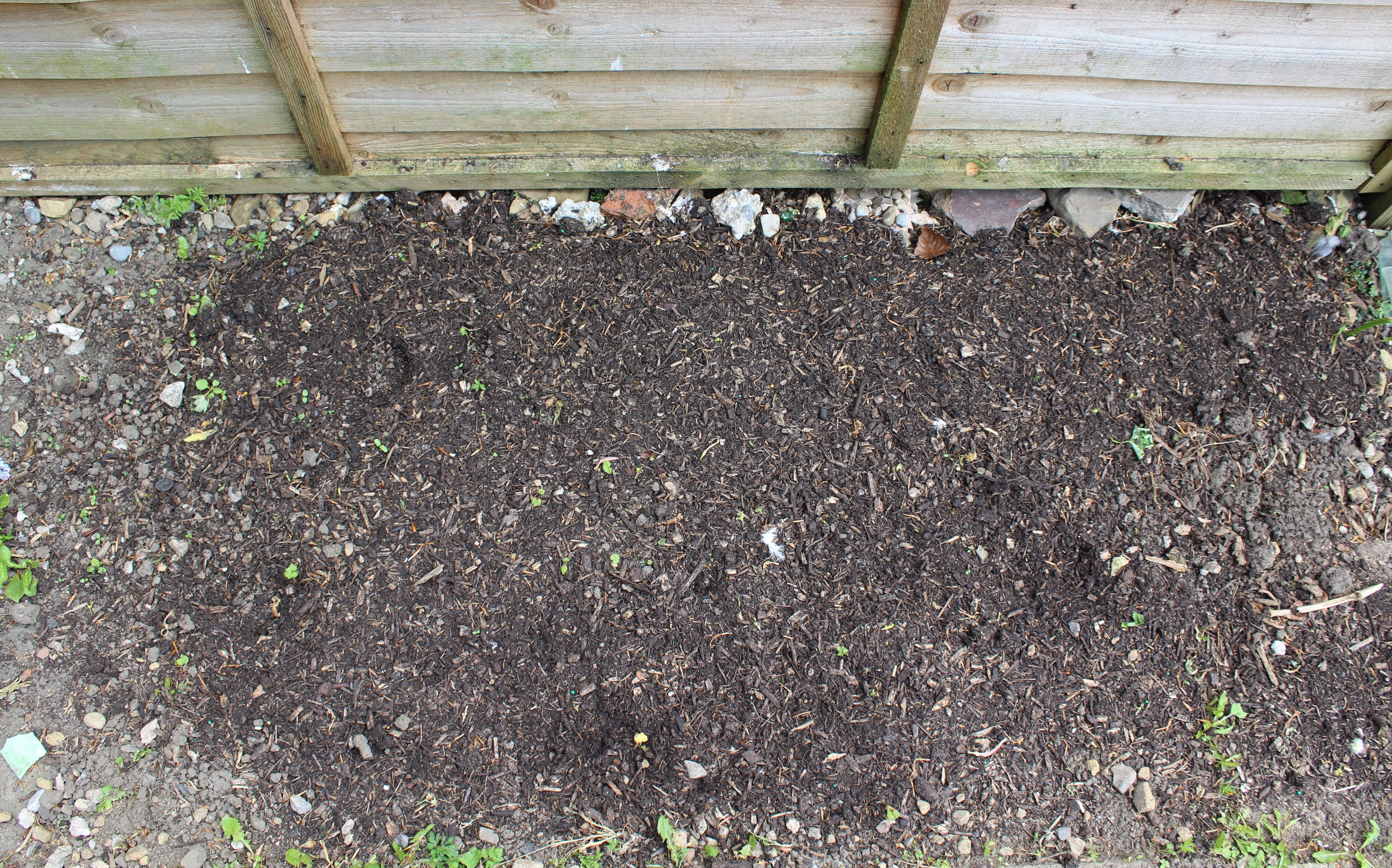
I’m sure I planted more flowers than the space can hold but who knows how many will germinate, especially as seeds, in this year of pandemic, are hard to find? Monty Don of BBC Gardener’s World has assured us to not be afraid to plant old seeds; I would anyway but it’s nice to have an expert’s reassurance. Hopefully the orange cosmos, yellow orange, and orchid purple zinnias, dahlias, cobalt blue lobelias, and I don’t remember what all, will make beautiful colourful flowers in plenty of time to accompany our evenings on the patio.

newly seeded garden soil by a wooden fence

A few tiny seedlings in the cleared flower bed

I look forward to the day new colour comes to this tiny patch. What colours will you have in your garden and why do you like/love them?

Seeds

It was finally time to plant my seeds! The winter seemed especially long and wet, but spring had finally come.  It was still too cold at night to plant out some varieties of flowers and vegetables, but I still had my seed trays from last year. One clear plastic dome had broken and the other banged around by high winds but the two trays and one lid, along with some soapy water were ready for their new assignment. I couldn’t get any fine seed starting compost—I was simply happy my friend brought me some regular compost. I filled the cells with the fresh compost and “delicate” seeds—yellow beans, purple beans, courgettes, tomatoes, basil. Their flowery companions in process are mimulus, morning glory, nemesia, and petunia. Since I have a lot of mauve wallflowers still blooming from the autumn, plus a swathe of bright yellow volunteers, I decided at the last to leave them unplanted for now.

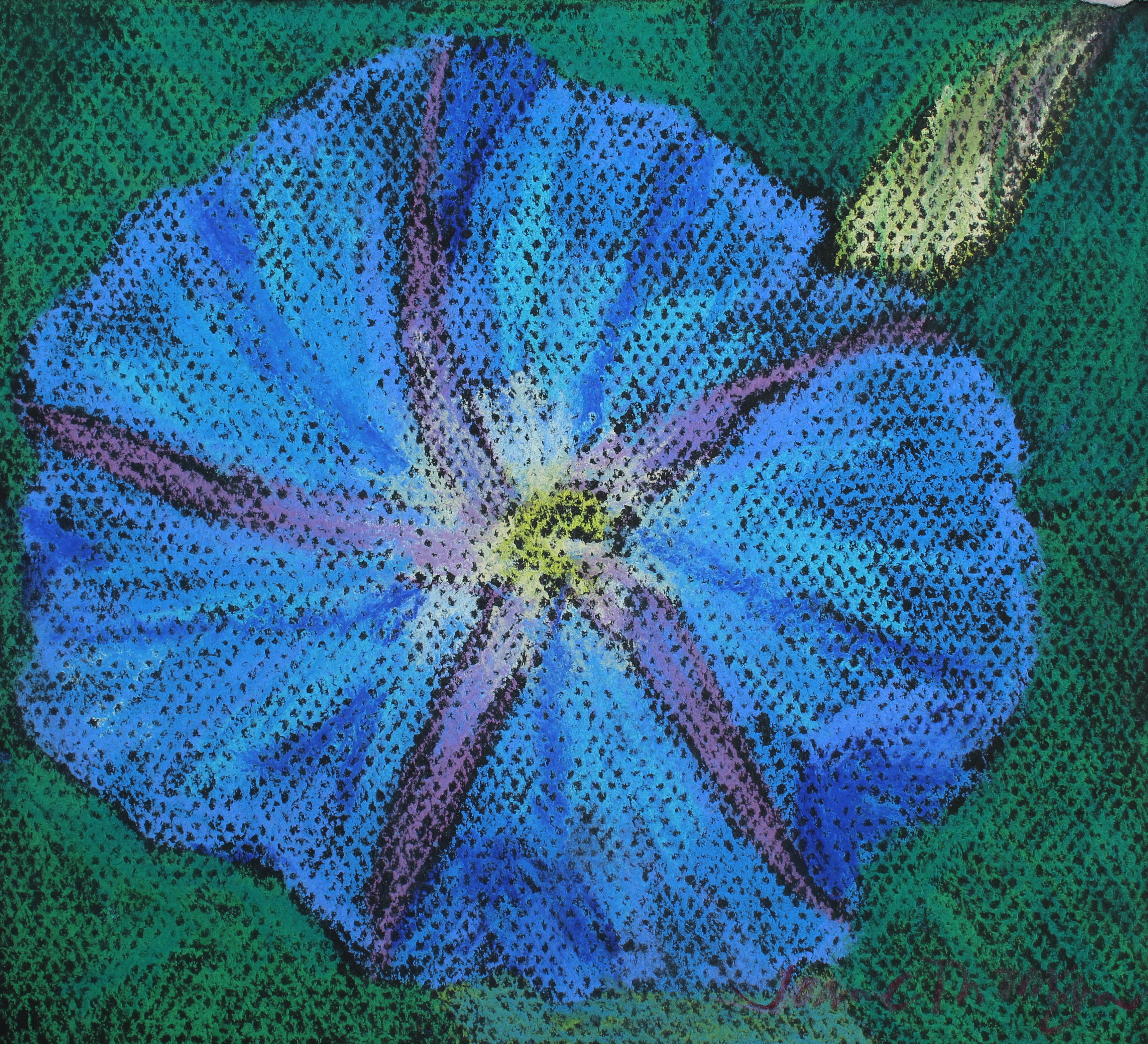
The hard seeds of morning glories have to soak overnight but the extra step is worth it. I hope they do well; my husband and I love to see their intensely blue, almost purple show each morning. I’ve planted them at nearly every home we’ve had.

blue flower with green background

Morning Glory Joan C. Thomson pastel

Last year’s seedlings didn’t fare well having dried out while I travelled, but since I won’t be travelling during the pandemic, I’ll be able to keep an eye on them.

Some of the seeds, such as the yellow, and purple beans and courgettes were large while the mimulus were tiny—each producing its own kind.

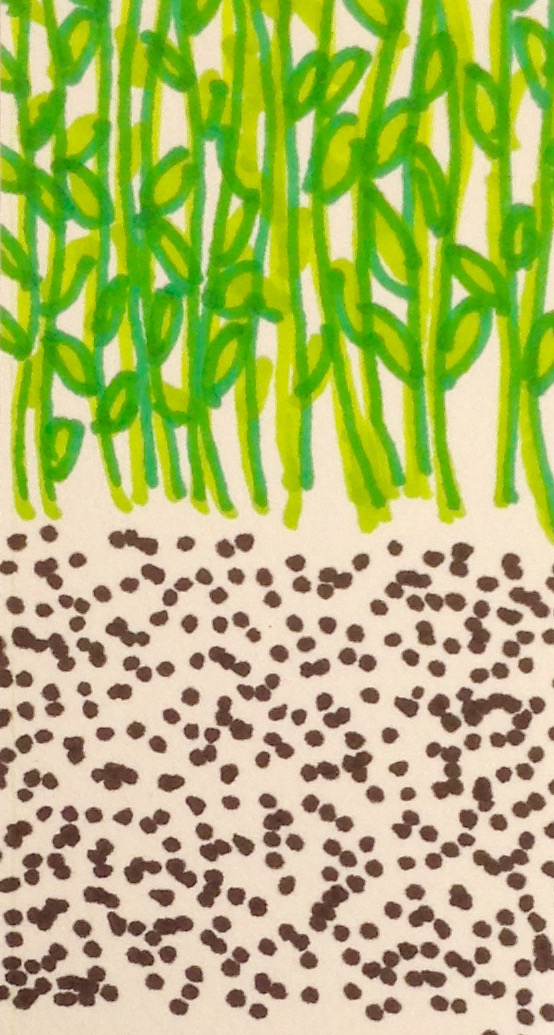
Jesus talked a lot about seeds since life, the life he created in the Beginning, began in a

drawing of seeds and plants

Increase Seed Joan C. Thomson

garden. He said faith can be compared to a tiny black mustard seed—a black dot that grows into a massive plant that’s the largest of garden plants. I’ve seen pictures of mustard plants towering over men’s heads—up to ten feet high! It’s not that it takes such a small amount of faith to accomplish, since Jesus often chided his disciples for having “little faith;” it’s the proportion of the tiny seed to the massive plant. It’s the little seed “that could.” So many hundreds, even thousands of tiny black dot seeds are borne by each huge plant that if each one spread and dropped its seeds into favourable earth there would be a forest! I read that the black mustard could so easily take over a garden, they were outlawed in Israel in Jesus’ day. Wow! That’s big faith!  What if we had proportionate faith like that? What if we really took Jesus at his word? Might things that are wrong change for the right?

A couple of weeks later, my seedlings are up and straining for the sun coming from the three windows that surround them. Spraying them with water a couple of times each day keeps them growing.

What flower, vegetable or herb seeds are you planting? Are you having trouble buying seeds during the lockdown in your country? Are you planting any “seeds of faith?”

Better Than You Think

It was cold and rainy that day; I didn’t want to go out.  Besides, I could see my garden well enough from my kitchen window—I didn’t need to go out.  Finally, I couldn’t make up excuses anymore, so I donned my hat and coat and made my way out to my garden.

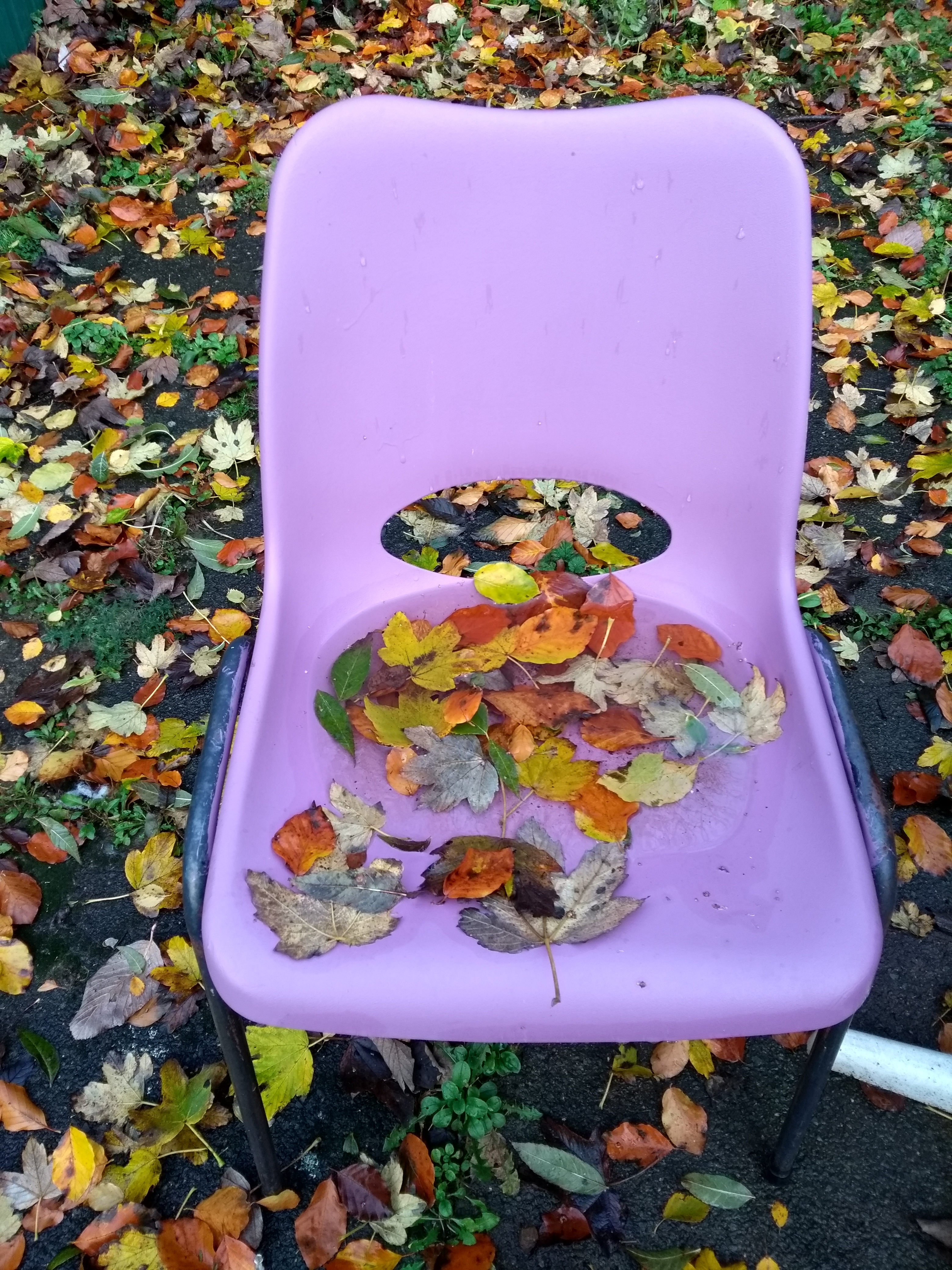
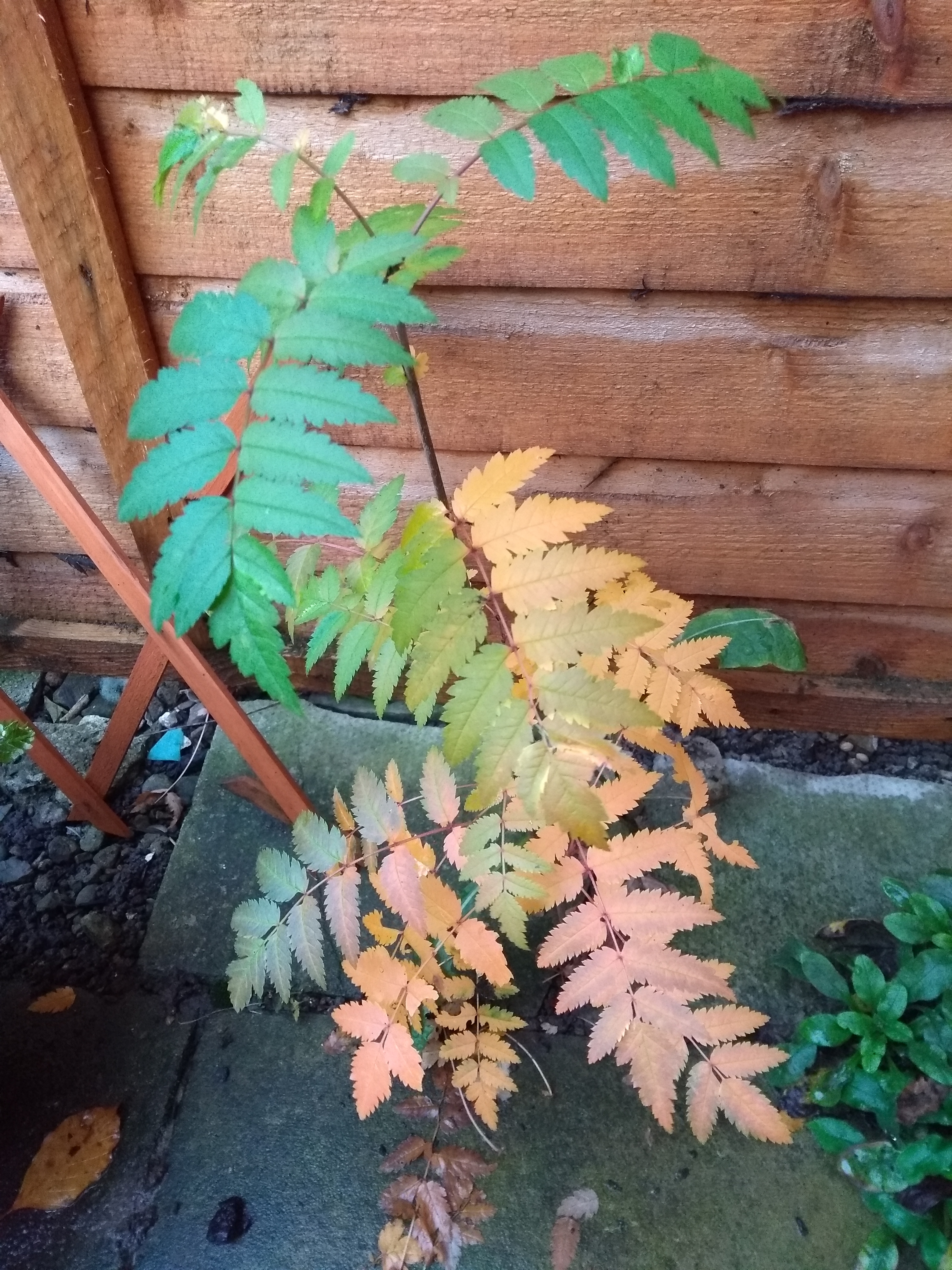
Ah yes, my distant view disguised much needed deadheading—of course. Many of the sunrise dahlias had shattered  but there was more to see.  My foray into the cold and wet was rewarded with lovely sights unseen from a distance, sights that called for a close-up. Yellow, orange and red leaves floated in my purple chair; entire plants turned red. If I had stayed inside, I would have missed the beauty.

leaves in chair

Colourful leaves in my purple chair!

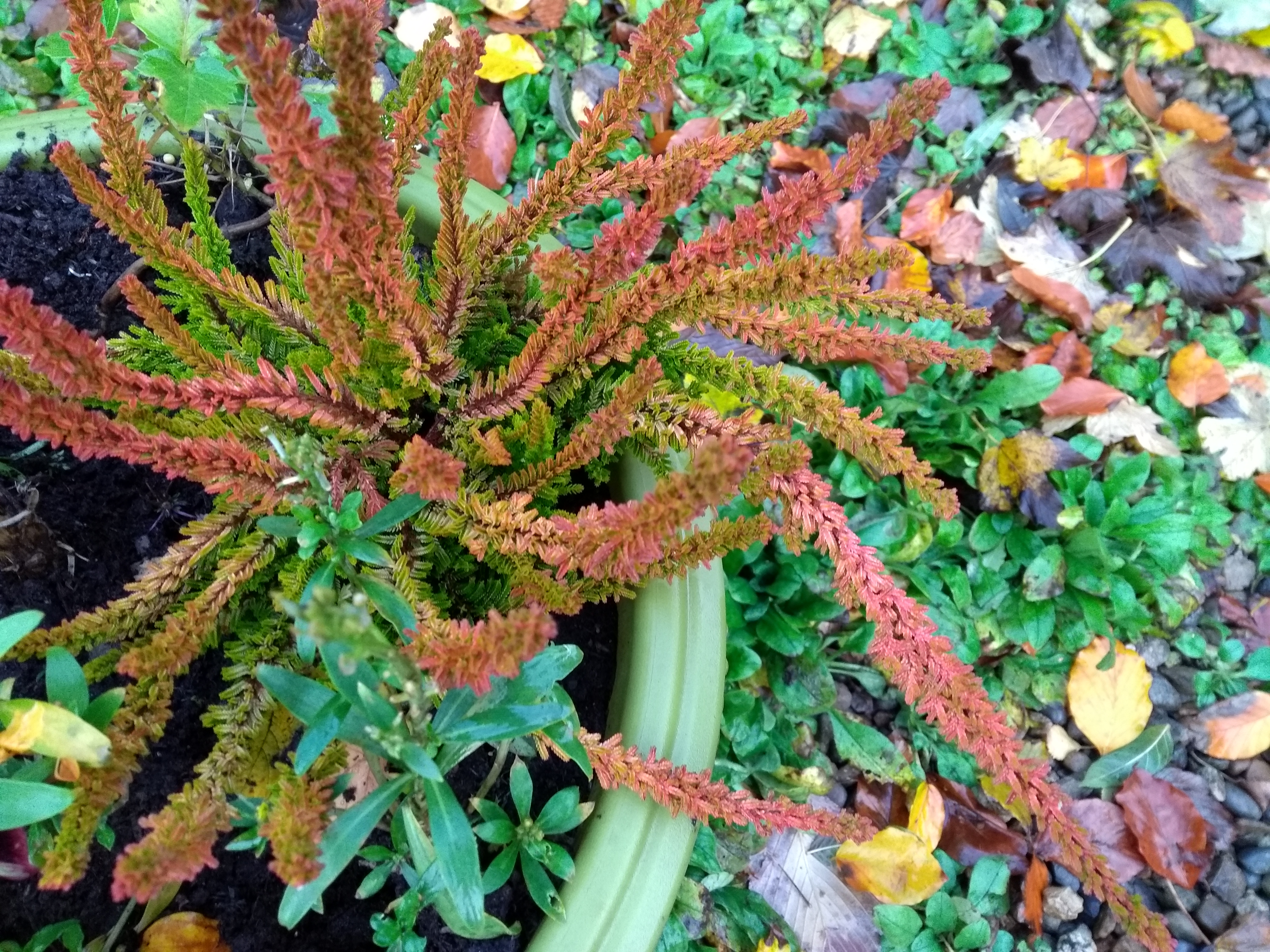
autumn colours on plantgarden plant with autumn colours

Filling the Gaps

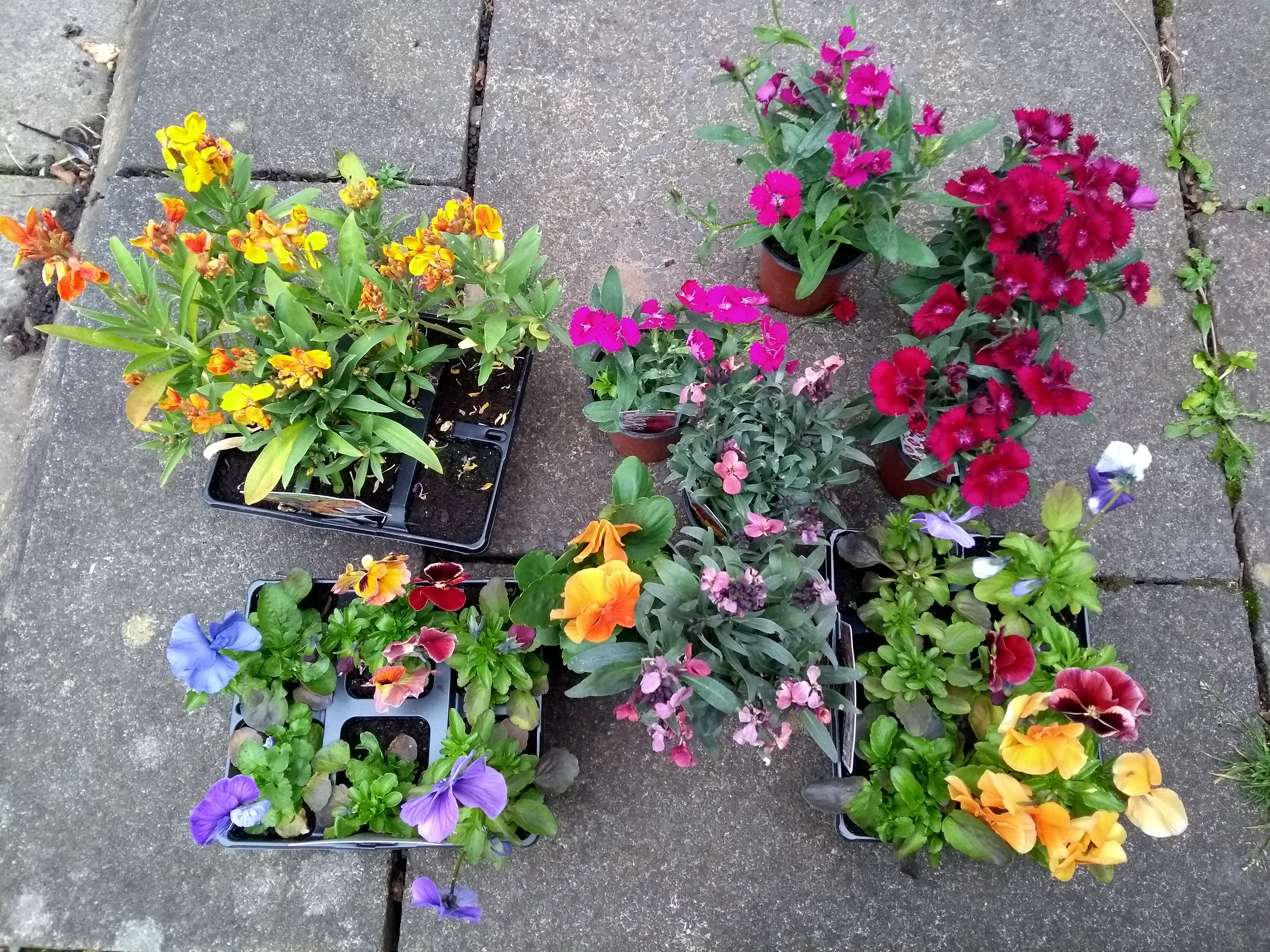
Colourful bedding plants

Autumn Bedding Plants

My container garden was doing well but the gaps bothered me.  They bothered me but the birds loved them; magpies especially like to dig the open spaces mining for worms.  I don’t mind the big tuxedoed birds but they were spilling my precious soil between the gravel below and exposing the roots of plants.  It was time to fill the gaps.

My container garden was doing well but the gaps bothered me.

I made my way to the garden centre by two buses only to find that it was shutting down—going out of business.  It’s the only one anywhere around me.  They had loads of discounts, though not on the bedding plants I sought but I didn’t mind. I was after dianthus (Sweet William), wallflowers and pansies—that’s exactly what I found and in the colours I wanted.  I like several colours of pansies but have found that the snails don’t favour the orange ones as much so they fare better in my garden.

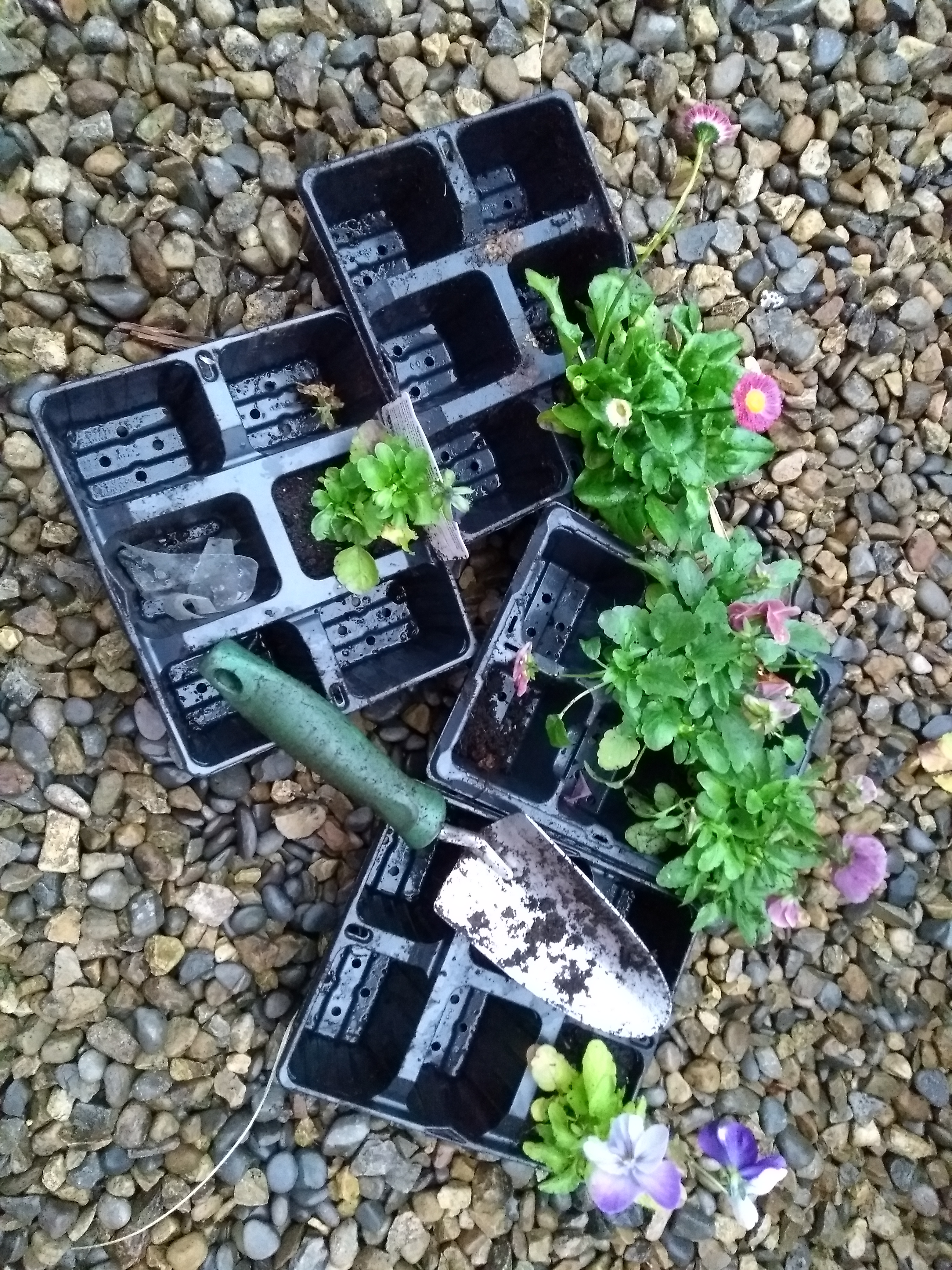
Planting garden bedding plants

Planting them all.

I planted and planted but gaps plus two large empty pots and two smaller ones remained. The remedy? A friend and I made a day trip to some gardens attached to a garden centre and restaurant.  The garden centre had plants in every category including some I’d never seen before.  My friend kindly folded down her car seat to make room for a bag of compost and loads more plants including more pansies(!), asters, bellis daisies, ornamental kale and a yellow green heather-like plant.

Amazingly, I planted them all the next sunny afternoon, at last, filling the gaps.


green garden container with flowers

Asters, Wallflowers, Pansies

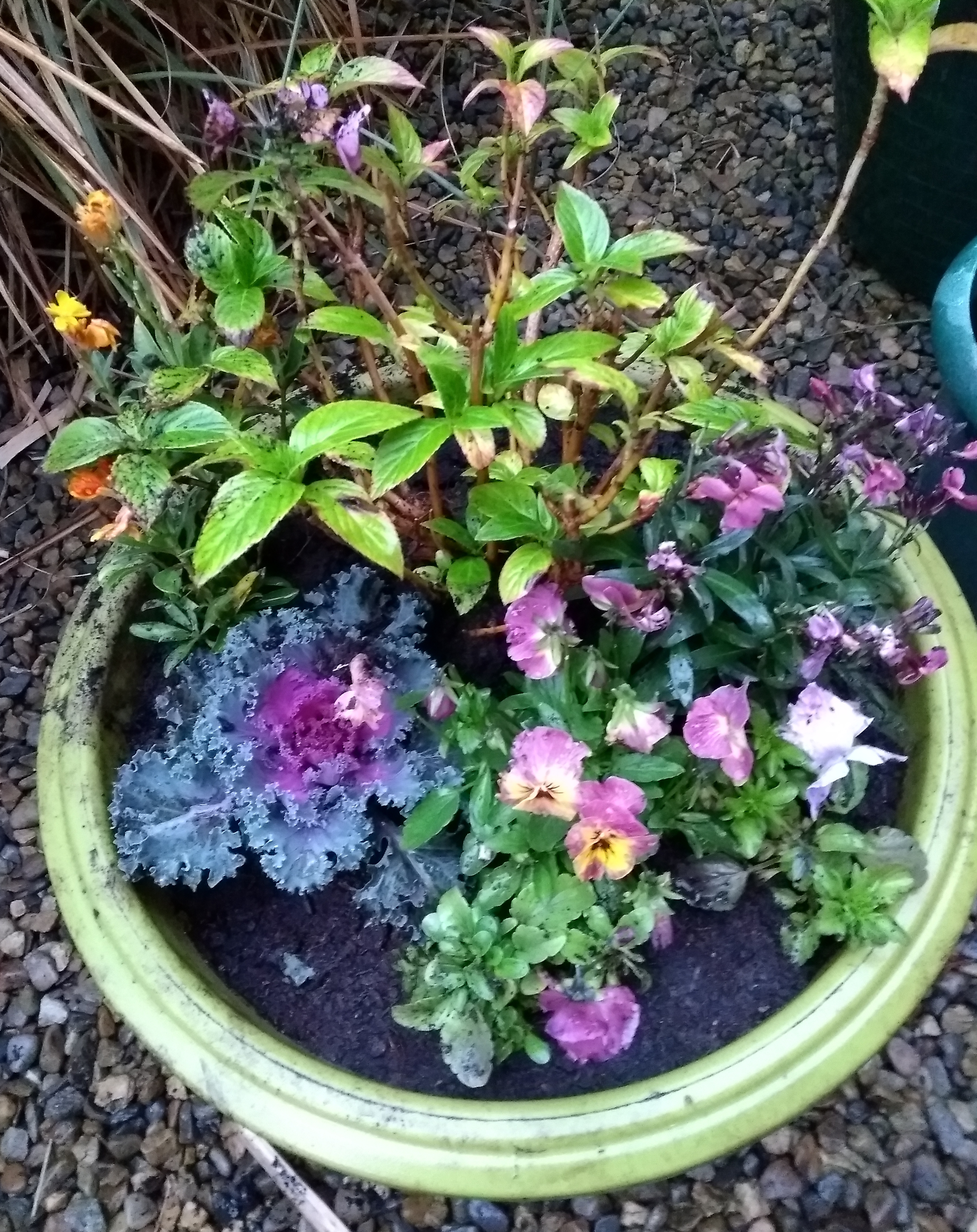
Green garden container of purple flowers

Ornamental Kale, Pansies and Hydrangea