Autumn Bedding Plants
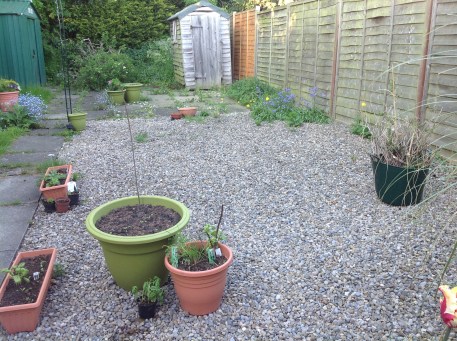
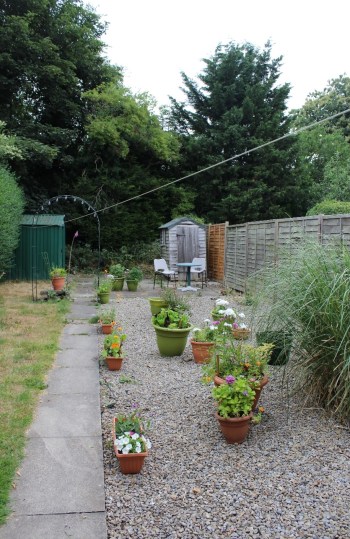
My container garden was doing well but the gaps bothered me. They bothered me but the birds loved them; magpies especially like to dig the open spaces mining for worms. I don’t mind the big tuxedoed birds but they were spilling my precious soil between the gravel below and exposing the roots of plants. It was time to fill the gaps.
My container garden was doing well but the gaps bothered me.
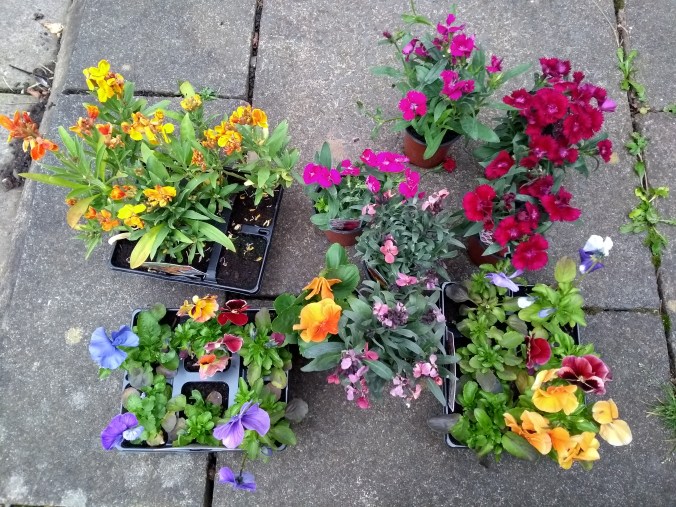
I made my way to the garden centre by two buses only to find that it was shutting down—going out of business. It’s the only one anywhere around me. They had loads of discounts, though not on the bedding plants I sought but I didn’t mind. I was after dianthus (Sweet William), wallflowers and pansies—that’s exactly what I found and in the colours I wanted. I like several colours of pansies but have found that the snails don’t favour the orange ones as much so they fare better in my garden.
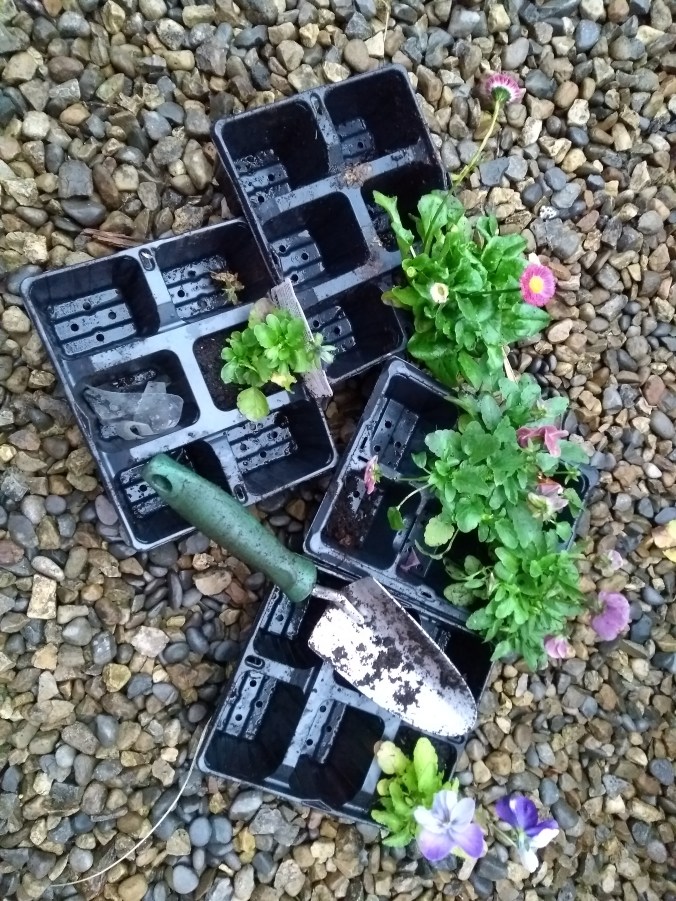
Planting them all.
I planted and planted but gaps plus two large empty pots and two smaller ones remained. The remedy? A friend and I made a day trip to some gardens attached to a garden centre and restaurant. The garden centre had plants in every category including some I’d never seen before. My friend kindly folded down her car seat to make room for a bag of compost and loads more plants including more pansies(!), asters, bellis daisies, ornamental kale and a yellow green heather-like plant.
Amazingly, I planted them all the next sunny afternoon, at last, filling the gaps.
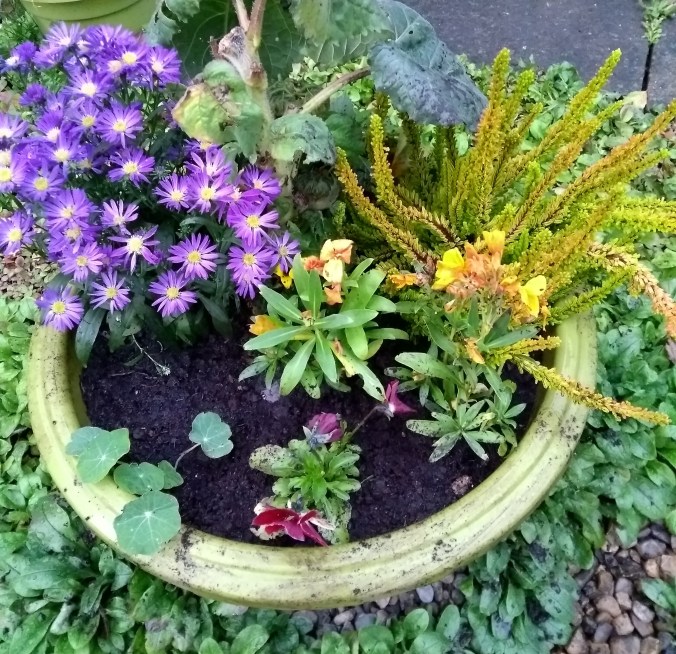
Asters, Wallflowers, Pansies

Ornamental Kale, Pansies and Hydrangea



 ith fragrant flowers. A city we lived in the US has streets lined with trees billowing with faintly pink cherry blossoms each spring.
 systematically chewed in curves, and stripped stalks, all signs of the hidden army that attacks my hard to get plants. It’s not like they have to go hungry—what about the wildflowers I allow to provide for the wildlife? What about the weeds? Ah but they are connoisseurs and prefer my tender petunias and delphiniums.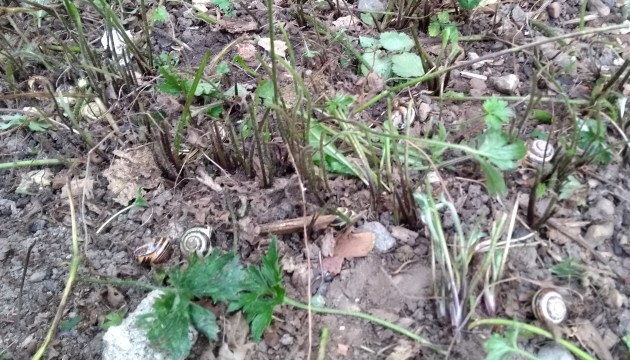
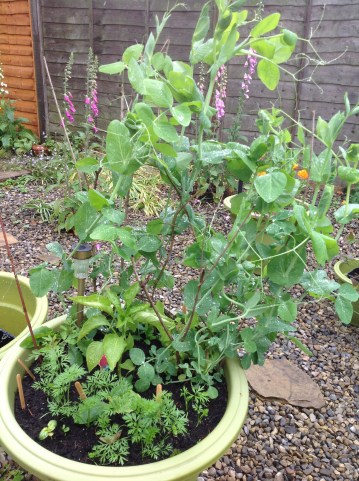
 Another and another proved too tough to eat so I freed the little green orbs from their leathery jackets making a very small serving for all the effort to grow and cook them. Friends hint that I must be mistaken and have instead grown regular peas. I checked the plants again and found that even the tiniest, newest pods already have round peas in them. In fact, the package says “mangetout, harvest: May thru Aug,” so not only are they the kind of peas to “eat it all,” but I’m well within the harvest time. I don’t think I’ll be planting those again. But then, I always say that one of the great things about gardening is that if something doesn’t work, you can throw it out and start again.
 again some other day!” After several days of all-day rain here in Yorkshire that keeps temperatures at an almost winter, I’ve had enough rain for now. It’s common for people to pray for rain but less so to pray for it to stop. That’s what I’m doing, praying for it to stop but only for a couple of days. But maybe we need to store it up for when it’s dry, one might think. Last summer certainly was dry—sunny, with almost no rain; it was lovely for outside activities but not good for the garden. My husband and I had to form our own “bucket brigade” to water the containers, even the beds, since we don’t have an outdoor hose bib. Yes rain is good, needed. And yes, it is England. However, the weather watchers warn Yorkshire of flooding—the ground and the waterways apparently can’t hold much more. Nor can the garden. The soil is getting waterlogged.
 I keep reading that we should save rainwater in the garden for dry times but by the time the ground and the soil in my pots dries out enough to need more, the rainwater in my bucket (pictured above—yes, I poured rainwater from other parts of the garden into it) will have diminished through evaporation. I suppose a rain butt (I’d never heard of one before I came to UK) would minimize evaporation but as a sojourner here, I’m reluctant to invest in the huge things.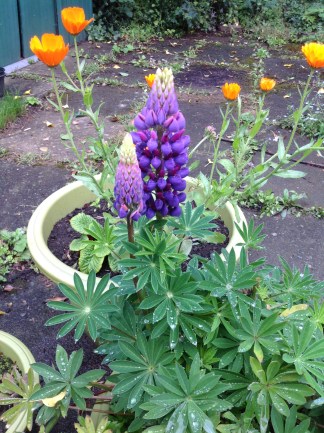
 A Leafy Journal